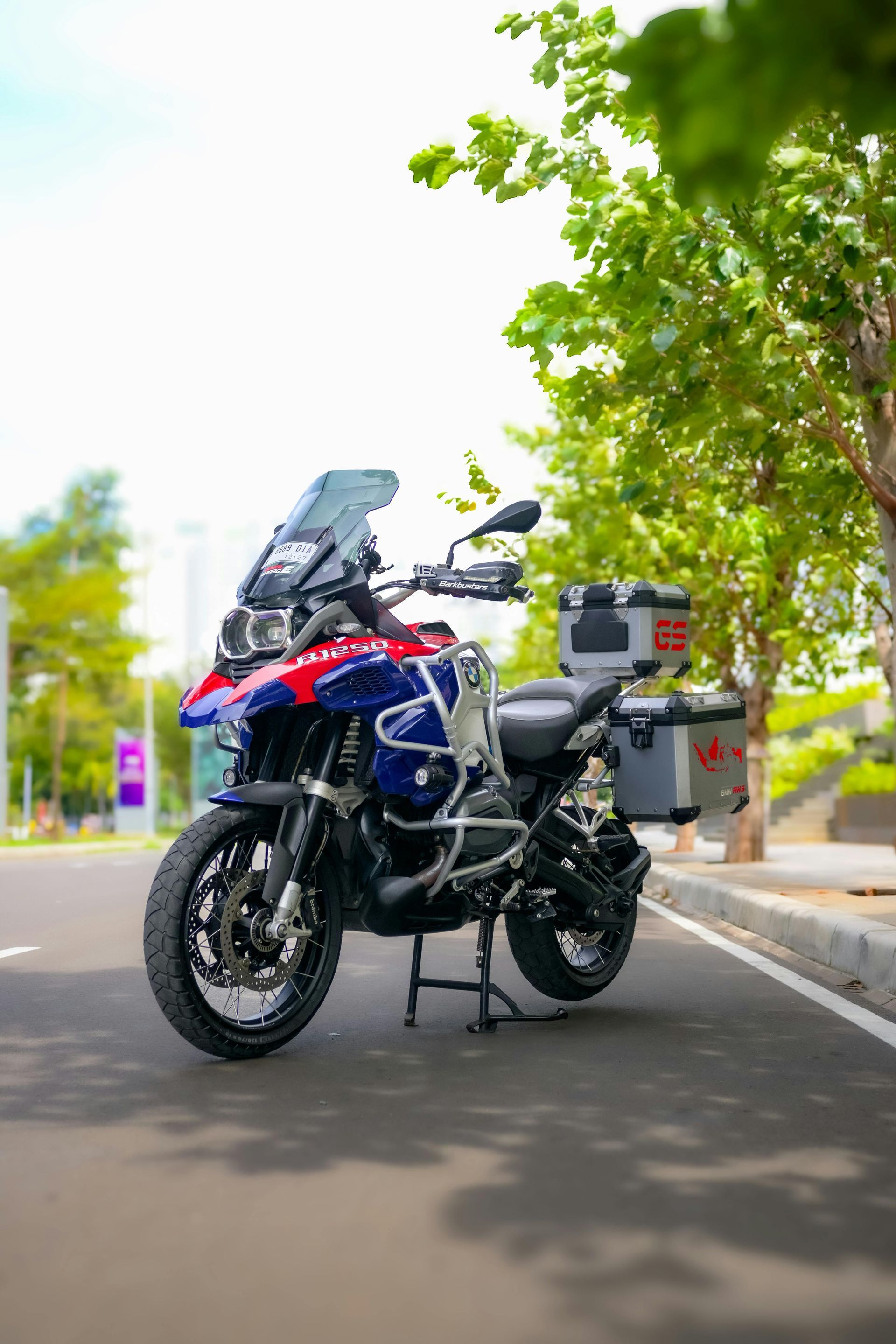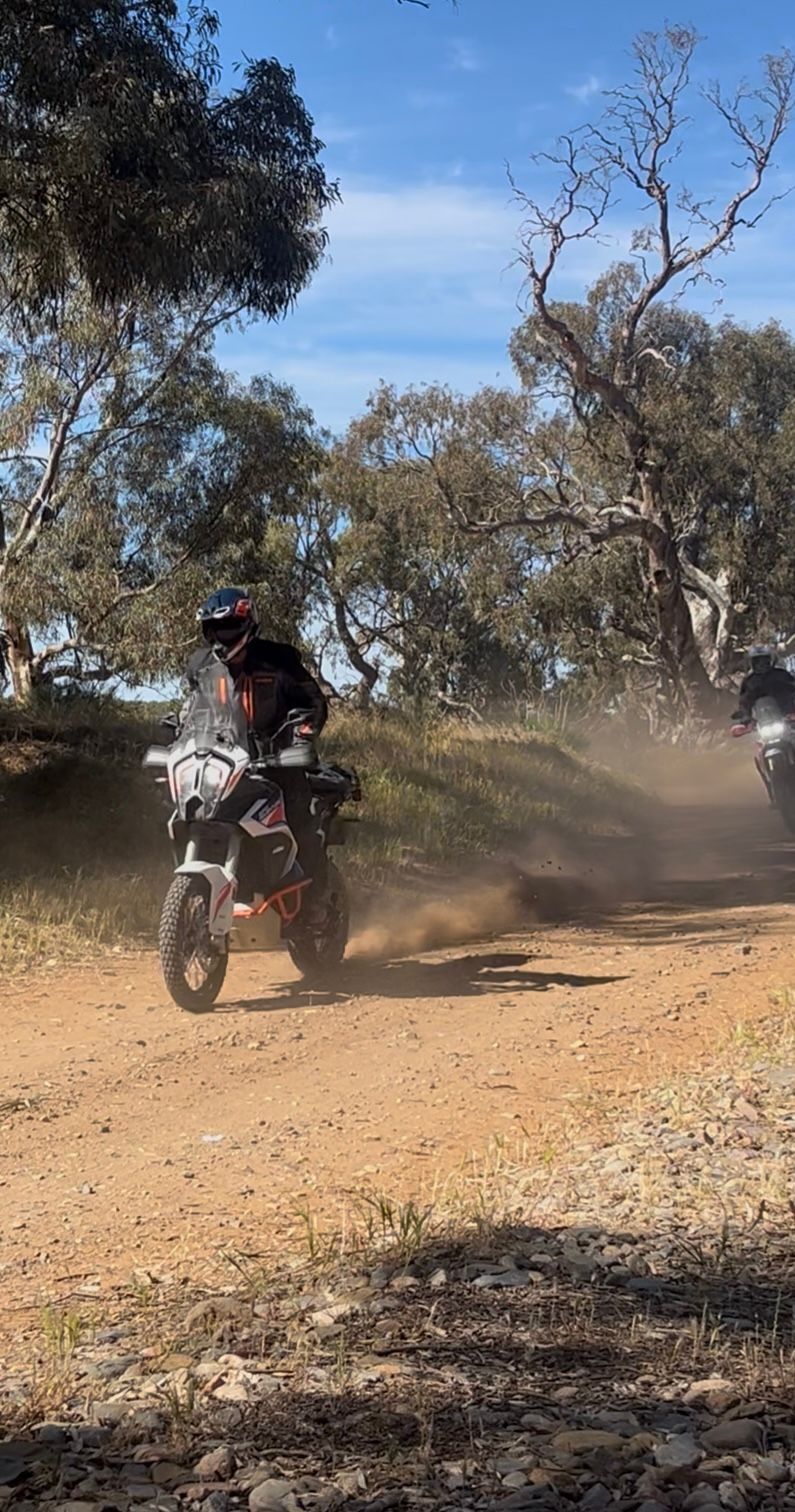
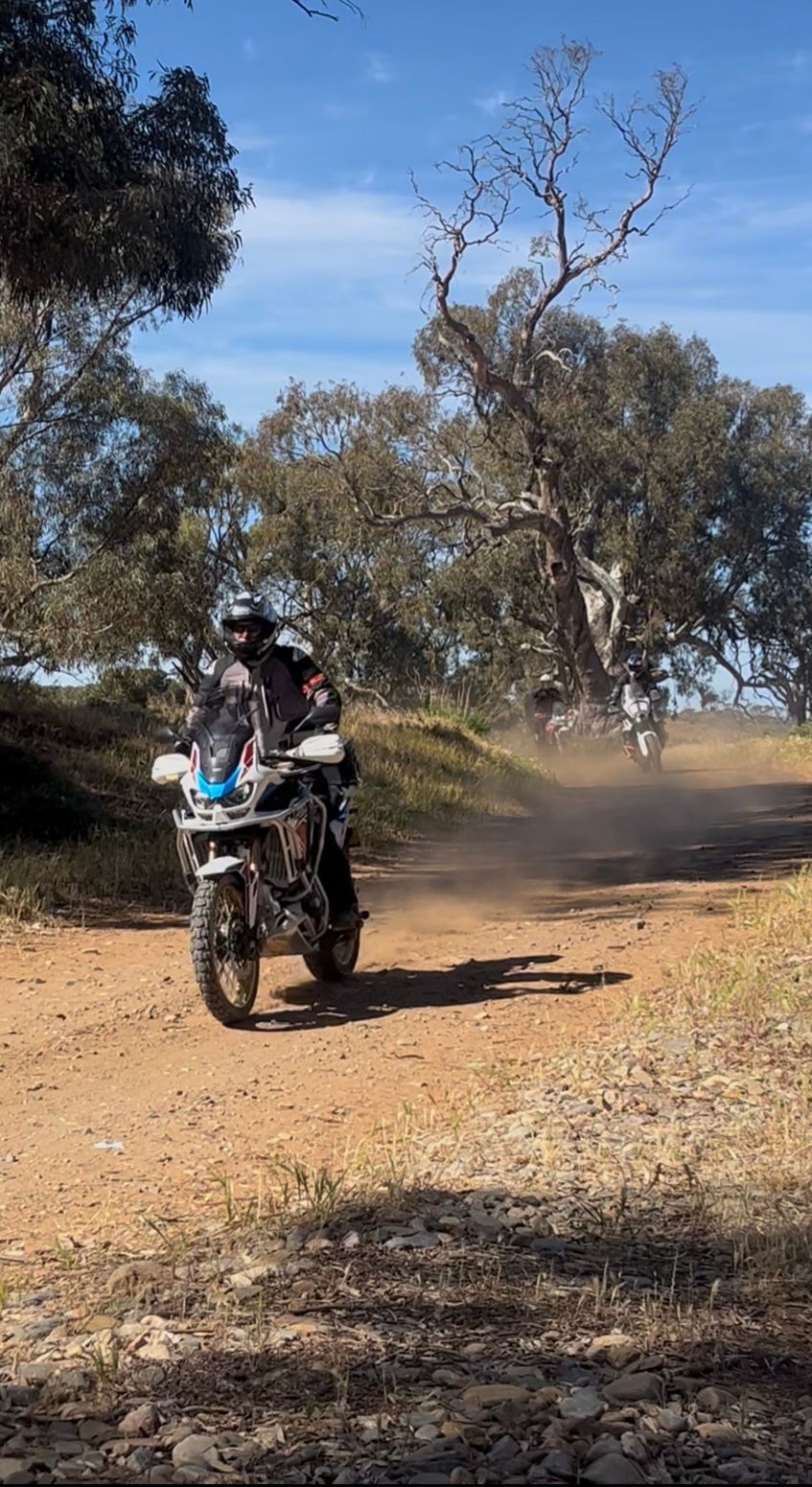
New Paragraph
This is paragraph text. Click it or hit the Manage Text button to change the font, color, size, format, and more. To set up site-wide paragraph and title styles, go to Site Theme.
CFMOTO 450 MT Fork Seal Replacement Guide
How to Change the Fork Seals on the 450 MT Without Losing Your Mind
There comes a point in every adventure bike’s life where the front forks start looking a little… sweaty. For the Desert Dingo this point was around 17k kms.
One minute carving through corrugations like a Dakar support vehicle, and the next there’s an oily ring creeping down the fork leg like a bad workshop omen.
Welcome to fork seal ownership.
If you ride your bike properly — gravel roads, creek crossings, bulldust, potholes, and the occasional “that looked shallower from the saddle” water crossing — fork seals eventually become a consumable item. It’s not necessarily a sign of poor quality. It’s just adventure riding reality.
The good news?
Changing fork seals on the 450 MT is absolutely achievable at home for a mechanically minded rider with some patience, decent tools, and a reasonably clean workspace. And if you’re already paying dealership labour rates that resemble a small mortgage repayment, this is one of those jobs worth learning. All upside down fork seals could be changed following these simple instructions but each brand are slightly different and may require slightly different tools to remove the fork caps.
Why Fork Seals Matter
Fork seals do one very important job:
They keep the fork oil inside the suspension.
That oil controls damping — compression and rebound — which is basically what stops your front suspension behaving like a pogo stick from the Royal Show.
Once a seal starts leaking:
- Fork damping performance drops
- The front end becomes vague
- Brake dive increases
- Oil can contaminate brake rotors
- Your expensive adventure bike starts feeling like a Woolworths shopping trolley
On a bike like the 450 MT, which genuinely encourages riders to leave the bitumen, fork seals live a hard life. Dust, grit, mud, and pressure washing all shorten seal life dramatically.
Common Signs Your Fork Seals Are Failing
Before tearing the bike apart, make sure the seals are actually leaking.
Typical symptoms include:
- Oil streaks down the fork tube
- Wet grime around the dust seal
- Excessive fork dive under braking
- One fork leg looking wetter than the other
- Front suspension feeling inconsistent
- Oil contamination near the brake calliper
Sometimes dirt trapped under the seal lip can mimic a leak. Before replacing seals, try cleaning the seal with a seal cleaning tool or thin film.
If oil returns after cleaning, the seals are done.
Tools You’ll Need
You can technically do this job with improvised tools and determination bordering on recklessness…
…but a few specialist tools make life dramatically easier.
Essential Tools
- 22mm Socket set
- 16mm spanner
- Set of Allen keys
- Torque wrench
- Front stand or lifting method
- Soft jaw vice
- Fork oil measuring jug
- Clean rags
- Brake cleaner
- Small Screwdriver
Specialist Tools (As an affiliate partner, Tenere tales may earn a small commission from qualifying purchases made through links in this article, at no extra cost to you)
Fork spring compressor a fork spring compressor safely compresses the fork spring assembly, allowing controlled removal and installation of the fork cap without damaging components or risking injury. https://amzn.to/4fsHYnn
Fork seal driver makes installing seals square and damage-free instead of “close enough with PVC pipe and swearing.” https://amzn.to/3RLgkIo
Parts Required
You’ll generally want:
- Fork seals
- Dust seals
- Fork oil
- Possibly new retaining clips
Do both fork seals at the same time.
Yes, even if only one is leaking.
Because the second seal will almost certainly fail approximately 14 minutes after you finish the first one.
That’s just motorcycle law.
Workshop Preparation
This is not the job to perform on a gravel driveway during a windstorm while the dog steals your clean rags.
You want:
- Clean workspace
- Bike stable and secure
- Plenty of bench space
- Good lighting
- Patience
Take photos during disassembly if you’re unsure.
Step 1 – Lift the Bike Safely
The front wheel needs to come off the ground.
Options include:
- Front headstock stand
- Centre stand plus jack
- Overhead straps
- Workshop lift
The bike must be secure because you’ll be removing:
- Front wheel
- Brake callipers
- Fork legs
If the bike falls over halfway through the job, your mood will deteriorate rapidly. I used a rear paddock stand and a hydraulic lift under the engine.
Step 2 – Remove Brake Callipers and Front Wheel
Remove:
- Brake callipers
- ABS sensor if required
- Front axle
- Front wheel
- Fork guards
- Front Mudguard
Hang the callipers safely.
Do NOT let them dangle by the brake hoses unless you enjoy replacing brake lines too.
Step 3 – Remove the Fork Legs
Loosen: Fork cap then the following (Very difficult to remove fork caps of the bike without some kind o damage occurring.
- Upper triple clamp bolts
- Lower triple clamp bolts
Slide each fork leg downward carefully.
Take note of:
- Fork height
- Position in clamps
- Clicker settings
A quick photo here saves confusion later.
Step 4 – Drain the Fork Oil
Now the fun begins.
Remove:
- Fork cap (use the fork spring compression tool to compress spring enough to slide the locking plate under the 16mm nut) https://amzn.to/3RLgkIo
- Spring assembly (allow fork oil to run off)
- Spacer components (ensure you arrange all components in the correct order on your bench)
Drain the oil into a container. (I let mine stand overnight)
Pump the fork repeatedly to evacuate as much old oil as possible.
And yes…
The oil will probably resemble old diesel mixed with sadness.
Step 6 – Remove the Dust Seal and Retaining Clip
Use a small screwdriver carefully to pry down the dust seal.
Underneath you’ll find:
- Retaining clip / circlip
Remove it using snap ring pliers.
Don’t launch it across the workshop.
It WILL attempt escape.
Step 7 – Separate the Fork Tubes
Now use the classic slide hammer method.
Pull the inner and outer fork tubes apart sharply until the seal and bushings pop free.
This usually takes:
- Several strong pulls
- Increasing aggression
- One motivational speech
Eventually the fork separates.
Congratulations.
You’re now committed.
Step 8 – Inspect Everything
This is the most important stage.
Inspect:
- Fork tubes
- Bushings
- Bush wear coating
- Scratches
- Corrosion
- Pitting
Any sharp damage on the fork tube will destroy your new seals almost immediately.
Tiny imperfections can sometimes be polished carefully using ultra-fine wet-and-dry paper.
Deep damage?
Different story.
Step 9 – Install the New Fork Seal
Lightly lubricate the new seal with fresh fork oil. You may want to consider protecting the sharp edges of the bushing seat also to prevent potential damage to your new seals on installation.
This matters.
Installing seals dry is one of the quickest ways to ruin them immediately.
Reassemble components in the correct order:
- Bushings
- Washer
- Oil seal
- Retaining clip
- Dust seal
Then drive the seal into place.
Using the Fork Seal Driver
This is where the proper tool earns its keep.
Recommended Tool https://amzn.to/3RLgkIo
A proper driver:
- Seats the seal evenly
- Prevents distortion
- Reduces damage risk
- Makes the job dramatically faster
You’ll hear a distinct change in sound once the seal bottoms into place.
Then reinstall:
- Retaining clip
- Dust seal
Step 10 – Refill with Fork Oil
Now refill the fork with the correct oil. Depending on application and rider weight.
The commonly referenced oil height for the 450 MT is approximately: 90mm Air gap from top with spring removed. This varies depending on desired settings and weight of fork oil used.
Measured from:
- Top of compressed fork tube
- Spring removed
Oil viscosity and level dramatically affect fork feel.
Too much oil:
- Harsh action
- Hydraulic lock risk
Too little:
- Bottoming
- Poor damping
Take your time here. Do some research look at your weight and bike setup one size does not fit all in this case.
Cartridge Bleeding
This catches many first-timers out.
You must slowly pump the cartridge rod repeatedly until:
- Air bubbles stop appearing
- Damping becomes consistent
Rush this process and the forks will feel terrible.
Patience here saves removing everything again later.
Step 11 – Reinstall Spring and Fork Cap
Reinstall:
- Spring
- Spacer
- Fork cap
A spring compressor makes this much easier on USD forks.
Recommended Tool https://amzn.to/3RLgkIo
Without one?
You’ll discover new yoga positions and vocabulary.
Step 12 – Refit Forks to the Bike
Slide the forks back into the clamps.
Torque everything correctly:
- Triple clamp bolts
- Axle
- Brake callipers
Do not “German torque” it.
(“Gutentight.”)
Use actual torque specs.
Step 13 – Final Checks
Before riding:
- Pump forks several times
- Pump front brake lever
- Check for leaks
- Verify axle alignment
- Ensure brakes operate correctly
Then go for a short cautious test ride.
First Ride Impressions
Fresh fork seals and oil often transform the bike more than riders expect.
Typical improvements:
- Smoother small bump compliance
- More controlled braking
- Better steering feel
- Reduced harshness
- Improved confidence off-road
A lot of riders don’t realise how gradually worn fork oil degrades performance until everything feels fresh again. Change out your fork ol at least annually.
Tips to Make Fork Seals Last Longer
Adventure bikes kill seals because dirt is relentless.
A few habits help enormously:
- Wipe fork tubes clean after dirt rides
- Avoid pressure washing directly at seals
- Use fork socks if riding heavy bulldust
- Clean bugs and grit regularly
- Inspect seals after muddy rides
Your seals are basically tiny hydraulic bodyguards.
Treat them kindly.
Is This Job worth doing yourself?
Honestly?
Yes — if:
- You enjoy mechanical work
- You have patience
- You want to learn your bike
- You ride enough to justify the tools
No — if:
- You hate mess
- You’re time poor
- You panic around springs under preload
- You throw tools when annoyed
There’s no shame outsourcing suspension work.
But learning to service your own forks gives you a much deeper understanding of how your bike behaves off-road.
And for adventure riders, that knowledge matters.
Final Thoughts from Gravel Hound
The CFMOTO 450 MT has earned a reputation as one of the best-value adventure bikes on the market because people actually ride them properly.
Not coffee-shop properly.
Adventure properly.
That means creek crossings, bulldust, gravel highways, loaded touring, and enough corrugations to loosen your fillings.
Eventually the fork seals surrender.
That’s not weakness.
That’s proof the bike’s being used the way it was intended.
And once you’ve tackled your first fork seal replacement successfully, you stop looking at suspension as black magic and start seeing it as just another part of keeping your bike ready for its next ride.
From Budget Challenger to Grand Prix Contender?
Why CFMOTO Might Be Building a Long-Term Plan for MotoGP and World Superbikes
There was a time when the words “Chinese motorcycle manufacturer” would trigger the same reaction in a paddock as someone microwaving fish in the workshop kitchen. Suspicion. Nervous glances. Quiet judgement.
Not anymore.
CFMOTO has spent the last few years doing something very clever. Instead of trying to scream “we’re premium now!” through flashy marketing alone, they’ve quietly built credibility step by step. Better engineering. Better styling. Better dealer networks. Better bikes.
Then they started racing seriously.
Now the motorcycle industry is beginning to ask a much bigger question:
Could CFMOTO eventually become a genuine force in Moto GP and World Superbikes?
A few years ago that idea would have sounded ridiculous. Today? It sounds ambitious… but believable.
And that’s the important shift.
Because when you look closely at what CFMOTO has been doing with the Aspar Team program, their expanding racing infrastructure, and especially their recent acquisition of a majority stake in Kalex Engineering, it starts to feel less like random sponsorship and more like a carefully constructed long-term strategy.
And if you’re one of those riders currently punting a CF Moto 450 MT down a dusty South Australian back road thinking “bloody hell this thing is good value,” you might be looking at the early chapters of a much bigger story.
Racing Changes Everything
Motorcycle racing has always been about more than trophies.
It’s engineering.
It’s credibility.
It’s ego.
It’s marketing.
It’s proof.
Winning races changes how the public sees a brand.
Nobody bought a Ducati Panigale because they needed to pick up mulch from Bunnings. They bought it because Ducati built a racing identity over decades. Same with Yamaha. Same with Honda. Same with KTM.
And CFMOTO understands this perfectly.
The company already has a close manufacturing relationship with KTM through joint ventures and production agreements. That relationship gave them access to knowledge, manufacturing standards and global market understanding far quicker than most emerging brands ever achieve.
But eventually every ambitious manufacturer reaches the same crossroads:
Do we remain a value-focused producer…
…or do we become a performance brand?
Racing is how you make that jump.
The Aspar Partnership Was No Accident
One of the smartest things CF MOTO did was avoid trying to enter Grand Prix racing alone.
Instead, they partnered with the hugely respected Aspar Team beginning in 2024 for Moto2 and Moto3 competition.
Now this is where it gets interesting.
Jorge “Aspar” Martinez isn’t some random team owner with a toolbox and a dream. He’s one of the most experienced operators in Grand Prix motorcycle racing. Multiple world championships. Decades in the paddock. Deep political and technical relationships throughout the sport.
If you wanted to learn how Moto GP actually works behind the curtain, Aspar is exactly the kind of partner you’d want.
And the results came quickly.
CF MOTO branding started appearing consistently at the front of Moto 3 grids. Riders like David Alonso delivered victories and championships under the CF MOTO-Aspar banner.
That matters enormously.
Because racing fans are tribal creatures. Once they repeatedly see a brand at the front, perceptions begin changing.
Slowly at first.
Then suddenly.
The same motorcycle enthusiasts who once dismissed Chinese motorcycles entirely are now saying things like:
“Yeah but the 450 MT actually seems pretty solid.”
That’s how reputations shift.
Not overnight.
Not through advertising.
Through repeated exposure and results.
Moto 3 and Moto 2 Are the Perfect Training Ground
Some people underestimate the lower Grand Prix classes.
That’s a mistake.
Moto3 and Moto2 are brutal environments.
They teach manufacturers about:
- rider development
- chassis tuning
- race logistics
- sponsor management
- data acquisition
- engine development
- aerodynamic understanding
- media pressure
- global operations
In many ways, Moto 2 is actually one of the best engineering classrooms in the world.
Which is why the Kalex move matters so much.
The Kalex Acquisition Changes the Conversation
When news broke that CF MOTO had acquired a controlling 51% stake in Kalex Engineering, a lot of people outside racing probably shrugged and moved on.
Inside racing circles?
Different story entirely.
Kalex is not some tiny fringe operation.
Kalex has dominated Moto2 chassis development for years. They are arguably the benchmark chassis manufacturer in the category.
That means CFMOTO didn’t just buy a company.
They bought knowledge.
They bought engineering capability.
They bought decades of racing experience.
They bought some of the smartest chassis minds in motorcycle racing.
And perhaps most importantly…
…they bought legitimacy.
Because suddenly CFMOTO isn’t merely sponsoring a racing team.
They now have a direct connection to one of the most successful technical organisations in Grand Prix racing.
That feels very deliberate.
This Looks Bigger Than Marketing
There’s a major difference between “we want racing exposure” and “we are building racing infrastructure.”
CFMOTO increasingly looks like the second category.
The Aspar partnership gives them operational and paddock expertise.
Kalex gives them engineering depth.
Their KTM relationship gives them access to high-performance powertrain knowledge.
Together, that starts forming the skeleton of something much larger.
Not tomorrow.
Not next season.
But eventually?
Possibly.
And the timing actually makes sense.
Why Moto GP Might Be More Realistic Than People Think
Moto GP is entering a new era.
Costs are enormous.
Technology is changing.
Manufacturers are reassessing involvement.
The 2027 regulations are reshaping the landscape.
This creates opportunity.
Historically, entering Moto GP from scratch was nearly impossible unless you were Honda-level wealthy. But modern Moto GP increasingly rewards partnerships, technical alliances and strategic entry points.
And CF MOTO already has several important puzzle pieces.
The rumours around potential Moto GP ambitions keep surfacing for a reason.
Jorge Martinez himself has acknowledged CF MOTO’s strong interest in eventually reaching Moto GP and World Superbikes, while also stressing it’s a long-term project rather than an immediate 2027 entry.
That actually makes the whole thing sound more credible.
Because manufacturers that rush into premier-class racing usually get absolutely smashed.
Just ask anyone who remembers the early CRT era disasters or manufacturers who underestimated Moto GP’s technical brutality.
Patience is smarter.
And right now CF MOTO seems patient.
World Superbikes May Be the Real Target First
Here’s where things get really interesting.
Moto GP grabs headlines.
But World Superbikes might actually make more strategic sense initially.
Why?
Because World SBK connects directly to production motorcycles.
“Win on Sunday, sell on Monday” still matters there.
And unlike Moto GP prototypes, superbikes actually resemble motorcycles people can buy.
Imagine this scenario:
CF MOTO develops a genuine high-performance superbike platform using knowledge gained from Kalex engineering, KTM relationships and Grand Prix racing programs.
Then they enter World SBK.
Suddenly the company transforms from:
“cheap Chinese alternative”
To:
“serious performance manufacturer.”
That’s a massive branding shift.
And honestly? It feels achievable.
Especially when you look at how rapidly Chinese manufacturing quality has evolved in the past decade.
The Industry Has Changed
A lot of old-school riders still underestimate Chinese manufacturers because they’re mentally stuck in 2009.
But modern Chinese motorcycle companies are not the same businesses they were fifteen years ago.
CF MOTO especially has evolved quickly.
Look at modern bikes like the CF MOTO 450MT or the sports bike platforms emerging globally. These aren’t crude knock-offs anymore.
They’re properly engineered motorcycles.
Are they perfect?
No.
Neither is anybody else’s bike.
Ask any KTM owner about electrical and cam shaft gremlins and watch the thousand-yard stare begin.
The truth is the gap has narrowed dramatically.
And racing accelerates that process even further.
Because racing forces rapid development.
Weaknesses get exposed immediately.
Durability gets tested brutally.
Engineering teams improve faster.
That’s why manufacturers race.
Building Riders, Not Just Bikes
Another fascinating part of the Aspar relationship is rider development.
CFMOTO isn’t simply slapping stickers on motorcycles.
They’re embedding themselves into the racing ecosystem.
That matters.
Because successful racing manufacturers don’t just build motorcycles.
They build pipelines.
Young riders.
Junior programs.
Technical staff.
Engineers.
Data analysts.
Mechanics.
The recent growth of the Aspar Academy and its expansion links into China suggest CF MOTO may be thinking exactly this way.
And that’s a very long-game mindset.
Could They Eventually Buy Their Way Into Moto GP?
Honestly?
Maybe.
Modern motorsport is full of acquisitions, technical partnerships and political manoeuvring.
The paddock rumours about CF MOTO potentially becoming involved with existing KTM Moto GP structures haven’t appeared out of nowhere.
Would they build a completely independent Moto GP effort from scratch?
Probably not initially.
Far more likely would be:
- a technical alliance
- satellite involvement
- engine partnership
- acquisition of existing infrastructure
- rebadged or collaborative platforms
That’s how modern racing increasingly works.
And financially, CF MOTO absolutely has the scale to think globally.
The Biggest Challenge? Perception
Ironically, CF MOTO’s greatest challenge may not be engineering.
It may be convincing traditional motorcycle enthusiasts to emotionally accept a Chinese manufacturer at the top level of racing. The very same issue that faced the Japanese manufactures in the sixties.
Motorcyclists are tribal.
Loyal.
Emotional.
People grow up worshipping Honda.
Ducati.
Yamaha.
Suzuki.
Those brands carry decades of mythology.
CF MOTO doesn’t have that yet.
But racing is exactly how mythology begins.
KTM was once dismissed too.
Now they’re an established racing powerhouse.
History moves quickly in motorcycling.
The Desert Dingo Effect
Adventure riders especially are beginning to experience what could be called the “hang on a minute…” moment with CF MOTO.
A lot of riders climb aboard a modern CF Moto expecting disappointment…
…and instead discover a motorcycle that’s competent, enjoyable and surprisingly refined.
That changes conversations around campfires.
And racing success amplifies those conversations.
Because suddenly the bloke on the 450 MT isn’t riding the “cheap option.”
He’s riding a bike from a company investing in world championship racing programs.
That changes brand psychology enormously.
So Will We See CFMOTO in Moto GP?
Not tomorrow.
Maybe not even this decade.
But the foundations are quietly being laid.
The Aspar partnership.
The Moto2 and Moto3 success.
The Kalex acquisition.
The infrastructure expansion.
The growing global dealer presence.
The performance-bike development.
Individually, each move seems interesting.
Together?
They start looking like strategy.
And perhaps the smartest thing CFMOTO is doing right now is refusing to rush.
Because Grand Prix racing has destroyed plenty of manufacturers who arrived full of confidence and left carrying a smoking wallet and emotional trauma.
Moto GP is savage.
World Superbikes is unforgiving.
But CF MOTO increasingly looks like a company preparing properly rather than simply chasing headlines.
And that alone should make the established manufacturers slightly nervous.
Because whether traditionalists like it or not, motorcycle manufacturing is changing.
The centre of gravity in the industry is shifting.
And somewhere in a modern racing workshop, there’s probably already a whiteboard with three dangerous words written across the top:
“CF MOTO Moto GP Project.”
The old guard might laugh today.
They probably shouldn’t laugh too hard.
And if CFMOTO does eventually roll onto a Moto GP grid, somewhere in pit lane there’ll be an old fat bald bloke in dusty adventure gear muttering, ‘Yeah nah… I should’ve seen this coming back when Barry nearly bought that bloody Himalayan.’
Until next time… keep the shiny side up, the bakery stops frequent, and remember — adventure riding is a lot like romance after fifty… less about outright performance, more about reliability, comfort, and not throwing your back out halfway through.”
A Gravel Hound take on Barry’s dilemma
There comes a point in every adventure rider’s life where they stand in the shed, beer in hand, staring into the middle distance wondering:
“Do I buy the sensible bike… the exciting bike… or the bike that makes me look like I crossed Mongolia even though I mostly ride to bakeries?”
That moment has officially arrived for Barry.
Now to be fair, Barry isn’t looking for a Dakar weapon. He’s looking for a bike that can survive South Australian gravel roads, the occasional rocky climb, a bit of highway punishment, some badly planned “shortcuts” suggested by the Route Commander, and at least three hours of standing around outside country bakeries discussing tyre pressures.
So we’ve narrowed the field to three of the hottest middleweight adventure bikes currently punching on in Australia:
- CFMOTO 450MT
- KTM 390 Adventure R
- Royal Enfield Himalayan 450
And unlike the polished nonsense you’ll read in some motorcycle brochures, this is the straight-talking Gravel Hound version.
No fluff.
No corporate waffle.
No bloke in a white adventure suit pretending he “accidentally discovered a remote village” 14 minutes from a café.
Let’s get into it.
The Spec Sheet Shootout
Bike
Power
Torque
Weight
Fuel Capacity
Seat Height
Wheels
Approx Ride Away Price
CFMOTO 450MT
32.5kW / 44hp
44Nm
175kg dry
17.5L
820mm
21/18 tubed
Around $9,990
KTM 390 Adventure R
45hp
39Nm
176kg wet
14L
870mm
21/18 tubed
Around $11,295
Royal Enfield Himalayan 450
40hp
40Nm
195kg kerb
17L
860mm
21/17 tubeless
Around $10,000–$11,000
Specifications sourced from manufacturer and Australian media launch data.
The CF Moto 450 MT — “The Bloody Good Surprise”
Let’s get this out of the way early.
The CFMOTO 450MT is the bike absolutely nobody expected to be this good.
A few years ago if you turned up to an ADV ride on a CF Moto, blokes would quietly walk over and check whether you’d accidentally parked in the lawn mower section.
Not anymore.
The 450 MT is seriously impressive.
The motor is smooth, punchy and ridiculously friendly. It doesn’t vibrate like an angry jackhammer and it doesn’t feel stressed sitting on highway speeds. That matters in Australia where “just down the road” can mean 300 kilometres and a dead kangaroo.
What really makes the 450 MT shine is balance.
It feels planted off-road without feeling like a drunken water buffalo on bitumen. It’s approachable. Easy to ride. Easy to trust. Easy to recover when Barry inevitably charges into a sandy corner yelling “she’ll be right.”
And unlike some adventure bikes, it doesn’t feel like it’s trying to physically assault you every time the terrain gets rough.
The ergonomics are excellent too.
At 820mm seat height, Barry can actually touch the ground without needing a search and rescue helicopter every time he stops on uneven gravel.
That alone gives it a massive advantage over the KTM.
The suspension is genuinely capable for the money. Not “good for a Chinese bike.” Just… good. Full stop.
Then there’s the price.
At around ten grand ride-away, the thing is frankly absurd value.
Crash bars, decent electronics, switchable ABS, rally styling, proper ADV geometry, big tank, respectable range — all there.
Now the negatives.
Because no bike is perfect.
The bash plate setup is annoying for servicing. Some components still lack the long-term proven durability of Japanese bikes. Dealer networks are improving but still inconsistent depending where you live. And yes, somewhere deep inside every older rider is still a tiny voice whispering:
“But will it explode near Oodnadatta?”
Probably not.
But adventure riders are suspicious creatures by nature. Half the Pack still carries enough tools to rebuild a Sherman tank beside the track.
Still… the 450 MT is probably the smartest all-round package here.
Which feels weird to say.
The KTM 390 Adventure R — “The Hyperactive Labrador”
The KTM 390 Adventure R is what happens when Austrian engineers consume too much caffeine and decide all motorcycles should behave like motocross bikes with registration.
This thing is aggressive.
Tall. Sharp. Focused.
It wants to attack terrain.
The suspension is excellent. The chassis is genuinely impressive. At speed off-road, the KTM feels lighter and more alive than the other two bikes. Properly ridden, it will embarrass much bigger motorcycles.
And that’s the thing.
“Properly ridden.”
The KTM rewards skill.
But if you’re tired, average, middle-aged, carrying camping gear, or built like a retired prop forward who enjoys bakery slices, it can also become exhausting.
That 870mm seat height is not mucking around.
Barry’s not exactly a six-foot-three enduro racer named Sven. He’s a normal bloke who occasionally needs to paddle through rough sections while muttering words unsuitable for children.
The KTM also feels more frantic on-road.
The engine loves revs. It’s exciting. Fun. Energetic.
But over long distances the KTM can feel like a kelpie that hasn’t been walked for three days.
The seat is firmer. Wind protection less forgiving. Overall comfort lower than the CF Moto and Himalayan.
Then we arrive at the elephant in the orange room:
KTM ownership anxiety.
Now before the KTM faithful storm the comments section wearing PowerParts underpants, yes, many KTMs are reliable.
But adventure riders have long memories.
If somebody says:
“My KTM stranded me in the middle of nowhere…”
Nobody even asks follow-up questions anymore.
They just nod respectfully.
Still, if Barry wants the most capable dirt-focused machine of the three — this is it.
No argument.
The KTM is the athlete.
But athletes are sometimes high-maintenance lunatics.
The Royal Enfield Himalayan 450 — “The Tractor With Soul”
The Royal Enfield Himalayan 450 might be the most lovable motorcycle here.
Not fastest.
Not lightest.
Not sharpest.
But lovable.
The old Himalayan was charming in the same way an old farm dog is charming. Loyal. Honest. Slow enough to observe geological change in real time.
The new 450 changes everything.
The liquid-cooled Sherpa engine is massively improved. Proper power now. Smooth delivery. Strong torque. Highway cruising no longer feels like a hostage situation.
And importantly — it still retains character.
The Himalayan doesn’t feel clinical.
It feels mechanical. Human. Real.
There’s something delightfully unpretentious about it.
Nobody buys a Himalayan to impress café crowds.
You buy it because you genuinely want to go somewhere.
The tubeless wheel option is also a massive advantage for adventure touring.
Puncture repairs on tubed tyres out bush are character-building exactly once.
After that they’re just annoying.
The Himalayan also feels incredibly stable and confidence inspiring. The chassis geometry is calm and forgiving. It doesn’t twitch or overreact. It simply lumbers onward like a determined pack mule.
Which is also the downside.
At nearly 195kg wet, it’s noticeably heavier than the others.
And once you start dropping heavier bikes on rough tracks, the romance disappears rapidly.
Especially after the third lift in summer temperatures while your mates stand nearby offering “helpful advice” and filming vertically for social media.
The suspension is good but softer than the KTM. Hard-charging riders may overwhelm it.
But honestly?
Most riders aren’t charging Erzberg qualifiers.
Most are exploring.
And the Himalayan absolutely nails that vibe.
Which Bike Fits Barry Best?
Now this is where things get serious.
Because buying motorcycles emotionally is how blokes end up eating two-minute noodles while staring lovingly at premium anodised footpegs.
So let’s break Barry down properly.
Barry:
- Likes adventure riding but isn’t chasing hard enduro glory
- Wants comfort
- Wants confidence
- Wants reliability
- Wants value
- Wants something capable enough for proper gravel touring
- Occasionally buys tools but guards them like crown jewels
- Is highly capable of talking himself into unnecessary purchases after one test ride
So what should he buy?
If Barry Wants Maximum Dirt Performance
Buy the KTM.
Simple.
The KTM 390 Adventure R is the sharpest weapon here.
Best suspension.
Most aggressive geometry.
Most dirt-oriented feel.
But it demands more from the rider.
It’s the bike equivalent of adopting a Border Collie.
Wonderful if you have energy.
Potentially exhausting if you don’t.
If Barry Wants Character and Simplicity
Buy the Himalayan.
The Royal Enfield Himalayan 450 has genuine charm.
Tubeless wheels are brilliant.
Comfort is excellent.
The engine finally has enough power.
It feels honest.
And honestly, there’s something cool about riding a bike that doesn’t feel obsessed with lap times and YouTube influencers.
It’s the adventure bike for riders who actually stop and look around occasionally.
But If Barry Wants The Best Overall Package…
It’s the CF Moto.
Yep.
I said it.
The CFMOTO 450MT currently hits the sweet spot better than anything else in this category.
It’s comfortable.
Capable.
Affordable.
Friendly.
Well-equipped.
Balanced.
And perhaps most importantly…
It makes adventure riding feel easy.
That matters.
Because the older we get, the less interested we become in motorcycles that constantly try to prove something.
These days most riders just want:
- good mates
- good roads
- reliable bikes
- decent coffee
- and enough suspension travel to survive whatever terrible shortcut the Route Commander has discovered.
The 450 MT absolutely delivers that.
So unless Barry suddenly develops ambitions of racing Dakar qualifiers through the Flinders Ranges…
The smart money says buy the CF Moto.
Then spend the leftover cash on fuel, camping gear, bakery stops and tyres.
Because that’s where the real adventure lives anyway.
Living With the Desert Dingo (CF Moto 450 MT)
By The Gravel Hound
The Decision That Started It All
Went out for breakfast with the Route Commander—just another casual catch-up, the kind that usually ends with a coffee, a laugh, and a loose plan for the next ride.
Instead, we ended up in a bike shop.
Now, I should know better by this point in life. Walking into a motorcycle shop with another bloke who knows exactly how to push the right buttons is never going to end in a quiet day.
Somewhere between looking, talking, and justifying, I made the call to sideline the old Blue Mule—my trusty Yamaha XT660Z Ténéré—and bring something new into the shed.
The reasoning made sense.
With the Tasmania Tour coming up, reliability was front of mind. The Blue Mule had been a loyal servant, but maybe it was time to step into something a bit more modern… something that wouldn’t have me lying awake the night before departure wondering what might fall off next.
Fair call.
But I’ll be honest—I wasn’t expecting much.
I figured I’d end up with something a bit rough around the edges… underpowered… maybe even a little soulless. One of those bikes that ticks the boxes on paper but leaves you cold once you’re actually riding it.
What I got instead was the Desert Dingo.
A great-looking, great-sounding, smooth twin-cylinder adventure bike that feels properly balanced and just gets on with the job. No drama, no fuss—just ride.
Now, 16,000 kilometres later—after a full lap of Tasmania, countless South Australian runs, and even a stretch over into Victoria—I reckon I’ve got a pretty solid handle on what this bike is really about.
And this isn’t a spec sheet review.
This is what it’s actually like to live with it.
🟧 First Impressions – More Than Expected
First impressions? It looks the part straight away.
Crash bars fitted, off-road tyres on—it immediately gave off the vibe of a smaller, more manageable version of the Yamaha Ténéré 700.
But the real surprise wasn’t visual—it was mechanical.
I was expecting something a bit agricultural. Instead, the motor is smooth, torquey, and genuinely enjoyable. There’s a nice, understated note from the stock exhaust—not loud or obnoxious, just enough to remind you you’re riding something with character.
It feels refined in a way I wasn’t expecting.
That said, it’s not perfect.
The high beam switch—very similar to the setup on the KTM 390 Adventure—is, quite frankly, a pain. You’re forever brushing it with your fingers and suddenly realising you’ve been lighting up the countryside like you’re leading a convoy through the outback.
It’s a small thing—but one you notice often.
🟧 On the Road – Honest and Comfortable
Out on the open road, particularly at South Australian highway speeds, the Desert Dingo feels like it’s working right on the edge of its comfort zone with the stock gearing.
Not struggling—but definitely aware of what’s being asked of it.
The engine itself is ultra-smooth, and if you give it a bit of encouragement, it can actually be a lot of fun. It’s not going to tear your arms off—at around 44 horsepower, it was never meant to—but it delivers power cleanly and predictably.
Overtaking requires a downshift to get things moving, but that’s just part of riding a bike in this class. Ride it properly, and it rewards you.
Where it really stands out on the road is comfort.
The seat is excellent. Long days in the saddle came and went without any fatigue or soreness—something a lot of bikes, even far more expensive ones, struggle to get right.
It’s the kind of bike you can spend all day on without thinking about it.
🟧 Off Road – Where It Comes Into Its Own
Take it off the blacktop, and the Desert Dingo starts to make a lot more sense.
It feels planted. Predictable. Confidence-inspiring.
The geometry, combined with the seat and rider position, allows for easy weight transfer—particularly getting your weight back when needed. For my stature and riding style, it just works. Standing on the pegs feels natural, not forced.
On gravel roads and general off-road terrain, it’s more than capable of being properly hustled along. You can carry decent pace, pick your lines, and the bike just follows through without complaint.
But—and it’s an important but—push it into rougher terrain, and the limitations start to show.
Hit a series of whoops or larger holes at speed, and the stock suspension reminds you pretty quickly what this bike is—and what it isn’t.
It’s not a motocross bike.
It’s not a hard enduro weapon.
Push it into that territory and it will let you know.
Stay within its intended purpose, though, and it absolutely shines.
🟧 The Mods – Making It My Own
Like most bikes that come through my shed, the Desert Dingo didn’t stay stock for long.
First to go were the passenger foot pegs, replaced with a custom exhaust bracket. Part aesthetics, part minor weight saving—but mainly because I simply don’t carry passengers.
Next was the radiator guard. The stock plastic unit didn’t inspire confidence, so I replaced it with an aluminium guard. Given my tendency to ride a little too close to the bloke in front—especially when filming—it was a necessary upgrade.
Air filtration was another priority. A foam air filter and pre-filter setup provide peace of mind in dusty South Australian conditions.
I also added a Carpuride W502 system, which has been a game changer. I use GAIA GPS for navigation, but I also rely on my phone as a GoPro remote. Constantly switching between the two was frustrating—this solved it cleanly.
Finally, I swapped the front sprocket from 14T to 15T. A simple change that helped settle things down on the highway.
Would I do these mods again?
Every single one—without hesitation.
🟧 The Annoyances – Because No Bike Is Perfect
No bike is perfect, and the Desert Dingo has its share of quirks.
The biggest one is the bash plate design.
Accessing the oil filter and drain requires dealing with the crash bars and removing the entire plate. It’s clumsy, unnecessary, and something that could have been easily improved at the design stage.
On top of that, the alignment between the bash plate and crash bar mounting points hasn’t been great from day one. This isn’t damage-related—it’s been like that since new.
The air filter and pre-filter installation also feels more fiddly than it needs to be.
Another minor annoyance—when you stop off-road and restart the bike, it defaults back to traction control and full ABS. Not a deal-breaker, but something you find yourself resetting more often than you’d like.
🟧 Ownership Reality – The Practical Side
From an ownership perspective, the Desert Dingo has been refreshingly straightforward.
Fuel consumption sits at around 4L/100km in real-world riding, giving solid range and keeping running costs low.
Servicing has been simple, aside from the bash plate frustration, and the bike itself is generally easy to work on.
It’s not a high-maintenance machine—and that’s a big part of its appeal.
🟧 Who This Bike Is REALLY For
This bike knows exactly what it is—and more importantly, what it isn’t.
It’s for riders who want a capable, balanced adventure bike that just gets on with the job without needing to throw wads of cash at it.
It’s for:
- Real-world riders
- Adventure tourers
- Riders who value balance over brute force
It’s not for:
- Hard enduro riders
- Motocross-style aggression
- Long, high-speed highway slogs
And perhaps most importantly…
It’s for riders willing to leave their ego behind and just enjoy the ride.
🟧 The Verdict – Earned Its Place
Would I buy another one?
In a heartbeat.
In fact, I’ve already made the decision—I’ll likely replace it toward the end of the year. If an updated model lands, I’ll be lining up early.
It has well and truly earned its place in the shed.
This bike consistently delivers exactly what adventure touring should be about:
Big smiles… and no poo in pants moments.
If I was a bit fitter and looking to push it harder, I’d consider adding a steering damper—it has shown, on occasion, that it could develop a decent head shake if really pushed.
The front brake could also use a bit more feel, although it performs perfectly well. That’s likely more a reflection of the other bikes in the shed running high-end Brembo setups.
At the end of the day, the Desert Dingo isn’t trying to be everything.
It just does what it’s built to do—really, really well.
Riding with Purpose
Supporting Blood Bikes Australia and the Eye Bank of South Australia
There are rides you remember for the scenery.
There are rides you remember for the laughs.
And then there are the rides that quietly matter more than anything else.
This is one of those.
More Than Just a Ride
Most of us got into motorcycling for the same reasons—freedom, adventure, a bit of dust in the air and a story at the end of it. But every now and then, the bike becomes something else entirely.
Through my involvement with Blood Bikes Australia, I’ve had the chance to use the same skills we all take for granted—planning routes, riding in all conditions, turning up on time—and apply them to something far bigger than a weekend ride.
In South Australia, Blood Bikes currently supports the Eye Bank of South Australia.
And what they do is nothing short of remarkable.
Restoring Sight — One Delivery at a Time
The Eye Bank operates behind the scenes, but its impact is life-changing.
When someone donates their corneal tissue, it sets off a carefully managed process. That tissue is recovered, assessed, preserved, and prepared for transplant surgery. Timing, handling, and logistics are critical—there’s no room for delay, and no margin for error.
For the recipient, it can mean something most of us never think twice about… the ability to see again.
That’s where Blood Bikes comes in.
The Missing Link in the Chain
Getting that tissue from point A to point B isn’t just a delivery—it’s a mission.
Blood Bikes Australia is part of a long-standing international tradition, originally developed to move urgent medical items between hospitals quickly, safely, and at no cost to the healthcare system. It’s a simple idea… but an incredibly powerful one.
Volunteer riders step in where time matters.
No sirens.
No fuss.
Just reliable, committed people getting the job done.
It’s the kind of work that doesn’t make headlines—but without it, the system doesn’t function as smoothly as it should.
Why It Matters
We often talk about “giving back” as riders. This is exactly what that looks like.
It’s not about heroics.
It’s not about recognition.
It’s about being dependable when it counts.
Every completed run supports a process that can restore someone’s independence, their confidence, and their quality of life. That’s a powerful thing to be part of.
And the best part? The skills required are the same ones most riders already have.
Could You Be Part of It?
If you’re a rider, especially one who enjoys a bit of purpose behind the handlebars, this is worth a serious look.
Blood Bikes Australia relies on volunteers—people who are:
- Reliable
- Calm under pressure
- Comfortable riding in varied conditions
- Keen to contribute to something bigger than themselves
You don’t need to be the fastest rider in the group.
You don’t need the newest bike.
You just need the right attitude.
A Call to Service Providers
There’s another side to this as well.
If you’re part of a medical, pathology, or healthcare organisation and you require the transport of urgent items—blood, tissue, samples, or equipment—services like Blood Bikes Australia can provide a reliable, community-driven solution.
Importantly, Blood Bikes Australia operates as a community-based, not-for-profit service. Any organisation looking to engage their support must align with that model—focused on community benefit rather than commercial gain.
It’s a model built on trust, professionalism, and a shared goal of improving outcomes without adding cost pressures to the system.
Final Thoughts from the Saddle
We spend a lot of time chasing the next ride—the next track, the next trip, the next story.
But every now and then, it’s worth taking a step back and asking a simple question:
What if the ride could mean more?
For me, this is one of those answers.
Sometimes the most important rides aren’t about the destination…
they’re about helping someone else get theirs.
If you’d like to learn more, get involved, or explore how your organisation could benefit from the service, reach out to Blood Bikes Australia www.bloodbikesaustralia.com.au and start the conversation.
Because this is one ride that truly matters.
Adventure Touring Done Right
Why Most Riders Get It Wrong (And How to Fix It)
Last week we talked about the shift—from Adventure Riding to Adventure Touring. That quiet realisation that maybe… just maybe… the best rides aren’t the ones that nearly kill you. But here’s the problem. Most riders make the shift…Without actually changing how they ride. They still plan like they’re chasing a single hard track. They still ride like they’re trying to prove something. And by the end of the day? They’re cooked. Frustrated. And wondering why it didn’t feel as good as it should have. Because Adventure Touring isn’t just a mindset shift. It’s a system. And once you understand that system… everything changes.
The Biggest Mistake Riders Make
Let’s call it out straight. Most riders plan a ride like this:
- Pick a destination
- Draw the shortest or most “interesting” line
- Add a few dirt sections
- Hope for the best
Sounds familiar? The issue is… that’s not a ride plan. That’s a gamble. Adventure Touring isn’t about just getting there. It’s about how the entire day flows.
The 5 Pillars of a Great Adventure Touring Ride
Over time, whether you realise it or not, every great ride you’ve done ticks these five boxes. Miss one—and the whole day starts to unravel.
1. Distance That Matches the Rider (Not the Ego)
We’ve all done it. Planned a 500 km day thinking, “Yeah… that’s doable.” Technically? Sure. Enjoyable? Different story. The sweet spot for most riders—especially loaded ADV bikes—is:
- 300–450 km per day
- Enough to feel like an adventure
- Not so much that you’re racing the clock
Anything beyond that… and you’re not touring anymore. You’re just surviving again.
2. Terrain Flow over Technical Difficulty
Here’s where a lot of riders get it wrong. They chase difficulty instead of flow. One brutal 20 km section can drain more energy than 200 km of good gravel. Great Adventure Touring rides are built on:
- Flowing dirt roads
- Manageable technical sections (in short bursts)
- Terrain that lets you ride, not wrestle
Because the goal isn’t to conquer the track. It’s to stay in the ride.
3. Fuel Strategy = Freedom
Nothing changes your mindset faster than watching your fuel range drop… with nothing ahead but scrub. I personally have a range of roughly 400km that’s solid. But Adventure Touring thinking says:
- Plan fuel stops at 250–300 km intervals
- Always have a Plan B servo
- Treat fuel like a timeline marker, not a panic point
When fuel is sorted? Your head clears. And the ride opens up.
4. Stops Aren’t Delays—they’re Part of the Ride
This one took me a while. Old mindset: “Let’s push through and make time.”
New mindset: “Where’s the next good stop?”
Because let’s be honest…
- The bakery
- That servo coffee that somehow tastes elite
- Standing around taking the piss out of each other
That is the ride. If your plan doesn’t include stops worth looking forward to… You’re missing half the experience.
5. Ride Pace That Brings Everyone Home Smiling
This is the big one. Adventure riding pace often splits groups. Adventure touring pace builds them. You start to:
- Wait at turns without being asked
- Ride to the slowest rider—not the fastest
- Keep the group tight and relaxed
Because no one remembers who was fastest. But everyone remembers:
- Who got left behind
- Who helped out
- And who made it a good day
The Hidden Factor: Energy Management
Here’s something no one talks about enough. Adventure Touring is less about fuel in the tank…And more about fuel in you. Every decision you make affects it:
- Hard terrain drains it
- Poor pacing kills it
- Skipping breaks wrecks it
Get it right? You finish the day thinking: “I could do that all again tomorrow.” Get it wrong? You’re reaching for painkillers and questioning your life choices.
A Simple Way to Build a Better Ride
Next time you plan a ride, try this: Instead of asking: “What tracks do I want to ride?” Ask: “What kind of day do I want to have?” Then build around that:
- Distance → realistic
- Terrain → flowing
- Fuel → predictable
- Stops → enjoyable
- Pace → sustainable
Do that… and something clicks.
The Gravel Hound Reality Check
Here’s the truth. Adventure Touring isn’t softer. It’s smarter. It’s what lets you:
- Ride further
- Ride more often
- And actually enjoy the places you’ve ridden to
And maybe that’s the biggest shift of all. You stop chasing the hardest ride… And start chasing the best one.
What Comes Next In the next article, we’ll get into the nuts and bolts:
- How to plan a full day route (step-by-step)
- Using GPX files properly (and avoiding common mistakes)
- Real-world fuel mapping
- And how to build rides that always deliver
Because once you understand how to plan it properly…You’re no longer guessing. You’re building rides that work. Every time.
Ride Further. Ride Smarter. Ride Together.
– The Gravel Hound
Adventure Touring vs Adventure Riding
The Shift Every Rider Eventually Makes
A group of us were sat around at the bakery during a recent ride and Paul coined a phrase that really hit home to me, “what we do isn’t really adventure riding its adventure touring” well that got me thinking he’s right and he’s onto something here! I reckon there comes a point in every rider’s journey where something changes. It’s not dramatic. There’s no big announcement. No sudden decision to hang up the helmet or slow things down. It’s much quieter than that. You just start looking at a ride differently. Where once the goal was the hardest track, the deepest rut, or the steepest climb… now for me it’s something else. Something a bit harder to explain—but a lot easier to feel.
The Early Days – Chasing the Challenge
Most of us start out the same way. Riding is all about the test. The challenge. The story you can tell at the end of it. You want to be the fastest, you pick the roughest line. You aim for the unknown. You measure the day by how many times you nearly lost it—and how good it felt when you didn’t. And there’s absolutely nothing wrong with that. In fact, it’s essential, especially in the early days that phase teaches you how to ride. How to read terrain. How to trust yourself when things get a bit loose under the tyres. It builds the confidence that every good rider carries for life. But it also comes with a cost.
You finish rides exhausted—especially for those of us on the wrong side of 50, but truthfully it catches up with everyone eventually. Sore, a bit battered, sometimes even frustrated. And when you look back on the day, you realise most of your energy went into surviving the track… rather than actually taking in where you were or enjoying the ride itself.
The Moment It Changes
I never really realised when the shift happened. Maybe it was denial—getting older and not wanting to admit it. Arrogance and ignorance. Somewhere along the journey, we’ve matured. The rides don’t really involve much technical, difficult stuff anymore. It’s not about picking our way through the nastiest terrain we can find. It’s about a group of mates heading out, getting away from the traffic, and having a good time… Usually on bikes that are a bit overpowered… and definitely a bit overweight for what we’re doing. And you know what? That doesn’t feel like a downgrade. If anything—it feels like we’ve finally figured it out.
What Is Adventure Touring?
Adventure Touring isn’t about riding less. It’s about riding further, smarter, and with more purpose. It’s the difference between:
- Conquering a track
- And connecting a journey
Where Adventure Riding asks:
“Can I get through this?”
Adventure Touring asks:
“How far can I go today… and still want to do it again tomorrow?”
It’s not easier. It’s just different. You’re thinking about fuel range. Comfort. Route flow. Where the next stop is. Who you’re riding with. How the day fits together—not just the next kilometre. And strangely enough, that brings a whole new level of satisfaction and camaraderie which is so often missing from our modern daily lives.
The Bike Doesn’t Change—But the Setup Does
You’ll notice it first in how you prepare. The bike might be the same, but the setup starts to evolve. You begin to value:
- A comfortable seat over a lighter one
- Fuel range over outright aggression
- Tyres that last the distance, not just grip the moment
You carry a bit more—but with intention. Tools you actually need. Water you’ll definitely use. Maybe even a decent jacket instead of “she’ll be right.” It’s not about being soft. It’s about being ready.
The Real Difference Is Mindset
At its core, this isn’t about bikes or gear. It’s about mindset. Adventure Riding is often about proving something—usually to yourself. Adventure Touring is about experiencing something—and making it last. You start to:
- Ride at a pace that keeps the group together
- Choose routes that offer variety, not just difficulty
- Appreciate the stops as much as the stretches
And perhaps most importantly… You start to realise that the best rides aren’t always the hardest ones. They’re the ones you’d happily do again next weekend.
Not One or the Other
Here’s the thing—this isn’t a choice between two sides. You don’t “quit” Adventure Riding. You just add another layer to it. There will always be days for pushing limits. For tackling that track you’ve been eyeing off. For testing yourself and the bike. But there will also be days where the goal is simple: Ride out. Ride far. Ride well. Come back with a story worth telling. And more often than not… those are the rides that stay with you.
The Gravel Hound Way
If there’s one thing I’ve learned, it’s this:
Adventure Riding is about the moment. Adventure Touring is about the journey. And the longer you ride, the more that journey starts to matter. Not because you’ve slowed down…But because you’ve figured out what makes a ride truly great.
What Comes Next
This is just the start.
In the next article, we’ll break down what actually makes a great Adventure Touring ride—from distance and pacing to fuel strategy, route planning, and why most riders get it wrong. Because going further isn’t about luck. It’s about understanding the system. And once you do…The whole map opens up.
Ride Further. Ride Smarter. Ride Together.
Sena 50S Review
Simple, Powerful, and a Genuine Game Changer for Group Riding
If you spend any amount of time riding with other people, good communication makes a massive difference. It is not just about having a chat while you ride. It is about calling out hazards, managing turns, keeping the group together, and making the whole ride feel more connected and more enjoyable.
Over the years I have seen plenty of motorcycle comms systems that promise the world but end up delivering frustration. Too many are fiddly to set up, unreliable once you are moving, or packed with features that sound impressive until you actually try to use them with gloves on at the side of the road.
The Sena 50S feels different.
This is a comms system that feels like it was designed by people who understand what riders actually want. Simple controls, strong audio quality, and most importantly, a Mesh intercom system that makes group communication ridiculously easy.
First Impressions
From the moment you take the Sena 50S out of the box, it gives off the feeling of being a quality bit of gear. It feels solid, well made, and properly thought through. Once mounted to the helmet, it looks neat and purposeful without feeling bulky or awkward.
The controls are easy to understand, and the well-known Sena jog dial is a standout straight away. On a motorcycle, especially with gloves on, simplicity matters. Tiny buttons and complicated menu systems are not your friend when you are stopped at a fuel station or trying to make a quick adjustment on the fly.
The 50S gets this right.
The Mesh Feature Is the Real Star
Let’s get straight to the biggest selling point of the Sena 50S, because this is the feature that really hypes this unit above a lot of other systems on the market.
The Mesh intercom is brilliant.
And more than that, it is simple.
That simplicity is what makes it such a powerful feature. Traditional Bluetooth group pairing can sometimes feel like you need a degree in electronics just to get everyone talking. Someone drops out, somebody turns their unit off, someone reconnects in the wrong order, and before you know it the whole group is standing around in the dirt scratching their heads instead of riding.
With the Sena 50S Mesh system, it is a completely different experience.
You switch it on, hit the Mesh button, and you are in. That is the beauty of it. There is no drama, no mucking around, and no wasting half the morning trying to reconnect the group. It just works.
For group rides, that is a genuine game changer.
If one rider drops back, loses range, or stops for a moment, the system handles it smoothly. When they come back into range, they reconnect automatically. That means less stress, less interruption, and more time actually enjoying the ride.
For adventure riders, touring riders, and anyone who regularly heads out with mates, this is a massive plus.
Group Riding Becomes Better in Every Way
The reason the Mesh function is so good is because it improves the ride in ways that go beyond simple conversation.
You can warn the group about potholes, washouts, gravel patches, wildlife, or oncoming traffic issues. You can let people know when to turn. You can tell the bloke at the back that the bakery stop is coming up. And yes, you can also enjoy the banter that makes a good ride even better.
That is where the Sena 50S really starts to shine.
It makes the whole riding experience feel smoother, more connected, and far more enjoyable. Instead of fighting the technology, you forget about it and get on with the day.
That is exactly what good gear should do.
Sound Quality That Actually Impresses
A comms system can have all the clever features in the world, but if the sound quality is poor, it is going to let you down. Thankfully, the Sena 50S performs very strongly here as well.
Voice communication comes through clearly and cleanly. Conversations are easy to follow, and instructions are not lost in a mess of muffled sound or distortion. Even at road speeds, the clarity is impressive.
Music playback is also surprisingly good. No, it is not going to replace a premium home audio system, but for a motorcycle headset, it sounds excellent. GPS directions are also crisp and easy to hear, which matters when you are trying to follow a route without constantly glancing down at a screen.
For riders who want one unit to handle group communication, navigation prompts, and music, the 50S does the job very well.
Easy to Use in the Real World
One of the best things about the Sena 50S is that it does not feel overcomplicated. That matters more than ever once you are actually riding.
The jog dial is easy to find, easy to operate with gloves, and easy to get used to. Within a short time, the controls become second nature. That is a massive win because motorcycle gear should never feel like hard work.
The Mesh button also deserves praise because it takes what could be a technically complicated feature and makes it almost effortless. That is the difference between a feature that sounds good on paper and one that riders genuinely use every ride.
The Sena 50S sits firmly in the second category.
Battery Life and Reliability
A comms system only becomes useful if you trust it to keep working throughout the day. The 50S has a strong reputation for reliability, and in practical use it feels like a unit you can depend on.
Battery life is strong enough for a full day’s ride, which is exactly what most riders need. Whether you are out on a weekend blast, an all-day backroads loop, or a longer adventure ride, the system has the stamina to keep up.
That reliability is important. Nobody wants a comms unit that starts playing up halfway through the day. With the Sena 50S, the overall impression is one of confidence. It feels dependable, and that counts for a lot.
Build Quality and Overall Feel
The 50S feels like a premium product. The fit and finish are excellent, the hardware feels durable, and the overall user experience reflects that extra quality.
That does not mean it is complicated or overly flashy. In fact, one of its strengths is that it manages to feel premium without becoming fussy. It keeps the focus on what matters — communication, ease of use, and a better riding experience.
That is the sort of quality riders appreciate over time.
Final Thoughts
The Sena 50S is one of those products that quickly proves its value once you start using it properly. It is not just another motorcycle gadget. It is a tool that genuinely improves the ride.
The Mesh intercom system is the standout feature and the main reason this unit is so easy to recommend. It takes what used to be one of the most frustrating parts of group riding communication and turns it into something simple, quick, and reliable.
That simplicity is what makes it so impressive.
You do not need to be a tech wizard. You do not need to spend ages pairing units and reconnecting riders. You just turn it on, join the Mesh, and get on with the ride.
Add in strong sound quality, easy controls, solid battery life, and a premium overall feel, and the Sena 50S becomes a seriously impressive package.
For anyone who rides with friends, tours regularly, or wants a comms unit that delivers quality without unnecessary hassle, this is a very strong option.
Verdict
The Sena 50S gets a big thumbs up from me.
It is easy to use, built well, sounds great, and most importantly, the Mesh system is an absolute standout. For group riding, it makes life easier and the whole experience better.
Sometimes a product promises to simplify things and does the exact opposite.
The Sena 50S actually delivers.
If you want to grab one, I’ve dropped an affiliate link below—I only recommend gear I rate, and it helps support the channel at no extra cost to you.
Affiliate Disclosure
This article may contain affiliate links. If you purchase through those links, it helps support the website and channel at no extra cost to you. I only recommend products that I genuinely rate and believe are worth a look.
Gravel Hound Review:
Carpuride W502 – Budget Tech That Actually Delivers
There’s a moment on every ride when you realise… maybe you’re not as young, sharp, or directionally gifted as you once were. That moment usually comes somewhere between “I know this track” and “why am I in a paddock?”
Enter the less than $250 Carpuride W502 Motorcycle GPS Wireless Portable Car Play Android Auto — a low-cost bit of kit that, quite frankly, has no right being as good as it is.
🐺 First Impressions – Simple, Solid, No Fuss
Straight out of the box, this thing screams practicality over polish—and that’s not a bad thing. You’re not buying jewellery here… you’re buying something that’s going to sit on your bars, get dusted, rattled, maybe even drowned, and just keep doing its job.
The 5” screen is bright, clear, and actually readable in proper Aussie sunlight—not that weak, washed-out nonsense you sometimes get with budget gear.
🔧 Installation – Even a Gravel Hound Could Do It
Now this is where I was genuinely impressed.
No overcomplicated wiring nightmares. No “refer to page 47 of the manual” nonsense.
Mount it. Power it. Pair your phone. Done.
I had it up and running quicker than it takes Paul to order a bacon and egg roll.
- Mount feels solid
- Wiring is straightforward
- Bluetooth pairing was painless
- Car Play fired up without drama
For something at this price point, that’s a massive win.
📱 On the Ride – Where It Actually Matters
This is where the W502 earns its keep.
Running Apple Car Play / Android Auto means:
- Proper navigation (Google Maps, Waze etc.)
- Music control without fumbling
- Calls if you’re that way inclined
And the real kicker? You don’t have to mount your phone out in the elements. Your expensive phone stays safe in your pocket while this unit takes the beating.
On rough gravel, it held steady. No bouncing, no losing connection, no tantrums.
⚠️ Honest Gravel Hound Moment (a.k.a. user error…)
Now… let’s address the elephant in the shed.
Twice… yes, TWICE… I’ve flattened my bike battery.
Not because of the unit.
Because I was too stupid to remember to turn the thing off after a long ride.
That’s on me.
So learn from the Gravel Hound:
👉 Either wire it to ignition or build the habit… because it will keep drawing power if you leave it on.
💰 Value for Money – This Is the Big One
This is where the Carpuride punches way above its weight.
For a relatively low-cost solution, you’re getting:
- A clear, usable screen
- Reliable connectivity
- Proper navigation integration
- A rugged enough unit for ADV use
I’ve used gear that costs three times as much that doesn’t feel three times better.
🔗 Affiliate Link (Support the Pack)
If you’re thinking about grabbing one, heres an affiliate link. https://amzn.to/4cDvY0y
It won’t cost you a cent extra, but it helps support the Gravel Hound adventures and keeps the wheels turning.
🐾 Final Verdict
This isn’t a flashy, high-end bit of boutique gear.
It’s better than that.
It’s:
- Practical
- Affordable
- Easy to install
- Reliable on the ride
And for what we do—Adventure Touring (let’s call it what it is these days)—it just makes life easier.
🐺 Gravel Hound Score:
9 / 10 – “Bloody good bit of kit… just don’t forget to turn it off, you muppet.”
Why Women Might Be Avoiding Adventure Riding
(And What Blokes Might Be Getting Wrong)
Last week here at Gravel Hound HQ, we tried a little experiment.
We put out a questionnaire asking for feedback from women who ride — particularly those interested in adventure riding. The goal was simple: learn what might encourage more women to get involved in gravel riding, long-distance touring, and exploring the backroads.
We asked about things like confidence, training, bike size, riding groups, and what might make adventure riding more appealing.
The response?
Nothing.
Not one reply.
Now that could mean a few things.
Maybe the post didn’t reach the right people.
Maybe surveys are boring.
Or maybe — just maybe —
we blokes are missing something about how the adventure riding world actually looks from the outside.
So instead of waiting for answers, let's explore a few possibilities.
The Big Bike Problem
Adventure bikes have become… well… massive.
What started as lightweight dual-sport machines has turned into a fleet of 250-kg expedition trucks with handlebars.
Africa Twins, GS’s, big Teneres — brilliant bikes, but they can be intimidating even for experienced riders.
For someone new to the scene, the message can unintentionally sound like:
"You need a giant motorcycle and a set of aluminium panniers before you're allowed to join the adventure."
Which of course isn't true.
Some of the best adventure rides ever done have been on small bikes, light bikes, or whatever happened to be in the shed.
The “Boys Club” Look
Adventure riding doesn’t deliberately exclude women.
But from the outside, it can sometimes look like a boys club.
Think about the typical photos from rides:
A group of dusty middle-aged blokes standing around in adventure jackets debating tyre pressures and telling heroic stories about that corner they definitely didn’t almost crash on.
Again — guilty as charged.
For someone new looking in, it can feel like walking into a room where everyone already knows each other.
Confidence Comes From Community
Many riders start adventure riding because a friend drags them along.
“Come on, it’s only a gravel road.”
“Don’t worry, we’ll stop if you fall over.”
“Worst case scenario we’ll all laugh and pick the bike up.”
That support network makes a huge difference.
Without it, adventure riding can look like a pretty intimidating hobby to try alone.
The Skills Gap Myth
One thing worth saying clearly:
Many of the best technical riders out there are women.
You only have to watch women competing in enduro, motocross, or rally to see that skill isn’t the issue.
The real barrier may be getting that first entry point into the community.
Once someone is riding, confidence grows quickly.
What Blokes Might Be Getting Wrong
Sometimes the biggest barrier isn’t equipment or skill.
Its culture and perception.
A few things we might need to think about:
• Are we welcoming new riders, or unintentionally intimidating them?
• Do group rides cater for beginners, or only experienced riders?
• Do we encourage smaller bikes and learning at your own pace?
• Do we make space for people to join without already knowing everyone?
Adventure riding should feel like an open invitation, not an elite club.
The Reality of Adventure Riding
The truth is that most adventure rides look like this:
• Riding scenic backroads
• Stopping for coffee
• Taking photos of bikes with nice views behind them
• Getting lost occasionally
• Debating which road looks more interesting
It’s hardly extreme sport.
The real skill of adventure riding is simply being curious enough to explore the next road.
Let’s Ask the Question Again
So let’s try this again — but this time without a questionnaire.
If you’re a woman who rides, or someone who has thought about trying adventure riding:
We’d genuinely love to hear your perspective.
What would make adventure riding more appealing?
What might hold someone back from trying it?
What would make you feel welcome joining a ride?
Because the truth is simple.
Adventure riding is about freedom, exploration, and seeing places most people drive straight past.
And there’s absolutely no reason that should only belong to blokes in dusty jackets arguing about tyre pressures.
Why Aren’t More Women Riding Adventure Bikes?
A Gravel Hound Honest Conversation
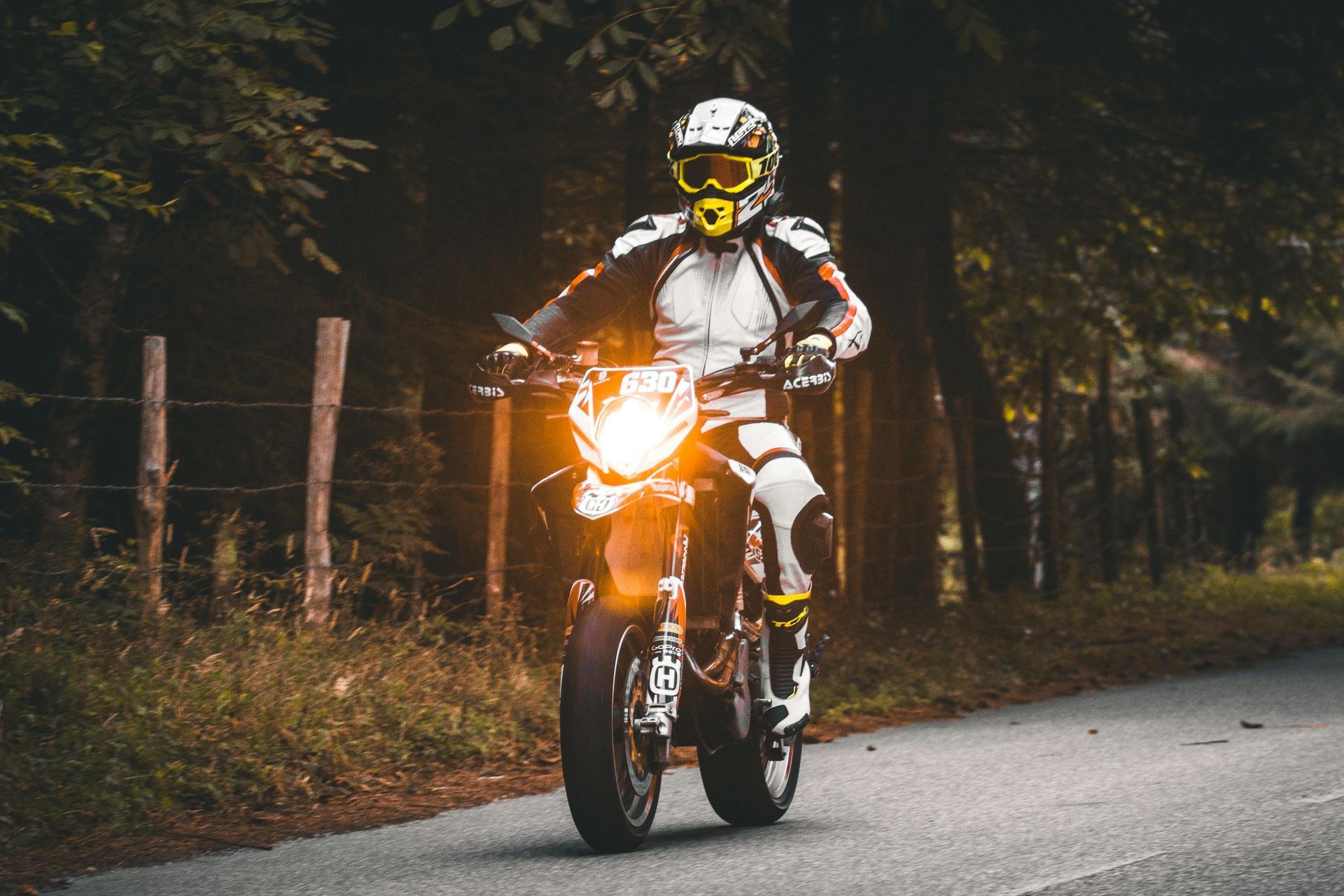
I’ve been around motorcycles a long time. Long enough to remember racing against girls back in the late 1970s. And here’s the thing… They were fast. Properly fast. No novelty. No special category feeling. Just racers on bikes. So when people say women riding off-road is some kind of “new trend,” I quietly shake my head. Because it isn’t new. What surprises me more is this: Participation doesn’t seem to have grown significantly. Nearly fifty years later. And that’s the bit worth exploring.
The Ride Line-Up Test
Roll into a servo. Pull up outside a bakery mid ride. Unload off the ferry in Devonport.
Twenty plus adventure bikes. Nineteen blokes. Maybe one woman. Most times none.
And that’s not a criticism. It’s an observation. Because if women were racing motocross in the 70s — why aren’t we seeing equal growth in adventure riding today?
It’s Not Ability
Let’s kill that myth immediately. Back in the late 70s, the girls I raced against:
- Started the same gates
- Hit the same jumps
- Rode the same tracks
- Crashed the same crashes
Skill was skill. And that hasn’t changed. So the issue isn’t capability.
The Machine Barrier
Adventure bikes are big. Tall seats. Top-heavy fuel tanks. 220–260kg before you’ve packed a toothbrush.
Now yes — plenty of women ride these bikes exceptionally well. But entry confidence matters. If your first experience is tip-toeing at every stop and worrying about picking the thing up alone, the psychological load is higher. And if the psychological load is higher, fewer people step in.
The Pathway Gap
In the 70s, if you rode dirt, you probably started young. Many boys were encouraged into mechanical hobbies. Into paddocks. Into sheds. Many girls weren’t.
So instead of a 10-year progression from mini bike to trail bike to enduro machine… we now expect new riders to jump straight into a 230kg adventure platform.
That’s not inclusion.
That’s skipping the apprenticeship.
The Culture Question
Adventure riding culture can sometimes be:
• Competitive
• Ego-heavy
• Mechanically condescending
• Pace-driven
If a new rider drops a bike and gets a lecture instead of a hand… they won’t be back.
Back in the 70s, when those girls lined up on the grid, they were racers first. Not novelties. Not exceptions. Just competitors. Somehow, in adventure riding, we still sometimes treat women as rare sightings instead of simply riders.
Risk & Framing
Research consistently shows women assess risk differently. Not weaker. Just more consequence-aware.
Adventure riding is often marketed as: Hard. Remote and Extreme.
What if we reframed it as: Exploration. Skill-building. Community engagement. Journey over ego.
Because that’s what most of us actually ride for — male or female.
From the Saddle of The Gravel Hound
I’ve watched this sport for nearly half a century. I’ve raced alongside women. Ridden with women. Seen talent that would humble half the blokes in the car park.
So when I look at a modern ADV ride with twenty bikes and one woman, I don’t think:
“They don’t want to be here.”
I wonder:
• Are we making it easy to enter?
• Are we mentoring properly?
• Are we celebrating skill over size?
• Are we removing unnecessary intimidation?
And here’s where I’d genuinely like to open the throttle on this conversation.
If you’re a woman riding adventure bikes — or thinking about it — I’d value your perspective. What attracted you? What nearly stopped you? What still frustrates you? And what would make the pathway easier for the next rider coming through?
Because this isn’t a debate to be had about women. It’s a conversation to be had with women.
So ladies if you’re willing, I’d genuinely value you sharing your experience through the feedback form at the bottom of this article. I’m not looking for perfect answers — just honest ones. I’d really like to understand what we can do better to increase participation and make this community stronger, more welcoming, and more supportive for everyone who wants to ride.
Your perspective might just help shape how we grow this great community going forward.
Adventure riding isn’t about brute strength. It’s about: Line choice. Throttle control. Balance. Resilience. And mechanical sympathy. None of which are gender specific.
The Real Question
If women were racing hard in the late 1970s and even earlier, why hasn’t participation exploded since?
That’s not a criticism. It’s a curiosity.
Because freedom on two wheels is too good to be limited by culture, perception, or outdated pathways.
And maybe the future growth of adventure riding doesn’t depend on building bigger bikes.
Maybe it depends on building better ladders into the sport.
The Lie We Tell Ourselves About Adventure Riding
A Gravel Hound Reflection
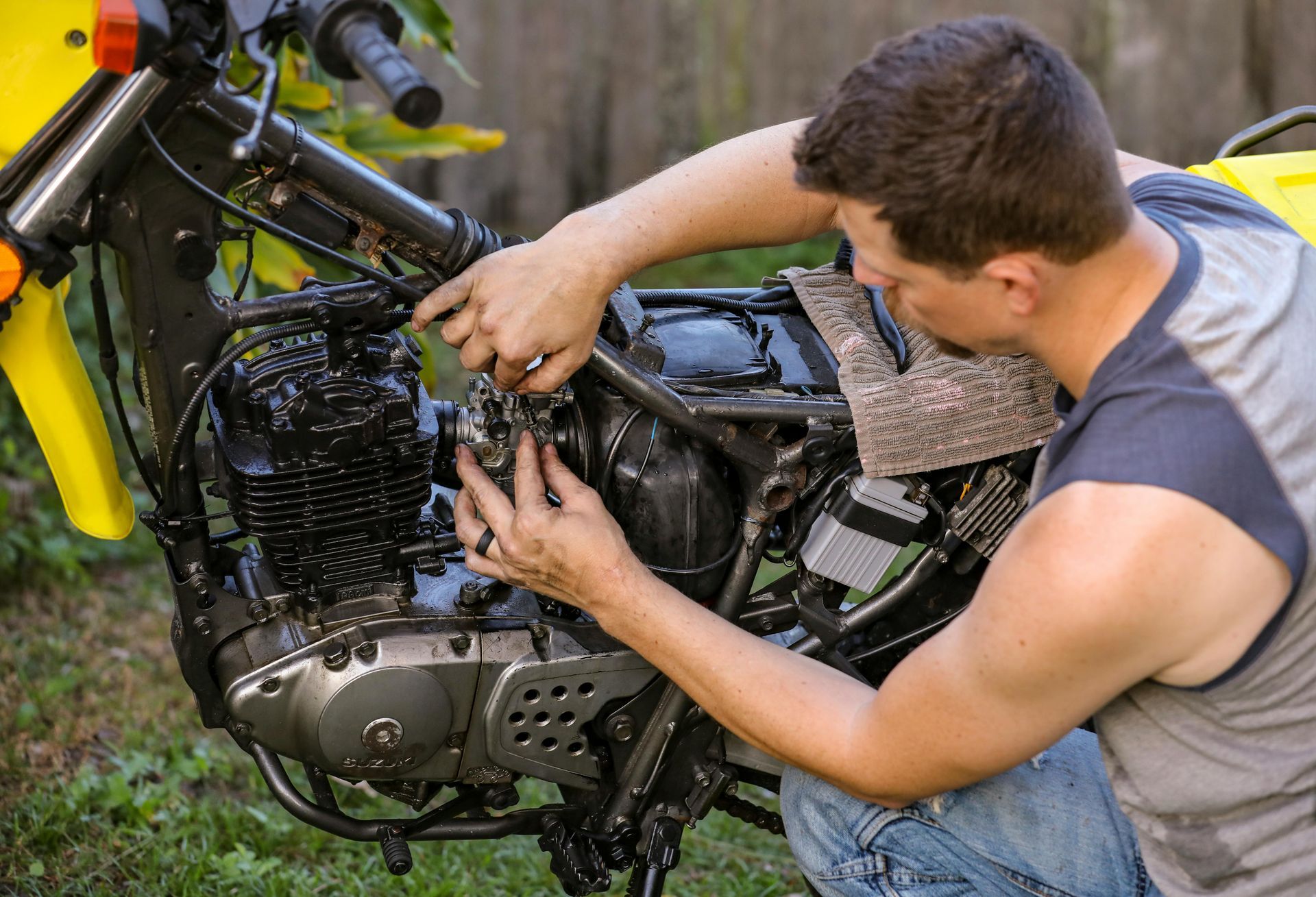
The Dream We Sell
Adventure riding looks simple enough.
Golden sunrises & sunsets, Dust hanging thick in the air, a bike parked heroically beside a lonely gravel road or a cold beer at the pub after 400 kilometres of “epic”.
It’s sold as freedom, and it is freedom, but also a lie. We pretend it’s glamorous.
The Lie
The lie we tell ourselves is this:
Adventure riding is about the bike. We obsess over suspension upgrades, crash bars, lithium batteries, tail tidies, GPS mounts and that extra five horsepower. We convince ourselves the next upgrade is the missing piece. but it isn’t. Because adventure riding isn’t mechanical.
It’s psychological.
The Reality No One Posts
No one posts:
• The moment you drop the bike alone and realise it weighs more than your pride can lift.
• The puncture in the middle of nowhere.
• The fatigue at kilometre 380 when your neck is cooked and your throttle hand is numb.
• The quiet doubt when weather rolls in and you're still two hours from fuel.
That’s the real adventure. and it has nothing to do with brand names.
Tasmania Taught Me Something
On our recent Tour of Tasmania — 4,600+ kilometres, ferry crossings, cold mornings, tight tarmac, unpredictable gravel — something became very clear. It wasn’t the horsepower that mattered, It wasn’t who had cruise control, It wasn’t who had the biggest tank, It wasn’t who had the flashiest kit.
It was:
Who could manage fatigue, who stayed calm when plans shifted, who carried spares, who rode within their limits, who checked on their mates.
Adventure riding is resilience disguised as recreation.
The Ego Trap
There’s another lie.
We think adventure riding is about pushing limits. Sometimes it is. But more often it’s about knowing when not to. I’ve seen big bikes with big egos avoid gravel because it might scratch something, I’ve seen smaller bikes ridden hard by riders with nothing to prove, Real adventure isn’t about being the fastest, It’s about being the one who makes it home with a story.
What It Actually Is
Adventure riding is:
Preparation over power, Patience over pride, Community over competition Mental strength over mechanical upgrades. It’s the quiet confidence that comes from riding into uncertainty and being comfortable there. That comfort doesn’t come from horsepower.
It comes from experience. And experience comes from discomfort.
The Honest Truth
You don’t become an adventure rider by buying the bike. You become one the first time you:
• Ride into weather you didn’t expect.
• Fix something roadside with basic tools.
• Admit you’re tired and pull up early.
• Help a mate before yourself.
• Turn around because it’s smarter, not because it’s easier.
Adventure isn’t found. It’s earned.
Why I Still Ride
Because nothing else strips away ego like a loaded bike on loose gravel. Nothing else forces clarity like 400 kilometers of thinking time. Nothing else reminds you that control is an illusion — but preparation isn’t. That’s the part we don’t post. That’s the part that changes you. And that’s why I’ll keep riding.
— Gravel Hound
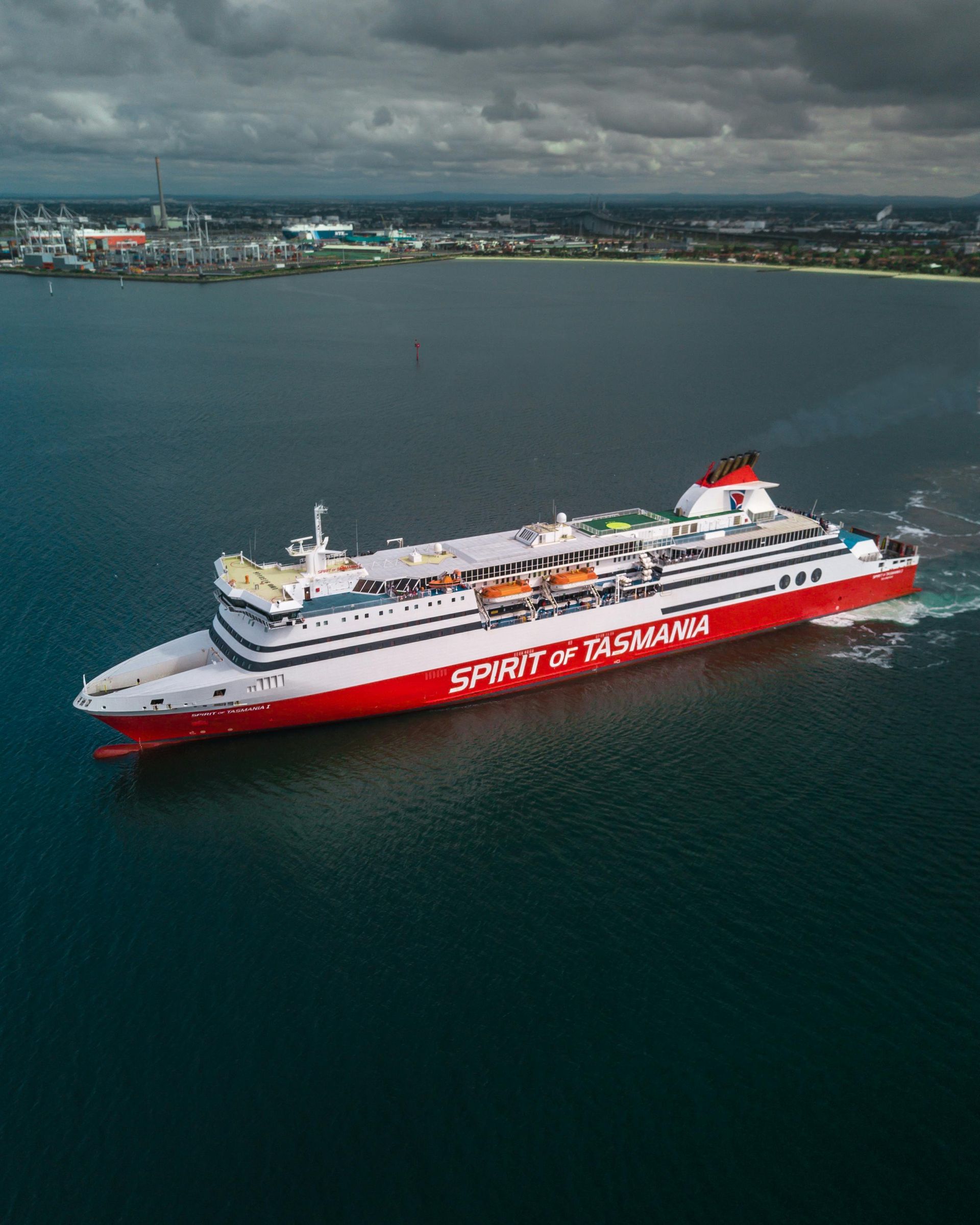
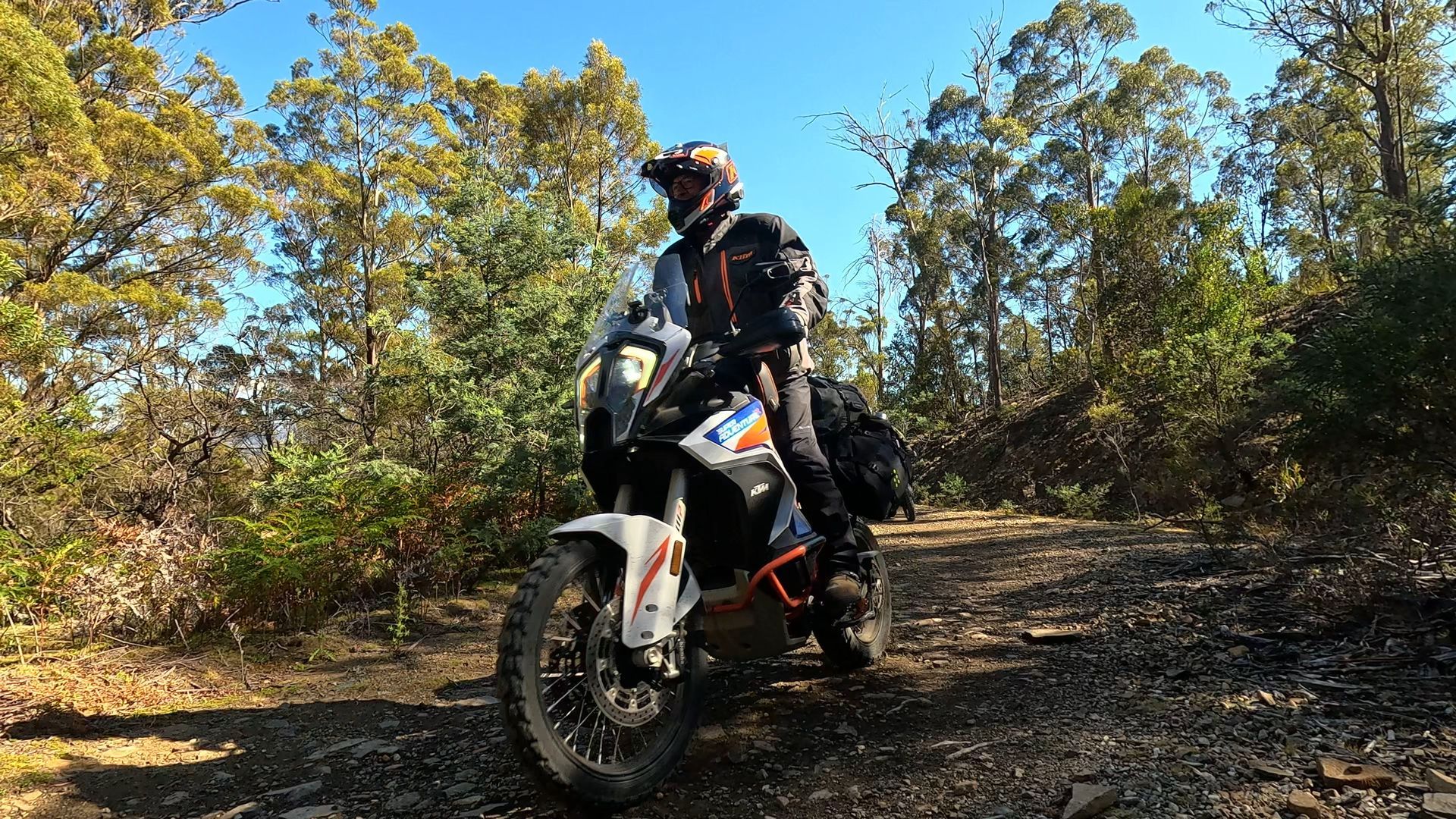
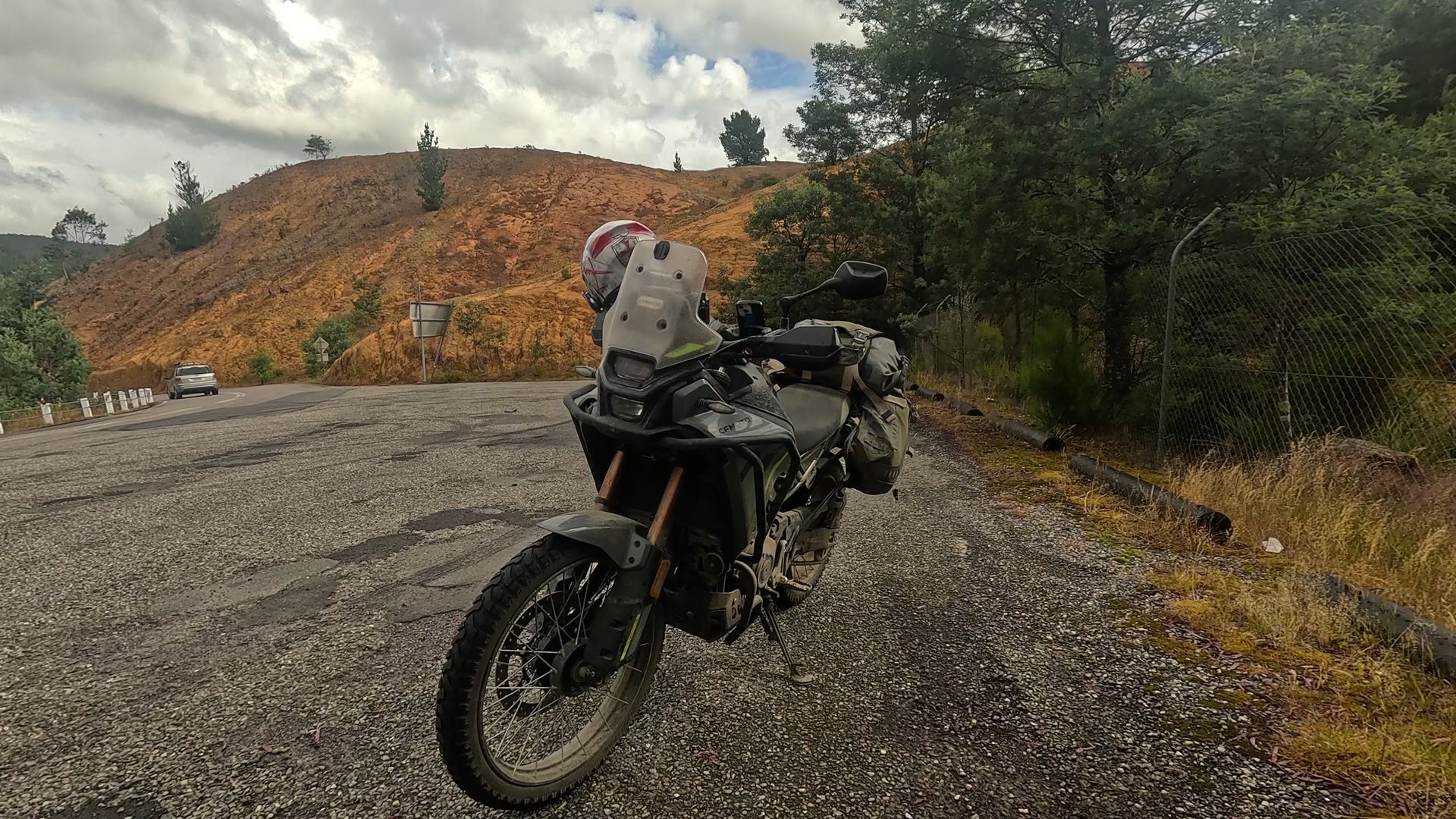
The Real Cost of Adventure Riding: What It Actually Takes to Ride Tasmania
A Gravel Hound Honest Breakdown
The Myth vs The Reality
Adventure riding has always sold the same dream.
Freedom. Open roads. Remote landscapes. A few beers and exaggerated stories in a quiet country pub where everyone becomes a hero by the second round.
And to be fair—it delivers every bit of that.
What it doesn’t advertise is the quiet financial truth behind the dream.
Tasmania, in particular, is not just a ride. It’s an investment in experience. One that pays you back in memories, perspective, and the kind of deep satisfaction only earned one kilometre at a time—but it demands proper planning and honest budgeting.
On this occasion, I was fortunate. The heavy lifting was handled by two of our regular ride crew, Jonny Lockwood and Paul Wilkey, who did an outstanding job planning and coordinating the trip. Their work meant the rest of us could focus on the important business of riding.
What follows is the real breakdown.
What it actually cost.
What it actually takes.
No fantasy. No guesswork. Just reality.
The Big One: The Ferry
There is no avoiding it. The Spirit of Tasmania is the financial gatekeeper.
It represents the physical and financial crossing between routine and adventure.
We opted for cabins. The logic was simple—sleep properly, ride properly.
To keep things fair and interesting, room allocations were decided months earlier during one of our planning sessions at Wayne’s house. Names drawn lottery-style. Luck would determine who slept solo and who shared quarters with a known snorer.
Total Ferry Cost Breakdown:
- 7 bikes
- 4 cabins
- Total cost: $6,204.00
- Federal Government rebate: $1,974.00
- Final cost per rider: $604.28
You can cut costs by sitting in a recliner overnight.
You can also ride tired, sore, and mentally dulled the next day.
This is not where you cut corners.
Sleep is performance equipment.
Fuel: Surprisingly Reasonable
Tasmania may be compact on the map, but its relentless twists, climbs, and endless corners ensure fuel is burned steadily. Very little of Tasmania involves sitting still. The bike is either accelerating, climbing, or driving out of another perfect bend.
Many of the fuel stops we encountered were unmanned, operating on simple pre-authorised credit card systems. No staff. No fuss. Just you, the bike, and the quiet hum of isolation somewhere far from anywhere.
Trip Fuel Stats (Adelaide to Adelaide):
- Total distance: approx. 4,700 km
- Average consumption (CF Moto 450 MT): 4.1L / 100km
- Total fuel cost: $323.71
The Desert Dingo proved itself to be exceptionally efficient. While larger bikes carried more outright power, the 450 quietly delivered range, economy, and reliability without complaint.
Accommodation: The Silent Budget Killer
Unless you are camping, accommodation becomes the single largest ongoing expense.
Tasmania offers outstanding rider-friendly accommodation. Clean rooms. Secure parking. Hot showers. And most importantly—a place to reset after a full day in the saddle.
Actual Accommodation Costs:
- Bayside Hotel, St Helens – $89.43 each
- Orford Blue Waters Hotel – $117.86 each
- Southport Hotel – $55.71 each
- Pedder Wilderness Lodge – $108.00 each
- Queenstown Motel Lodge – $126.14 each
- Tall Timbers Resort – $138.29 each
- Tullah Lakeside Lodge – $181.43 each
- Grand Central Motel, Mount Gambier – $135.00 each
Average per night: $119.00
10 nights total:
$1,190.00
Sharing rooms significantly reduces costs. Strategic room allocation is as important as fuel stops.
Food and Daily Living
Riding builds hunger in a way few other activities can.
Not gym hunger. Not boredom hunger.
Real hunger.
Breakfasts became ritual—large cooked meals and strong coffee. Fuel for both rider and machine.
Typical daily food costs:
- Breakfast & coffee: $30
- Lunch & coffee: $20
- Evening meal: $35–$38 average
Daily total: $75–$90
10-day total:
$750–$900
You can save money eating supermarket food. But part of the experience is supporting local towns, sitting down with your riding crew, and letting the day settle properly.
Tyres: Tasmania Eats Them
Tasmania is relentless on tyres.
The roads are abrasive. The corners are endless. Grip comes at a price.
I fitted brand new Mitas Enduro Trail E-07 tyres before departure.
By the time I returned home, the rear was approximately half worn.
Tyre cost: $486.90
This is not excessive wear.
This is Tasmania doing what Tasmania does.
Maintenance and Consumables
Preparation is part of the investment.
You don’t leave reliability to chance.
Pre-trip maintenance costs:
- Chain lubrication: $34.95
- Oil (2.2L): $60.00
- Oil filter: $20.00
- Tyres fitted: included above
Maintenance subtotal: $104.95
Total prep including tyres: $601.85
Money spent here buys confidence.
Confidence buys freedom.
Spares: The Insurance Policy You Hope Never to Use
Adventure riding rewards preparation.
I carried:
- Spare clutch and brake levers
- Tyre plug repair kit
- Spare cables
- Compact air compressor
- Selection of vario fasteners
- Duct tape (compulsory)
- Cable ties (non-negotiable)
None were needed.
But knowing they were there changes how you ride.
Preparation removes hesitation.
The Real Total Cost Breakdown
Actual Total Cost for 11-Day Tasmania Tour
Category
Cost
Ferry
$604.28
Fuel
$323.71
Accommodation
$1,190.00
Food
$900.00
Tyres
$486.90
Maintenance
$104.95
Total Cost:
$3,609.56
Cost Per Kilometre Perspective
Total distance: 4,700 km
Cost per kilometre: $0.77
Not cheap.
Not unreasonable.
Honest.
The Truth Nobody Tells You
You don’t remember the money.
You remember:
Jacob’s ladder.
The stillness of remote valleys.
Cold morning starts and warm afternoon arrivals.
Engines ticking as they cool.
The quiet satisfaction of another day completed.
Adventure riding is not cheap.
But it is never expensive.
Because it gives you something few things in life can.
Perspective.
Gravel Hound Verdict
Would I do it again?
Without hesitation.
The Desert Dingo proved something important on this trip. You don’t need the biggest bike. You don’t need the most horsepower. You don’t need perfection.
You just need reliability. Preparation. And the willingness to go.
Tasmania delivers some of the finest motorcycle riding on earth.
Now you know exactly what it costs to answer the call.
And the truth is simple.
It’s worth every cent.
Honda Transalp 2026
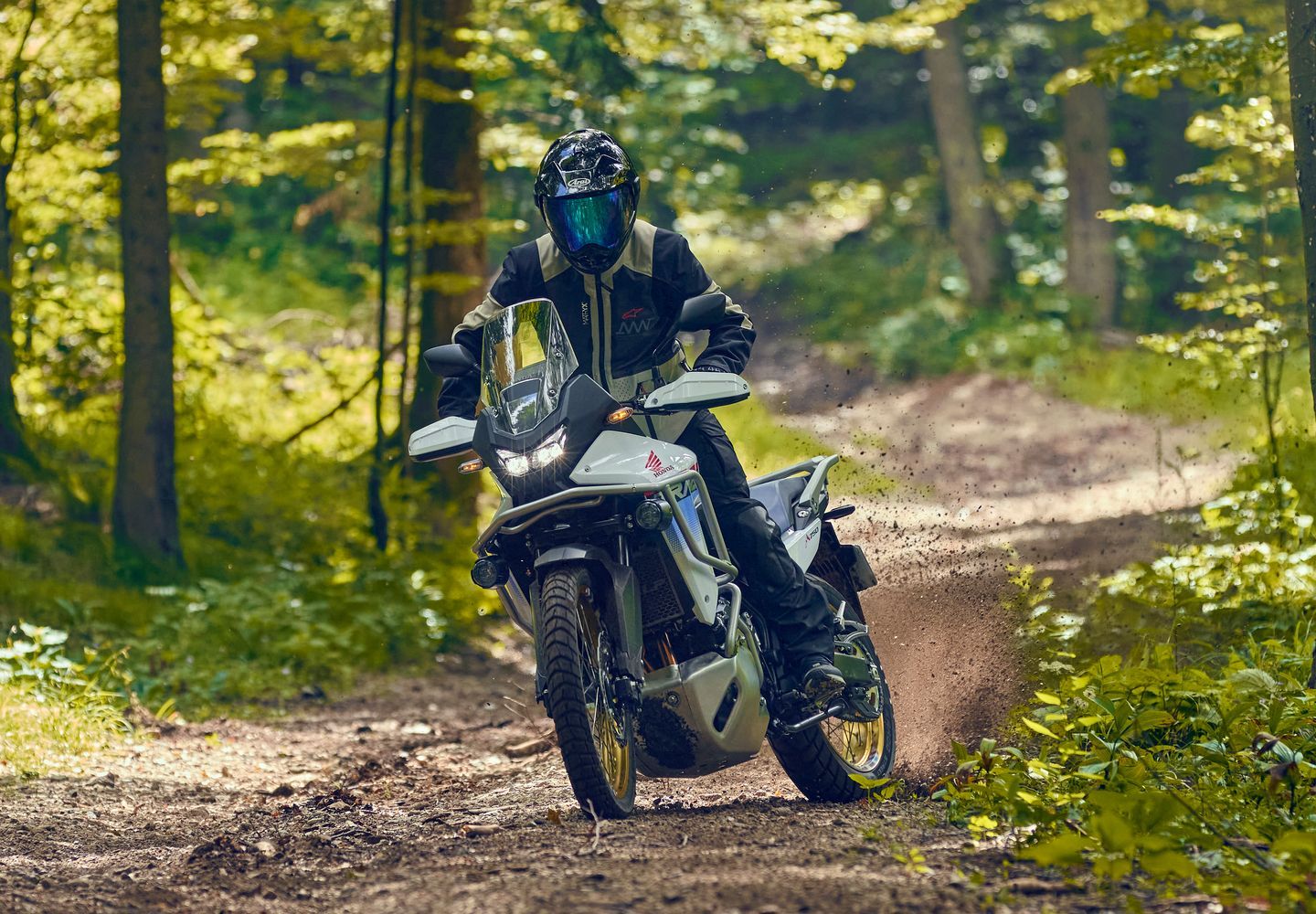
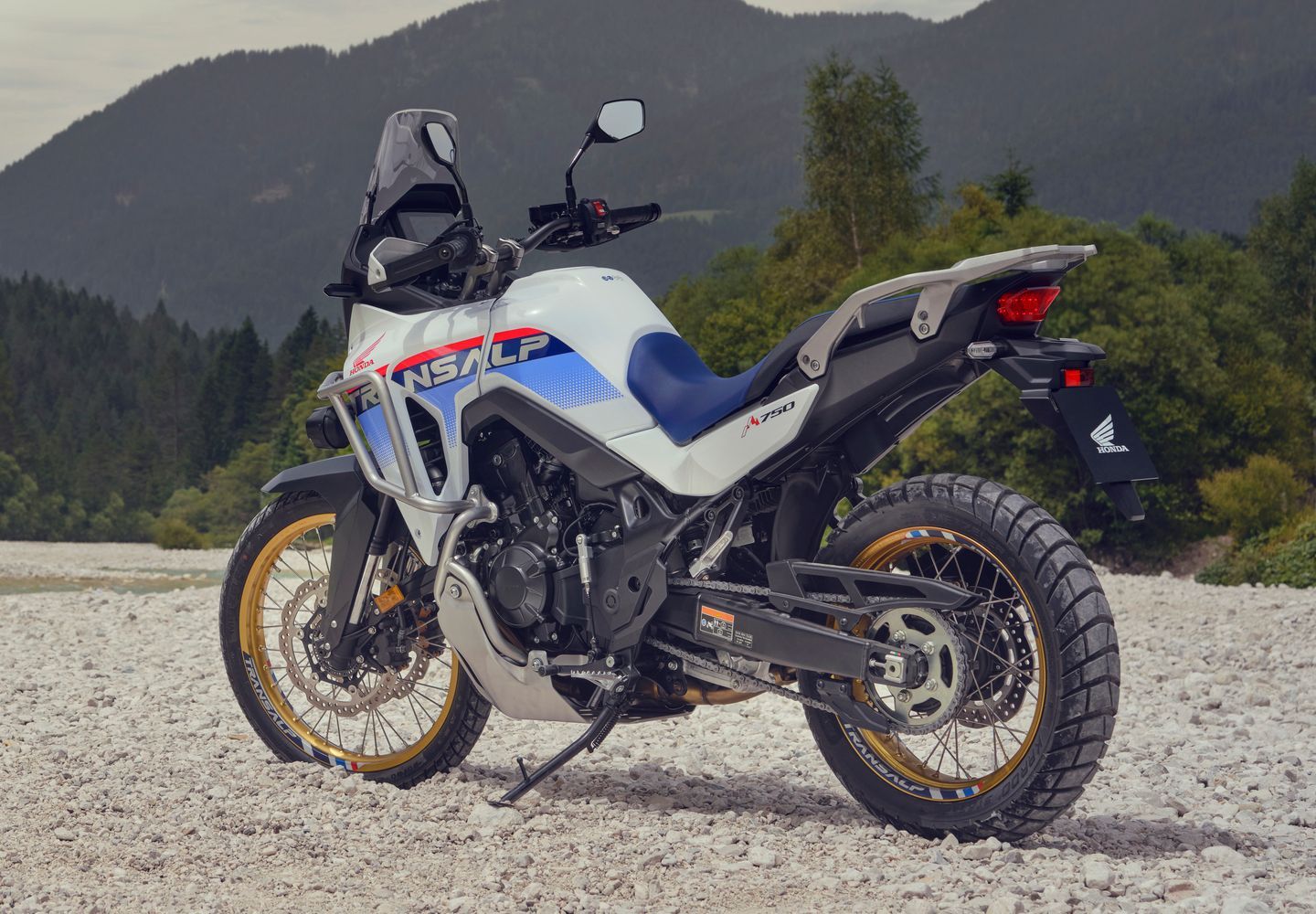
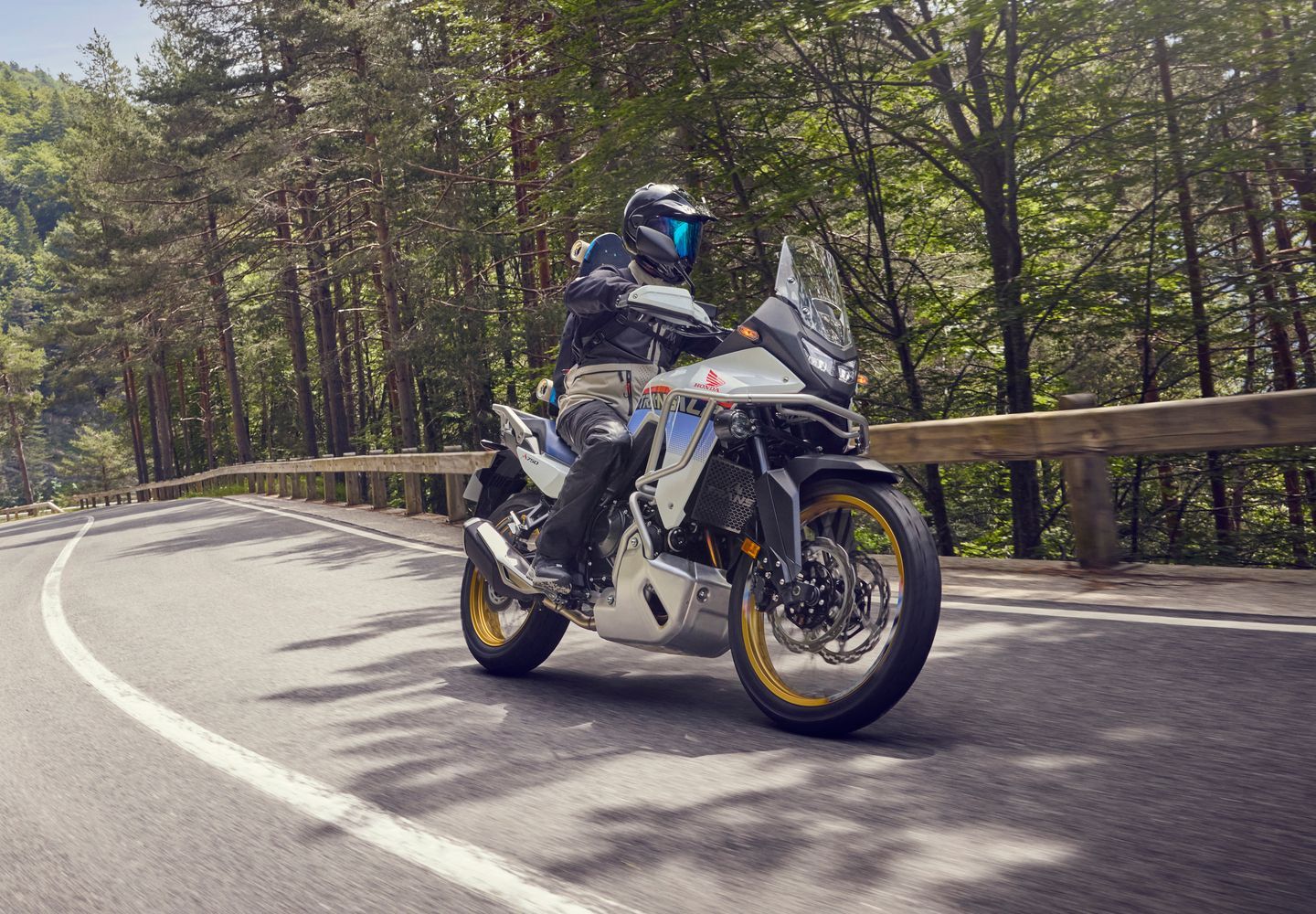
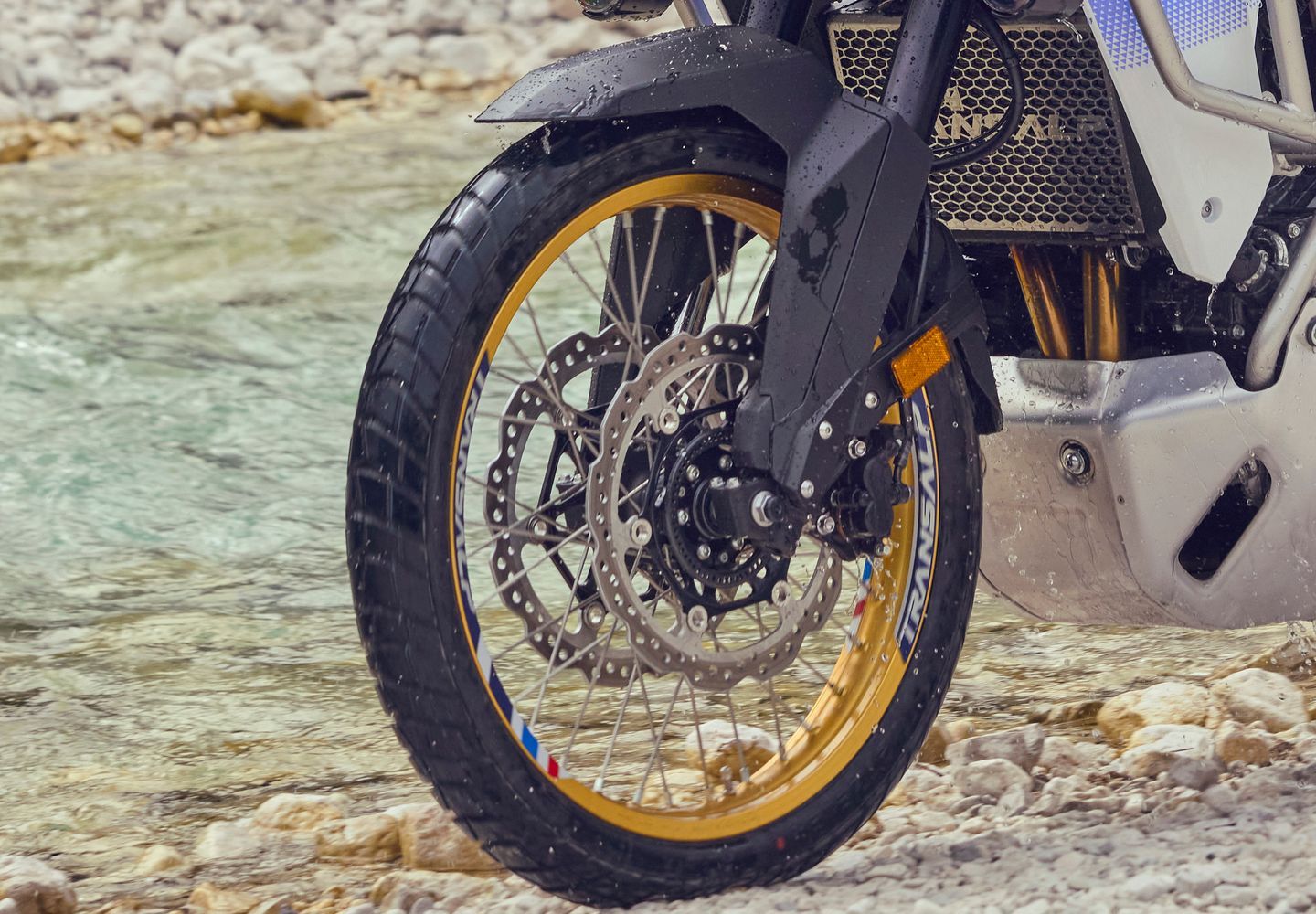
Honda Transalp 2026 The “grown-up” mid-size ADV that’ll do dirt… without pretending it’s a rally bike
Honda’s XL750 Transalp for 2026 is basically the sensible mate in your riding group who still shows up for gravel rides, but also pays their rego on time and owns a torque wrench that isn’t “calibrated by vibes”.
The headline is the E-Clutch version for 2026, plus a handful of practical tweaks aimed at making the Transalp easier to ride, easier to live with, and a bit more trail-ready—without turning it into an actual enduro weapon.
What it is (and what it isn’t)
It is: a mid-size adventure-touring bike that leans “all-rounder” — commuting, weekend twisties, light touring, and realistic off-road (think forestry roads, station tracks, and that “shortcut” your mate swore was fine).
It isn’t: a dedicated dirt bike, a rally replica, or a 200 kg enduro unicorn. At 216 kg kerb weight (E-Clutch 2026 spec), physics still clocks in for work, and might prove a bit of a handful off-road or those of us of the shorter stature.
2026 technical snapshot (the juicy bits)
Here’s the stuff you actually care about when you’re standing in a showroom pretending you’re “just looking”.
Engine & performance
- 755 cc liquid-cooled parallel twin with a 270° crank (more character than a sewing-machine twin)
- 67.5 kW @ 9,500 rpm
- 75 Nm @ 7,250 rpm
- Fuel injection (PGM-FI)
Translation: plenty of shove for overtakes and touring, without the “why is my rear tyre a consumable?” madness of the big-bore arms race.
Chassis, wheels, suspension
- 21” front / 18” rear spoked wheels, tube type
- Showa 43 mm USD forks, 200 mm travel
- Rear: Pro-Link, 190 mm travel
- Ground clearance: 210 mm
That wheel combo is a quiet promise that Honda expects you to leave the bitumen sometimes, not just park next to it for Instagram.
Dimensions & day-to-day living
- Seat height: 850 mm
- Fuel tank: 16.9 L
- Claimed consumption: 4.3 L/100 km (varies in the real world, especially with “Gravel Hound enthusiasm”)
- Kerb weight: 216 kg (E-Clutch 2026 spec)
Electronics & modes
- Ride modes: Sport / Standard / Rain / Gravel / User
- 5-inch TFT + Honda Road sync connectivity
- Rear ABS can be deactivated (thank you, Honda)
The 2026 headline: E-Clutch (what it means in plain English)
The Transalp E-Clutch 2026 keeps the normal 6-speed gearbox, but adds Honda’s E-Clutch system, meaning you can start/stop and shift without constantly feathering the clutch lever (you can still use the lever if you want).
Who benefits most?
- Newer ADV riders: less stall-fuelled panic when the track gets loose and the brain starts buffering.
- Commuters: stop-start traffic becomes less of a left-hand gym session.
- Tourers: smoother shifting when you’re tired, loaded, and negotiating a servo carpark like it’s a trials section.
Gravel Hound verdict: it’s like Honda installed a tiny riding coach in the clutch cover whose only job is whispering, “Relax, champ… I got this.”
Who the 2026 Transalp is aimed at
This bike makes the most sense for riders who want one bike to do most things well:
1) The “one-bike garage” realist
You commute, you weekend ride, you tour occasionally, and you do dirt roads when the map turns brown and your friends start acting brave.
2) The “downsizer”
You’ve done the big ADV thing, and now you’d like to finish a long day without feeling like you’ve been wrestling a fridge.
3) The “upgrader”
Coming from a 300–500 class ADV, the Transalp is a big step up in stability, comfort, and highway legs—without going full cruise-ship.
Pros (why it’s a strong buy)
- Proper ADV wheel sizes (21/18) + real suspension travel: it’s legitimately set up for gravel and rough roads.
- Friendly, usable power: strong numbers without the drama.
- E-Clutch option for 2026: lowers the workload and smooths out the “learning moments.”
- Rear ABS off: because dirt.
- Good range on paper with 16.9 L and claimed 4.3 L/100 km.
Cons (because no bike is perfect, not even your mate’s, and he won’t stop telling you)
- It’s still 216 kg (E-Clutch spec): manageable, yes. “Flickable like a 250,” no.
- 850 mm seat height: fine for many riders, but if you’re inseam-challenged, you’ll be doing the classic ADV ballet at stops.
- Tube-type tyres: spoked wheels are great; tubes are… character building. (Carry tools. Or friends. Preferably both.) A bit disappointing from Honda
- Not a hardcore enduro: if your “adventure” means sand whoops and hero lines all day, you’re shopping the wrong aisle.
- Air filter accessibility: why Honda why, tucked up under the fuel tank and behind the fairing panels The Air Filter: a Masterclass in “Because We Can. That humble, sacrificial sponge whose entire job is to die bravely so your engine may live. On an adventure bike. Designed, allegedly, for dust. Now, you’d think Honda — a company that has sent machines to the Moon, won Dakar stages, and built engines that outlive civilisations — might put the air filter somewhere sensible. Somewhere a tired rider could access after a long, dusty day without first achieving inner peace and removing half the motorcycle. You would be wrong. On the Transalp, the air filter lives beneath layers of plastic and under the fuel tank, like it’s being punished for something. It’s not under the seat. It’s not behind a side panel. It’s not even pretending to be field-serviceable. No — its buried deep in the bike’s core, protected from dust… and riders.
The Gravel Hound “should you buy it?” test
Buy the 2026 Transalp if you want:
- A genuinely capable mid-size ADV
- Road comfort + gravel confidence
- Modern electronics without needing a PhD
- An E-Clutch option that makes riding smoother and less tiring
Maybe look elsewhere if you want:
- The lightest possible dirt-focused weapon
- A bike that forgives zero maintenance and still survives your mate’s “let’s just send it” navigation choices
Yamaha Ténéré 700 World Raid (2026)
Yamaha Ténéré 700 World Raid (2026)
What Yamaha actually changed, and why it matters
The 2026 World Raid isn’t a “new sticker kit and a press photo in the desert” update. Yamaha’s basically taken the T7’s old-school honesty and bolted on the handful of modern bits that long-distance riders have been begging for—without turning it into a 260kg spaceship. It’s still a T7… but now it’s a proper long-haul weapon.
23L twin side-mounted connected aluminium tanks (lower CG + range) with Yamaha quoting ~500 km range. Yamaha Australia says the tanks are 1.5 kg lighter than before.
The bike keeps the rally vibe, but the “World Raid” brief is clearer than ever: go further, stay fresher, and keep control when the track turns nasty.
The fuel tanks: the World Raid’s whole personality
The connected twin tanks are the party trick. Capacity stays 23 litres, but the shape and mounting are all about mass centralisation—less “full tank flop” when you’re threading rocks, more stability when you’re pounding corrugations. Yamaha’s own wording leans heavily on this design as the reason it “keeps going.”
Gravel Hound translation: fewer panic prayers at 3 bars from nowhere, and less of that “why does it feel like I’m steering a half-full jerry can” moment mid-corner.
Electronics finally arrive: ride-by-wire + IMU brains (but not too much nanny)
This is the big philosophical shift: the 2026 World Raid gets Yamaha Chip Controlled Throttle (YCC-T) (ride-by-wire), replacing throttle cables. That unlocks two power modes and enables the modern assist suite.
A lot of outlets also point to a six-axis IMU underpinning the rider aids on the updated World Raid.
Why you care (in real riding terms):
Smoother/cleaner throttle control when it’s slick, steep, or both.
Rider aids that can be tuned to help rather than hijack.
Cruise control: the “I’m not 22 anymore” upgrade
Yamaha has added Cruise Control and a Speed Limiter. For a bike that’s built to eat distance, this is massive—especially for Australia and “get-there days.”
Tenere Tales angle: Cruise doesn’t make you soft. It saves your throttle hand so you’ve still got gas in the tank (the human one) when the road turns to gravel and the fun begins.
Dash + controls: modern cockpit, less mucking about
The World Raid runs a 6.3-inch full-colour TFT and updated switchgear, aimed at better usability and (depending on market/fitment) navigation/connectivity features. Yamaha highlights the TFT as a key comfort/tech step for the distance mission.
Suspension: “World Raid” means you can actually adjust it properly
Yamaha calls out fully adjustable KYB kit and the linked-type KYB Monocross rear as core hardware for control and comfort.
This matters because World Raid riders tend to be:
heavier (luggage + tools + water + “just in case” spares),
doing longer days,
hitting rougher surfaces.
Engine: familiar CP2, updated for the rules—and the ride
It’s still the CP2 689cc parallel twin character everyone trusts, now updated for EU5+ with Yamaha talking up improved torque delivery/response.
Bennetts lists output at 54 kW and 68 Nm (with peak power at 9,000 rpm).
The important bit: World Raid owners don’t need more peak horsepower. They need predictable drive when traction is vague and the bike is loaded.
Australia: when you can actually buy it (and what it’ll cost)
For us here: Australian reporting and dealers state June 2026 arrival, priced from $27,349 ride-away.
Who should care (and who shouldn’t)
You should care if:
you do real-distance rides (hello Tassie mission planning),
you’re sick of wrist fatigue on transit days,
you want the T7 feel but with just enough modern support.
You might not care if:
you’re a minimalist who loves cables and hates screens,
you ride mostly local loops where range and cruise are irrelevant,
you already own a well-set-up older World Raid and prefer to spend the difference on suspension tuning + tanks + a holiday.
Tenere Tales “closing punch”
The 2026 World Raid looks like Yamaha listened to the exact rider who buys a T7: the one who wants reliability and simplicity, but also wants to finish day three without feeling like their right wrist has been through a belt sander.
When Will the Big-ADV Power Arms Race End? (And Why KTM’s 1390R Is Both the Answer and the Problem)
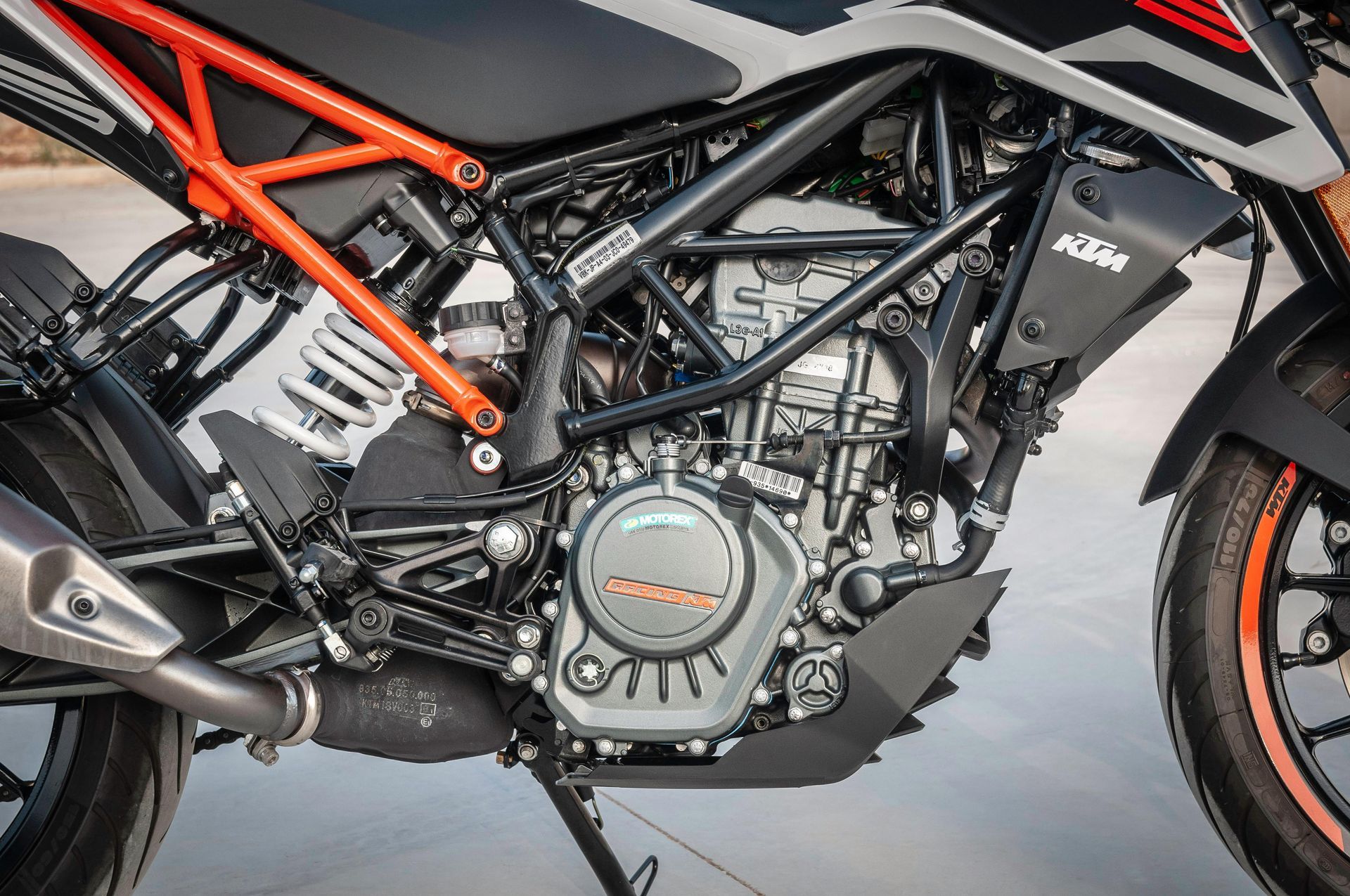
There was a time when a “big adventure bike” meant you could cross a continent, hop a few cattle grids, and still have enough puff left to overtake a caravan doing 83 in a 110 zone. Now? We’ve got bikes rolling out with the kind of power figures that used to live exclusively in the “I shouldn’t be trusted with this” section of the showroom. Enter KTM’s latest orange declaration of war: the 1390 Super Adventure R—1350cc, about 173 hp, and 145 Nm of torque, while still ticking the modern emissions box.
It’s basically KTM looking the industry dead in the eyes and saying: “You want more? Fine. Here. Try not to lick the throttle. “So the real question is: when will the quest for more power be over? And the Gravel Hound answer is: not soon… but it will eventually run into a wall.
The Power Arms Race: Why It Keeps Happening
1) Because horsepower is an easy headline
Most riders don’t test suspension valving, torque curves, aero stability, or low-speed fuelling in a brochure. But everyone understands “173 hp”. It’s simple. It sells.
2) Because the big-ADV buyer is often two riders in one
Half the week: touring weapon.
Weekend: “I’m basically Pol Tarres” cosplay.
So manufacturers build a bike that can do 200 km/h on the tarmac and still pretend it wants to see a dirt road. (Pretend being the key word.)
3) Because competition forces escalation
BMW does a thing → Ducati does a louder thing → KTM responds with a thing that looks like it was designed during a Monster Energy-fuelled argument.
So… When Does It End?
It ends when the returns stop being worth the trade-offs. We’re already close. The ceiling isn’t “because riders don’t want power.” Plenty do. The ceiling is because power drags baggage with it, like a mate who says he’ll bring one beer and shows up with an esky, a generator, and emotional problems. Here’s what eventually taps the brakes:
- Traction reality: adventure tyres, gravel, wet bitumen, luggage, and dodgy body position don’t care about your dyno sheet.
- Weight + complexity: making big power rideable means more electronics, stronger components, bigger cooling demands, etc.
- Regulations + emissions: staying compliant while pushing numbers becomes expensive engineering, not just “bigger bang.”
- The “useable speed” problem: most riders can’t regularly use full power without either losing licences or meeting a wombat at Mach 2.
KTM itself is basically hinting at the next phase: more usable performance, not just bigger numbers—talking up
Camshaft tech, emissions compliance, and long service intervals (like valve checks at
60,000 km).
That’s a sign the arms race is shifting from
“more power” to
“more control and less penalty.”
KTM 1390R: The Pros
1) Effortless overtakes and loaded touring
Big torque (145 Nm) means you can pass traffic even when the bike’s carrying:
- panniers,
- camping gear,
- And your mate’s “essential” cast-iron frypan.
2) Safer when you’re disciplined
Counterintuitive, but true: strong roll-on power can shorten time spent exposed during overtakes—if you’ve got self-control.
3) Modern tech makes stupid power more manageable
Ride modes, traction control, cornering ABS, all that wizardry turns “near-death experience” into “mildly irresponsible grin.”
4) Service interval bragging rights
That 60,000 km valve clearance claim is KTM basically saying: “Yes it’s a weapon… but it doesn’t have to be high-maintenance drama.”
KTM 1390R: The Cons (A.K.A. Where the Gravel Hound Raises an Eyebrow)
1) Weight is the silent assassin
Big power bikes tend to be big everything bikes. Reports put the 1390 Super Adventure R at around
546 lb fully fuelled (about 248 kg-ish in real money).
That’s fine… until you’re on a greasy climb, the front’s ploughing, and you realise your “adventure” has become a slow-motion forklift incident.
2) Power you can’t use off-road is just expensive temptation
On loose surfaces, traction is your boss, not horsepower. After a point, more power just means:
- More wheel spin,
- More electronic intervention,
- More “why is it doing that?” moments.
3) Complexity and cost creep
More performance usually means more complexity, and complexity usually means:
- More sensors,
- More things that can go wrong far from home,
- More “dealer-only” solutions.
4) Rider confidence takes the hit
A big bike with big power can intimidate riders into riding tight, cautious, and awkward—especially on dirt.
And a tense rider on gravel is basically a shopping trolley with a throttle.
5) The industry risks forgetting what “adventure” means
Adventure used to mean capability.
Now it sometimes means horsepower theatre with a beak.
The Middle Ground: What We Actually Want (Even If We Don’t Admit It)
Here’s my hot take, Gravel Hound style:
Most riders would be better served by less peak power, and more of the following:
- strong low-mid torque, smooth delivery
- lighter weight
- better cooling and fuel range
- simpler, tougher components
- suspension set up for real-world loads
- ergonomics that work after 9 hours
- electronics that help without making the bike feel like it’s negotiating with you
The manufacturers know it too. That’s why we’re seeing the marketing shift to “rideability,” “refinement,” and “real-world performance,” not just dyno chest-thumping.
Final Verdict: Will the Power Race End?
It’ll slow down when:
- bikes get heavy enough that the next hp increase doesn’t feel like progress,
- riders get tired of paying for power they never use,
- and manufacturers realise the real flex is making a 250 kg bike feel like a 200 kg bike.
KTM’s 1390R is a brilliant example of the current peak: monstrous, sophisticated, insanely capable—and also proof we’re getting close to the point where the next “upgrade” should be weight, usability, and simplicity rather than another handful of horsepower.
Because when your adventure bike has 173 horses, the real adventure becomes:
“Can I behave myself enough to maintain my licence?”
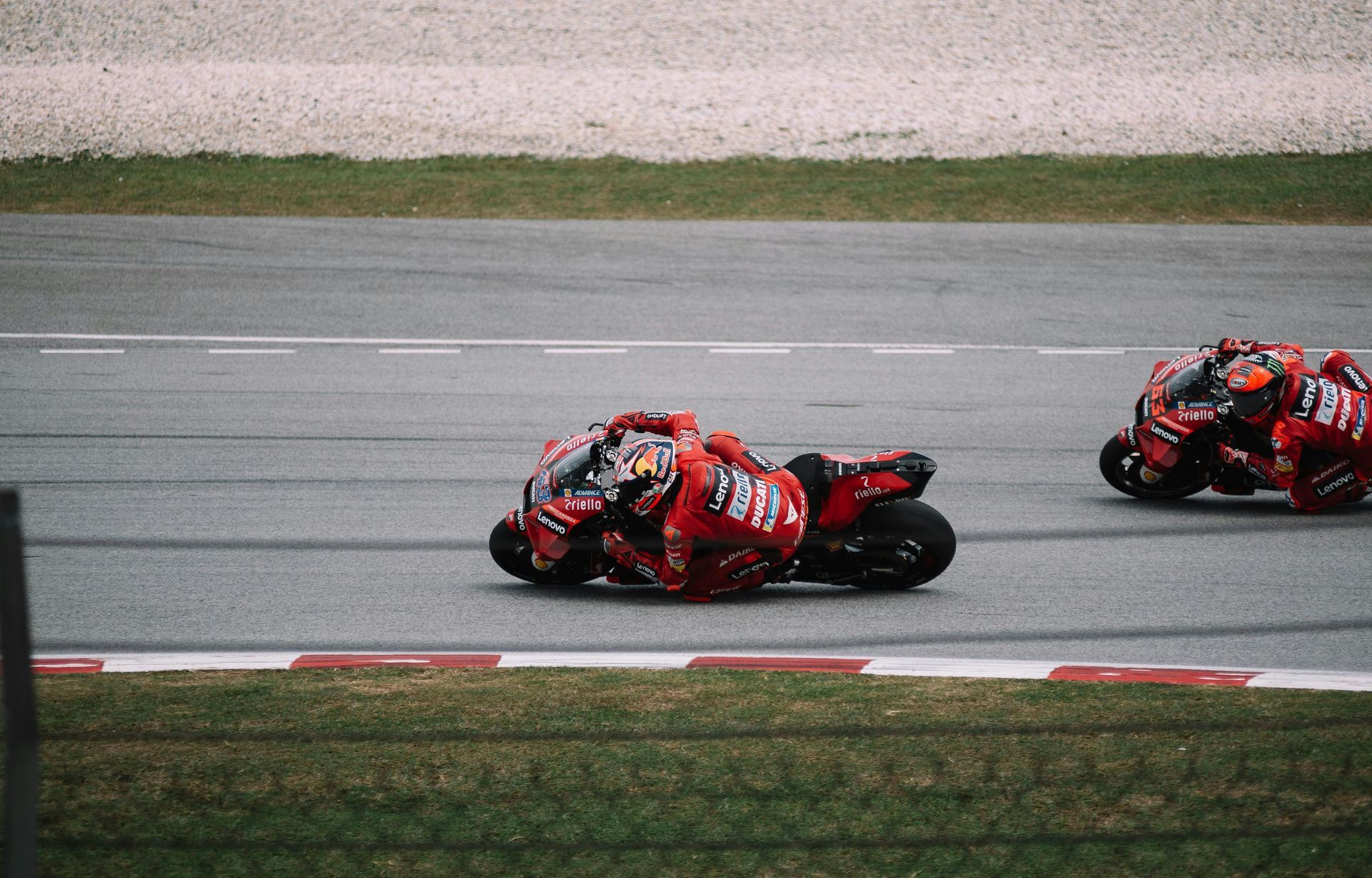
Italy’s Moto GP Problem Isn’t at the Front of the Grid — it’s in the Car Park
If you judged Italian motorcycling purely by Moto GP right now, you’d think everything was rosy. Ducati’s everywhere. Aprilia punching massive holes in factory egos. Italian engineering sitting at the grown-ups’ table once again a throwback to the Golden age of MV Augusta and AGO. But a short stroll away from the big trucks, past the lavish hospitality units, down toward Moto3 and Moto2 — and the picture changes. It’s no longer noisy down there. It’s not dramatic. Espresso just not prevalent anymore, it’s just… thin. And thin is dangerous for the future of Italian Moto GP who are in Danger of following the Americans and The Brits before them.
The Ladder Used to Be There. Now it’s a Rope.
Once upon a time — not even that long ago — Italy had a ladder. A proper one. Wide rungs, handrails, and someone holding it steady at the bottom. That someone was Valentino Rossi and his VR 46 Team and academy. The Rossi Academy didn’t just train riders, it
placed them. It gave Italian kids something priceless in modern motorsport: a path that didn’t require a miracle. You could see the steps. Moto3. Moto2. Moto GP. Not guaranteed — but possible. Then VR46 packed up shop downstairs and moved upstairs. Perfectly understandable. Sensible, even. Moto3 and Moto2 are financial meat grinders and Moto GP is where influence actually lives. But when VR46 withdrew, it didn’t just leave a vacancy — it left a
hole in the floor. Now the Italian ladder isn’t a ladder. It’s a rope.
And you’d better hope you’ve got the grip strength.
Spain Didn’t Get Faster — It Just Kept Building
Here’s the uncomfortable truth: Spain didn’t suddenly start producing better riders. Spain just never stopped building the system. Their kids grow up racing on circuits that the teams already scout. Spain also seems to offer many more training opportunity’s with an abundance of Go cart tracks enabling Mini bike racing and practice after school possible. They move through junior categories that feed directly into the world championship. By the time a Spanish rider hits Moto3, the paddock already knows their name, their data, and their bad habits. See Pedro Acosta. Italian riders? Too often they arrive as strangers. Not because they’re slower — but because they’ve taken a different, bumpier road. One with fewer signposts and more toll booths.
The Cost of Hope
Nobody likes talking money in racing, but pretending it doesn’t matter is how you lose generations. Moto3 and Moto2 are no longer junior classes. They’re professional motorsport with junior optics. If you don’t arrive funded, connected, and ready, you’re already behind. Italy used to blunt that edge through structure. Now it asks families to blunt it themselves. That’s not a development system — that’s a filtering mechanism. And it filters out a lot of talent that simply runs out of runway.
The Ducati Irony
This is where it gets cruel. Italy builds the best bikes in the paddock. Ducati has redefined what “the right bike” even means. Aprilia is right there, throwing elbows. And yet, the better the bikes get, the harder it becomes for an Italian rider without momentum to get a seat. Why? Because when your bike is the weapon of choice, nationality stops mattering altogether. Teams don’t need “potential” — they want proof. Junior wins. Data trails. Evidence. The irony is brutal: Italian bikes are winning now because they stopped being sentimental. Italian rider development hasn’t caught up to that reality.
Life after Rossi Feels Quieter Than Expected
Rossi didn’t just win races — he created gravity. Kids leaned toward racing because he made it look possible. Sponsors leaned in because he made it look valuable. Parents leaned in because he made it look worth the risk. Now, without him racing and with VR46 refocused, Italy lacks a single loud, unavoidable junior narrative. There are riders. There is talent. But there is no central voice saying, this is the path — follow it. So talent scatters. Or stalls. Or disappears.
This Isn’t a Crisis. Yet.
Let’s be clear: Italy is not in decline. This isn’t doom. This isn’t some nostalgic “back in my day” rant. This is a warning light. Moto GP will happily run without Italian riders at the front if that’s what the pipeline delivers. It already has proof that nationality doesn’t win races — preparation does. Right now, Italy is still shouting at the top of the paddock. But two classes down, its gone quiet. And in racing, quiet rarely means everything’s fine.
Gravel Hound Closing Thought
You don’t lose Moto GP titles overnight. You lose them five years earlier — when the next rider never gets the call. Italy still builds the bikes everyone wants to ride.
The question is whether it still builds the riders who’ll be ready when the seat opens. Because ladders, once removed, are hard to climb.
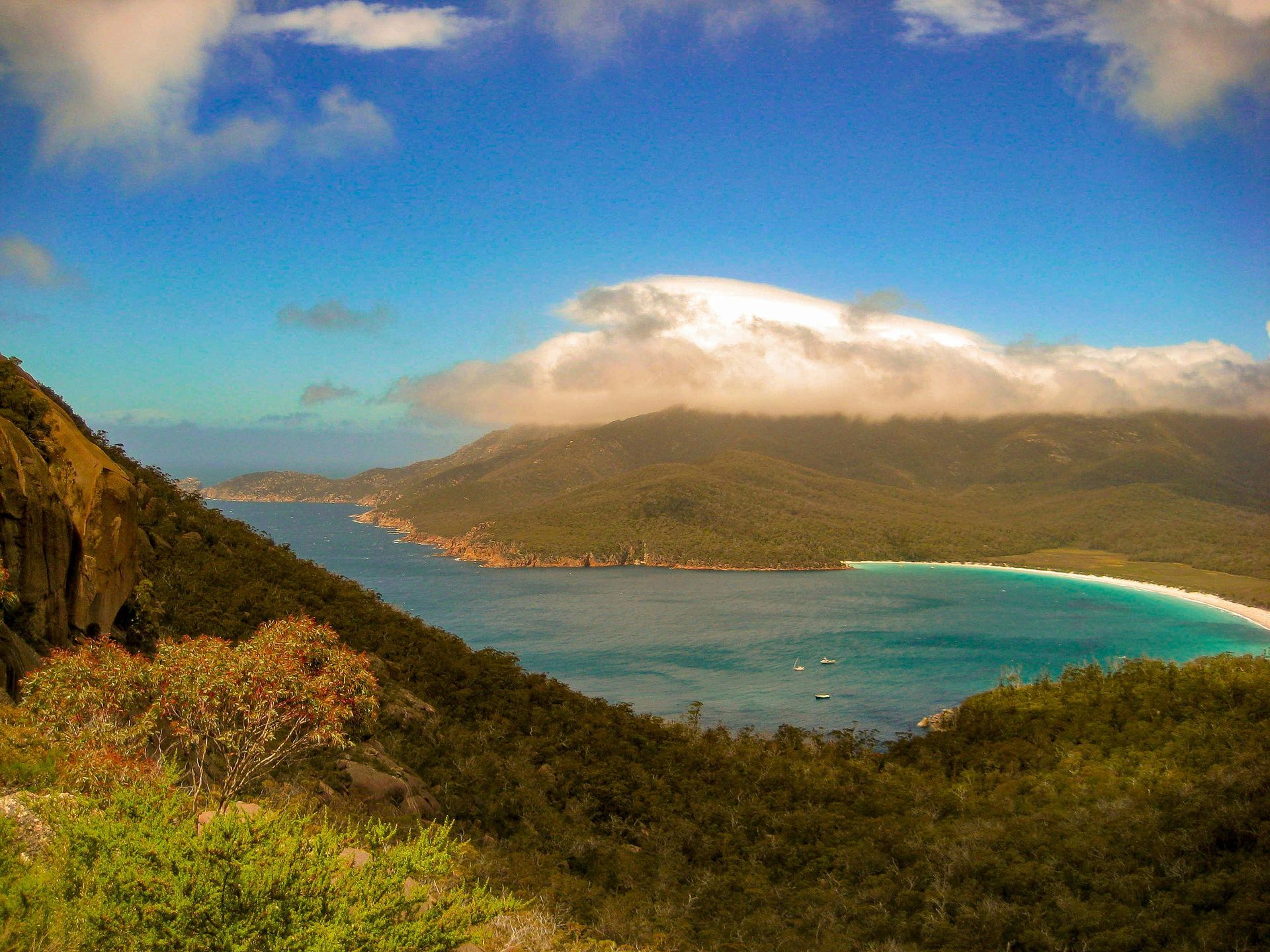
Getting the Bike Ready: Preparing for Tasmania (Where the Roads Bite Back)
Tasmania is not the place to “she’ll be right” your bike prep. This is an island where roads can go from billiard-table smooth to frost-heaved goat track in the space of a cattle grid. Where weather forecasts are more of a philosophical suggestion. Where corners tighten, surfaces change mid-lean, and the locals in Utes drive like they’ve got somewhere important to be. In short: Tasmania rewards preparation — and punishes complacency. With our upcoming Tasmanian run looming, this is how I’m preparing the bike so it’s ready for long days, mixed surfaces, cold mornings, and the occasional moment of self-reflection when you realise you’re a long way from the nearest parts counter. In the interest of keeping the wheels turning and the smiles intact, we’ll be operating an officially unofficial Tasmanian Time-Wasting Tax. Any delays caused by preventable bike issues — such as optimistic tyre choices, “I meant to fix that” maintenance, or forgetting the spare parts or tools you were specifically allocated — will result in a small contribution to the group slush fund. This is not a punishment for bad luck or genuine mechanical gremlins; it’s simply a gentle reminder that our Tasmanian tour has a tight schedule and has no slack time for sourcing spare parts and having tyres fitted.
Tyres: Hope Is Not a Strategy
Let’s start with the obvious. If your tyres are “probably good for another couple of thousand kilometres,” they are not good for Tasmania. We will all be heading out from Crafers on Brand new rubber. Tasmanian roads are famously grippy when dry and alarmingly slick when damp — sometimes in the same corner. Fresh rubber with a known personality is worth its weight in ferry tickets.
Rule #1:
If you’re wondering whether you’ll get away with it — you won’t.
Brakes: Because Gravity Works Harder Down There
Tasmania has hills. Proper ones. Which means: Long descents, Heavy braking, Cold starts followed by hot callipers. Check:
- Pad thickness (front and rear)
- Disc condition
- Brake fluid age (if you can’t remember when it was changed, that’s your answer)
Spongy brakes in the Tasmanian highlands are a quick way to discover new swear words.
Suspension: Set It for Reality, Not Ego
Loaded bike.
Cold weather.
Broken back roads.
Unexpected cattle grids.
- Increase preload for luggage
- Make sure adjusters actually move
- Check for leaks
- Ensure steering head bearings aren’t quietly plotting against you
This isn’t about riding faster — it’s about riding longer, with less fatigue and fewer “why does it feel weird?” moments.
Chain, Sprockets & Driveline: The Unsexy Stuff That Ends Trips
Chains don’t care how good the scenery is. Clean it. Inspect it. Adjust it. Lube it Daily whilst covering this type of mileage. Same goes for sprockets, wheel bearings, and anything that spins or moves. Tasmania is not the place to discover a dry bearing or a tight spot you’ve been ignoring.
Rule #2:
Preventative maintenance is cheaper than Tasmanian recovery trucks.
Electricals: Because Cold Finds Weakness
Cold mornings expose electrical gremlins faster than any workshop test.
Check:
- Battery health
- Charging system
- Lights (especially brake and indicators)
- Accessory wiring (heated gear, GPS, phone chargers)
Nothing kills morale like a dead battery at a misty Tassie lookout while everyone else is sipping coffee and taking photos. Also allocated are two jump start sets for the crew.
Luggage & Mounts: If It Can Shake Loose, It Will
Tasmanian roads vibrate bikes in ways mainland roads simply don’t.
Every bolt, rack, and mount should be:
- Tight
- Thread-locked where appropriate
- Tested on a loaded shakedown ride
If you haven’t ridden your bike fully loaded before the trip, you are conducting a live experiment. Tasmania is an unforgiving laboratory. Special note to self, make sure and double check tie downs are adequate and tight, including making sure camera is secure in mount as I’m famous for causing Go Pros to go diving down the road and holding the crew up while I retrieve said camera.
Spares & Tools: Ride Light, Think Heavy
No need to carry half a workshop — but you do need:
- Tyre repair kit
- Air solution
- Basic tools for your bike
- Chain lube
- A few strategic spares
The goal isn’t to rebuild the bike roadside — it’s to get moving again without drama.
Final Thoughts: Respect the Island
Tasmania is spectacular. Brutally beautiful. Technically demanding. Deeply rewarding.
But it asks one thing in return: respect. A well-prepared bike means:
- Less stress
- More confidence
- More brain space to enjoy the ride
Get the prep right, and Tasmania delivers some of the best riding you’ll ever do. Get it wrong, and you’ll still have stories — just not the ones you wanted. See you on the ferry.
Bring good tyres. And don’t trust the weather app.
Tasmania’s weather has the emotional stability of a two-stroke on bad fuel, so your riding gear needs to cover everything from high-30-degree heat to low single digits with sideways rain — sometimes in the same day. Layering is king: breathable base layers, proper insulation you can add or remove, and a genuinely waterproof outer shell (not “water-resistant if you believe hard enough”). Ventilation matters, so do seals, and if your gloves or boots take on water easily, assume they will — repeatedly. Heated gear isn’t overkill, its morale management, and dry socks are worth their weight in ferry tickets. Dress for the worst, vent for the best, and remember: in Tasmania, the sun is often just an apology between rain showers.
The Gravel Hound Packing Commandments (Tasmanian Edition)
I. Thou shalt not pack optimism as a weather strategy.
If your plan relies on “it probably won’t rain,” Tasmania has already decided otherwise.
II. Thou shalt honour thy waterproofs, for they shall keep thee warm and dry.
And if they are not actually waterproof, they will be exposed, shamed, and soaked.
III. Thou shalt bring layers, and thou shalt bring many.
For the day may begin at 32 degrees and end at 4, and neither will warn you.
IV. Thou shalt not test new gear on this trip.
Tasmania is not your beta-testing environment. Ride-tested gear only.
V. Thou shalt respect heated grips and heated liners, for they are morale devices.
They do not make you weak — they make you functional.
VI. Thou shalt pack dry socks as if thy happiness depends on them.
Because it does.
VII. Thou shalt secure thy luggage, lest it depart thee at speed.
Tasmanian roads vibrate loose anything held together by hope.
VIII. Thou shalt carry the tools and spares assigned unto thee.
And thou shalt remember where thou packed them when required.
IX. Thou shalt not bring gear that surrenders at the first puddle.
This includes boots, gloves, and emotional resilience.
X. Thou shalt honour the Klim Kaiser on his milestone birthday.
Celebrate with cake, stories, and dignity — not hypothermia, regret, or a poorly chosen jacket.

Set Your Bearings: A Rider’s reset for the Year Ahead.
The turn of a new year has a funny way of doing that thing to riders. Somewhere between the last ride of December and the first coffee of January, we all quietly think the same thought: “This will be the year I ride more.” Sometimes that means more kilometres. Sometimes it means new places. And sometimes it just means getting back to why we ride in the first place. At Tenere Tales, we’re not big on New Year’s resolutions. Bikes don’t care about promises. Instead, we like the idea of setting your bearings — choosing a direction, making a few deliberate decisions, and letting the road (or the dirt) do the rest.
Choose Experiences, Not Just Distances
There’s nothing wrong with chasing big numbers on the odometer, but some of the best rides have very little to do with distance. This year, consider choosing experiences instead:
· Your first proper overnight ride
- Your first gravel loop that actually makes you nervous (in a good way)
- That route you’ve saved, talked about, and never quite committed to
Riding with intent changes everything. You don’t need to ride harder or faster — just more deliberately. A good route has a way of pulling you out of autopilot. It asks you to be present. To read the surface. To think a corner ahead. That’s where riding starts to feel like riding again. We have all had days when we are not feeling it and just run on auto pilot and go through the motions, this can also be dangerous because concentration becomes an issue.
Start the Year Ride-Ready, Not Instagram-Ready
January is a great time to give the bike an honest look — not for upgrades, but for reliability. Forget the shiny stuff for a moment and check the basics:
- Tyres that suit how and where you actually ride
- Chain, sprockets, wheel bearings
- Suspension set for your weight, not the factory average
- Comfort tweaks that reduce fatigue, not just posture points
A bike that starts every time and finishes the day without drama is far more confidence-building than one that looks good parked outside a café.
The Rider Matters More Than the Bike
We spend a lot of time talking about machines, but the rider is still the biggest variable. A few small resets go a long way:
- Refresh slow-speed control
- Practice braking on mixed surfaces
- Spend time standing on the pegs properly
Just as important is headspace. Ride within your limits. Leave margin. Most crashes don’t happen because riders lack skill — they happen because riders ignore fatigue, ego, or conditions. There’s no trophy for getting home exhausted.
Tasmania: Setting the Bearings for Real
For our small band of intrepid adventures, this year already has a clear compass point — Tasmania. From 7–17 February 2026, a small crew will point the front wheels south and commit to an 11-day, 4,600-plus kilometre adventure that blends long transport days, relentless twisty tarmac, and some of the best gravel riding the island has to offer. This isn’t a rushed lap or a highlight-reel smash-and-grab. It’s a deliberately planned ride with time built in to actually ride Tasmania — not just tick it off. The journey starts the only honest way it can: an early roll-out from Adelaide to Geelong, tight timing, and the familiar hum of the Spirit of Tasmania loading ramp. By dawn the next morning, we roll into Devonport with the island waiting. From there, the route unfolds properly:
- Ben Lomond and Jacob’s Ladder, climbing early to remind us Tassie doesn’t ease you in gently
- Backroads through Scottsdale and Branxholm, mixing farmland dirt and forest tracks
- East coast nights via St Helens, then south through Bicheno, Coles Bay and Orford
- A southern loop taking in Hobart, Mount Wellington and Bruny Island
- Remote inland riding via Strathgordon, Lake Gordon and the Gordon Dam, where fuel planning matters and 91 octane is sometimes all you get
- The west coast classic from Derwent Bridge to Queenstown, a stretch many riders quietly call the best road in Australia
- A full sweep through Strahan, Smithton, Stanley, Zeehan and Tullah, blending C-roads, forest tracks and sweeping highways
- A final Tassie farewell via Cradle Mountain, Mole Creek, the Great Lakes and Sheffield, before boarding the ferry home
The return leg is part of the adventure too — the Great Ocean Road, Mount Gambier, and a coastal run through Beachport, Robe and the Coorong bringing the trip full circle back to Adelaide. This trip is exactly what setting your bearings looks like in practice:
- Bikes serviced, not just accessorised
- Tyres chosen for durability (Tassie’s coarse roads are hard on rubber)
- Ferries and accommodation locked in early
- A planned route with enough flexibility to enjoy the unexpected
Somewhere between ferry crossings, fuel stops and another debate about tyre pressures, the Klim Kaiser will quietly notch up a milestone birthday while we’re away. There will be no candles (fire risk), no cake (crumb control), and absolutely no slowing down to “act his age.” Instead, the celebration will involve more kilometres, questionable pub meals, copious amounts of Achol and the undeniable proof that experience and good Klim gear age far better than most of us. Milestone acknowledged — riding will continues. More than anything, it’s about intent. Not riding harder — riding properly, day after day, in changing conditions, with good people and good roads.
Riding Is Better Shared
Motorcycling has always been a quiet social contract. The nod. The wave. The fuel-stop conversations. The shared tracks passed on like secrets. This year, make space for community:
- Ride with someone new
- Share a route
- Ask a question you think you should already know the answer to
Tenere Tales exists because riding is better when it’s shared — routes, stories, and lessons learned the hard way.
Set One Bearing and Start Rolling
So here’s the invitation.
Don’t overthink the year. Don’t wait for perfect timing, perfect gear, or perfect fitness. Pick one ride you want to do this year. One route. One trip. One experience. Set your bearings — and start moving. If a GPX file helps turn “one day” into “this year”, you know where to find us. See you out there.
Ride safe. Ride curious. Ride ready.
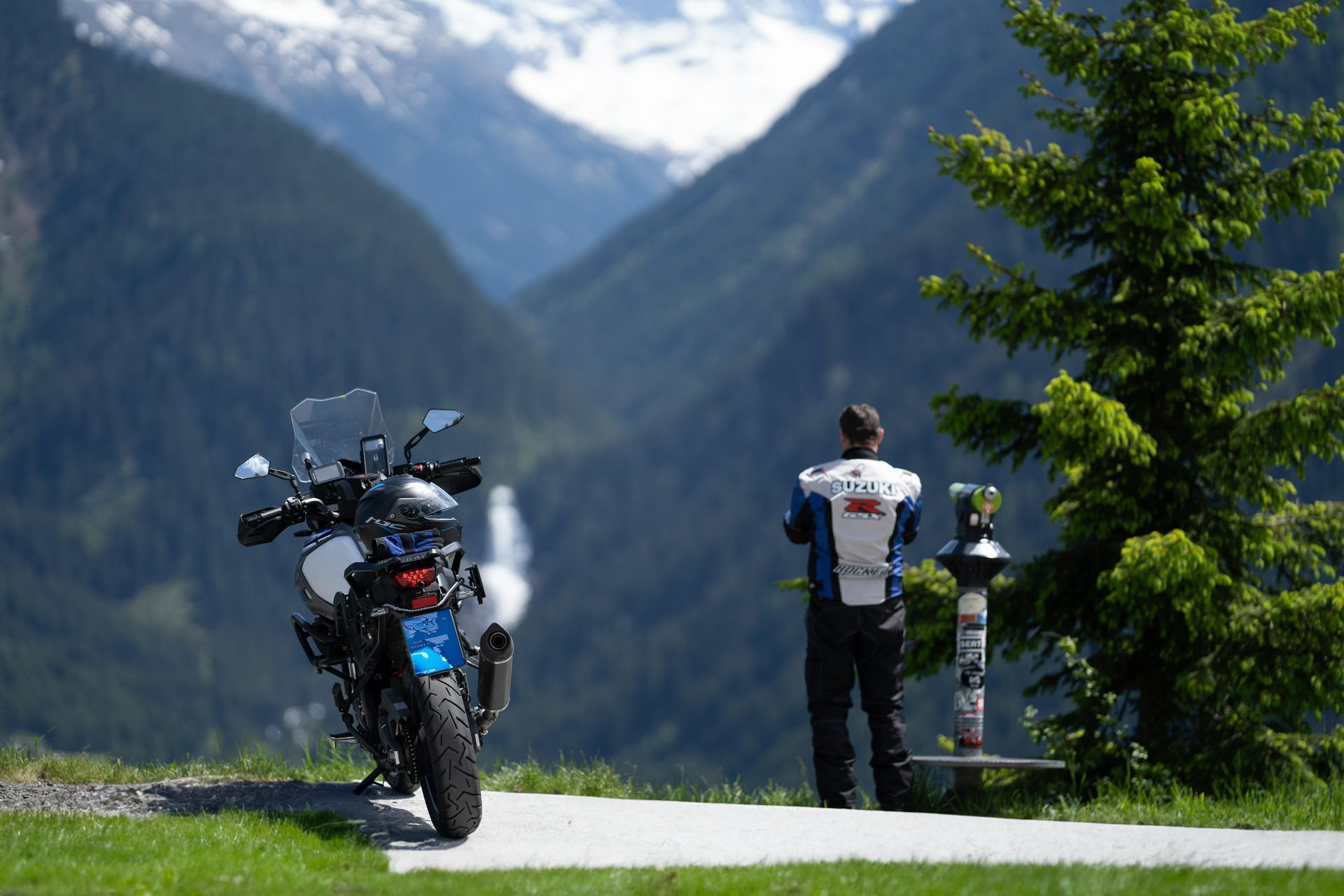
The Evolution of Suzuki Adventure series
From the DR Series to the V-Strom – When Two Very Different Paths Shared the Same DNA. Not all adventure motorcycles chased Dakar podiums.
Some were built simply to start every time, survive abuse, and ask very little in return. Suzuki’s adventure story doesn’t shout. It doesn’t boast cutting-edge electronics or race wins plastered across brochures. Instead, it quietly split into two parallel philosophies — the brutally simple DR series, and later, the refined, misunderstood V-Strom. Both came from the same company. Both serve adventure riders. And yet, they couldn’t be more different.
The DR Series – When Simple Was the Design Brief
The DR lineage began long before the term “adventure bike” meant Bluetooth menus and rider modes. Bikes like the DR600, DR650, and DR-Z400 were built when off-road meant dirt roads, station tracks, fire trails — and no support truck in sight. The DR formula was blunt: Air/oil-cooled single-cylinder engines, steel frame, minimal electrics and most importantly easy access to everything you might break or need to clean.
The DR650, in particular, became legendary not because it excelled at anything — but because it was good enough at everything and rarely complained. Well capable of holding its own Crossing deserts, commuting, out with the boys on the trail even a thrashing on the bitumen backroads with a smile on your dial. Did it all usually with no more than a few tools you carried under the seat no fancy racks for these guys.
Why the DR Earned Trust
- No ride modes to fail
- Carbs you could strip in the bush
- Suspension you worked around, not with menus
- Engines that ran hot, cold, abused, neglected — and kept running
It wasn’t glamorous. It was dependable. And in Australia, that mattered more than any any fancy marketing.
The Problem with the DR (And Why Suzuki Moved On)
For all its strengths, the DR series had limits. As riders aged (and expectations changed), the DR began to show cracks: Vibration on the freeway, no weather protection, very modest power output and not what most of us would call comfortable by modern standards.
Adventure riding was evolving. Riders wanted: to stay in the saddle for some longer day and multiday rides, often requiring long stretches of highway and the need to carry luggage or even for some a pillion. What was needed was reliability without forgoing the creature comforts. So Suzuki held its hand up and didn’t try to reinvent this cult machine. They created a new cult figure. Completely different.
Enter the V-Strom – A Different Kind of Adventure
In 2002, Suzuki released the DL1000 V-Strom, followed shortly by the far more successful DL650. This wasn’t a dirt bike pretending to tour. It was a road bike adapted for the long way around. Instead of chasing off-road dominance, the V-Strom focused on: Rider comfort in a very stable platform a decent touring range and maintain some of that legendary real world reliability. The engine choice told you everything you needed to know about this development a proven V Twin (later a parallel twin designed to run all day stress free fully loaded in all weathers. The V-Strom didn’t want to impress Instagram — it just wanted you to arrive refreshed and relaxed.
Why the V-Strom 650 Became a Benchmark
The V-Strom 650 is perhaps one of the most quietly successful motorcycles ever made. And yet, it’s often overlooked. Why? Because it doesn’t posture. What modern Suzuki does haven’t made a good looking bike since the GSXR 1100 as far as I’m concerned but in fairness the V-Strom did a job, offered decent fuel economy, neutral novice friendly handling character, arm chair comfort for all day excursions and near bullet proof reliability. It became the bike that: riders new to Adventure riding didn’t outgrow to quickly as is the case with KTM 390 Adventure and I suspect the Royal Enfield Himalaya, sensible (kind word for Old) riders quietly returned to participate in some long distance touring with the occasional forte up in gravel road or two. It really did earn a great deal of trust from its band of avid followers. In many ways, the V-Strom replaced the DR for riders whose adventures shifted from mere survival to fun leisurely travel.
Two Philosophies, One Honest Brand
This is what makes Suzuki’s adventure evolution interesting. They didn’t pretend one bike could do everything. KTM should have followed this philosophy instead of selling a 390 Duke in drag and duping us into telling us it was a capable lightweight adventure bike.
Instead:
- DR = bush-first, fix-it-yourself, suffer a little
- V-Strom = distance-first, comfort-focused, quietly capable
Where other manufacturers chased image and escalation, Suzuki stayed practical. No rush, no arms race, No spec-sheet warfare. Just bikes that worked and did what it said on the tin they never pretended to be anything else. In 2025, we find ourselves circling back toward lighter, simpler adventure bikes. See Yamaha Tenere 700, CF Moto 450 MT Royal Enfield Himalayan and hey presto DR650s are still being bought new, V-Strom 650s are seen crossing continents and many riders myself included are questioning complexity is worth it. The Humble DR reminds us you don’t need sophistication to get out with a bunch of mates and explore some gravel and single track just reliability and commitment. The V-Strom serves to remind us that Adventure neither has to be uncomfortable or extreme for it to be real.
The Gravel Hound Verdict
Suzuki didn’t abandon adventure — they split it into two honest paths. One stayed in the dust, wearing scars with pride. The other took the long way around in quiet confidence. Two very different bikes with a shared DNA, in a world that is constantly chasing the next big thing Suzuki’s philosophy deserves a bit of respect. Neither the DR nor the V-Strom is my cup of tea but respect where respect is due. Both deserve their place in Adventure riding history. I have a confession I do own a 1985 DR 600
THE EVOLUTION OF THE KTM ADVENTURE SERIES
How KTM Took Dakar Attitude, Poured It into a Fuel Tank, and Told the World to Hang On, Adventure bikes usually evolve gently — a few extra cc here, a fresh dash there, maybe a beak redesign that gains 0.02% more aerodynamic smugness. But KTM didn’t evolve. KTM escaped. The orange brand didn’t look at adventure riders and ask,
“What do you need? “They looked across the Sahara, squinted through the heat haze at the Paris–Dakar Rally… and asked, “How stupidly fast can we go before someone complains? “This is the story of how a quirky Austrian dirt-bike company became the patron saint of aggressive adventure riding — and why KTM’s Adventure series still feels like starting a bar fight with the desert itself.
The 640 Adventure (1997–2007)
In a time before electronics, TFT screens, and well before ABS became a government-mandated safety blanket… there once was the KTM 640 Adventure. A machine that didn’t just stand tall — it loomed. A bike so high you practically needed a stepladder and a pep talk just to swing a leg over. It rattled like a bag of spanners and cornered with all the grace of a shopping trolley missing a wheel, but none of that mattered. The 640A was built around the LC4 engine — a single-cylinder thumper that produced more vibrations than horsepower and somehow wore that as a badge of honour.
Yet this oddball, this uncompromising, slightly feral creature, became a cult icon. Why? Because no sensible manufacturer would have dared build something so focused, so unapologetically tough, and so blatantly Dakar-inspired. If you wanted a motorcycle that could cross the Nullarbor without blinking, blow past 4WDs on gravel like they were parked, and survive a low-speed crash with nothing more than a fresh scar and a story… the 640 Adventure was your mate.
It was here — in the madness, the noise, the height, and the sheer audacity — that KTM cemented its philosophy: win rallies first, sell bikes second. And the world has been better (and slightly more bruised) for it ever since.
The 950 & 990 Adventure — Dakar DNA Comes to the Streets (2003–2012)
The late ’90s and early 2000s were KTM’s golden rally era — Fabrizio Meoni, Marc Coma, Cyril Despres. big names. Big bikes. Big wins. So KTM took their rally platform and gave it to the public: the 950 Adventure. Twin-cylinder. Big 22-litre tank. Suspension tall enough to need oxygen. A chassis that said, “Yes, you can jump me. Please jump me! ”These weren’t adventure bikes as we know them today. These were weapons.
The 950 and later 990 Adventure became legends for one simple reason: They rode like oversized enduro bikes that somehow had headlights. Perfect for those amongst us that thought the BMW GS was a bit soft and the Africa Twin too polite, the 950/990 Adventure shouted: “Stop worrying’ and give it the berries.” The 990 brought EFI, better brakes, and even more punch — but retained that raw rally attitude. Many still say it’s the best big ADV bike ever built.
The 1190 Adventure — the Orange Brand Grows Up (2013–2016)
KTM shocked the industry with the 1190. It had… wait for it…refinement. Suddenly the orange hooligan had some manners. Still fast? Absolutely — 148 hp in an ADV bike was practically unheard of at the time. Still capable? It could dance through sand, corrugations, and twisties better than anything its size had any right to. But this was KTM admitting the market had changed. Reliable electronics. Traction control. ABS that actually worked off-road. A chassis ready for long-haul travel. And yet, if you twisted the throttle far enough, it still whispered: “Mate… do you want to see God?”
The 1290 Super Adventure — When Too Much Power Still Isn’t Enough (2015–Present)
Here lies madness. The KTM 1290 Super Adventure is what happens when a company asks itself: “How big can we go before physics takes out a restraining order?”
We’re talking:
- Up to 160 horsepower
- Semi-active WP suspension
- Cornering lights
- Electronics smarter than the average driver
- Cruise control (so you can relax while you break the sound barrier)
The 1290 is absurd and brilliant. A motorcycle that can tour across Australia in plush comfort… then get on gravel and make you feel like Toby Price in a mid-life crisis. It’s the ADV bike for riders who believe restraint is a medical condition.
The 790 / 890 Adventure — The Return to Dirt-First Thinking (2019–Present)
After building big, heavy adventure muscle bikes, KTM took a hard pivot.
Enter the 790 and later 890 Adventure platforms.
Right away:
Low-slung tanks.
Proper off-road geometry.
A chassis that says, “Take me places you’d normally only take an enduro.”
KTM had finally made the unicorn many riders wanted:
A middleweight ADV bike that actually rides like a dirt bike.
The R version in particular is a benchmark. If the 1290 is the sledgehammer, the 890R is the scalpel covered in dust.
KTM 390 Adventure
Less said about this the better although a very nice capable beginner friendly bike to use on the bitumen that is squarely where this bike should stay it has to be said definitely not one of KTM’s best ideas
The KTM Philosophy — Why Their Bikes Feel Different
Three truths define the orange DNA:
1. Power is fun, but dirt manners are sacred
Even the 1290 feels like an overgrown dirt bike when ridden aggressively.
2. Electronics must help, not tame
KTM tech is designed to let the bike go faster, not behave better.
3. KTM builds for riders who push limits
Not the “quiet tourer.”
Not the “smooth commuter.”
But the rider who enters a gravel corner thinking:
“Let’s see what happens.”
And let’s be honest — the world needs that kind of chaos.
What’s next for KTM?
Rumours, clues, and educated guesses:
- A new 990 or 901 Rally model
- More widespread semi-active suspension
- Lighter chassis across the range
- Hybrid or electric rally prototypes
- Continued focus on Dakar dominance
Whatever comes, it will not be sensible.
And thank goodness for that.
Final Thoughts — Why KTM Still Matters
In a world where adventure bikes are becoming safer, cleaner, and more polite, KTM stubbornly remains the brand that says:
“Adventure should feel a little bit dangerous.”
The 640 thumped it into shape.
The 950/990 showed us what rally spirit feels like.
The 1190 gave it sophistication.
The 1290 turned it into a tyre-shredding monster.
The 790/890 brought it back to its dirt-first roots.
The 390 opened the door for everyone else.
No other manufacturer has such a chaotic, brilliant lineage. And that’s why the KTM adventure story isn’t just evolution. It’s a riot. A glorious, dust-filled riot.
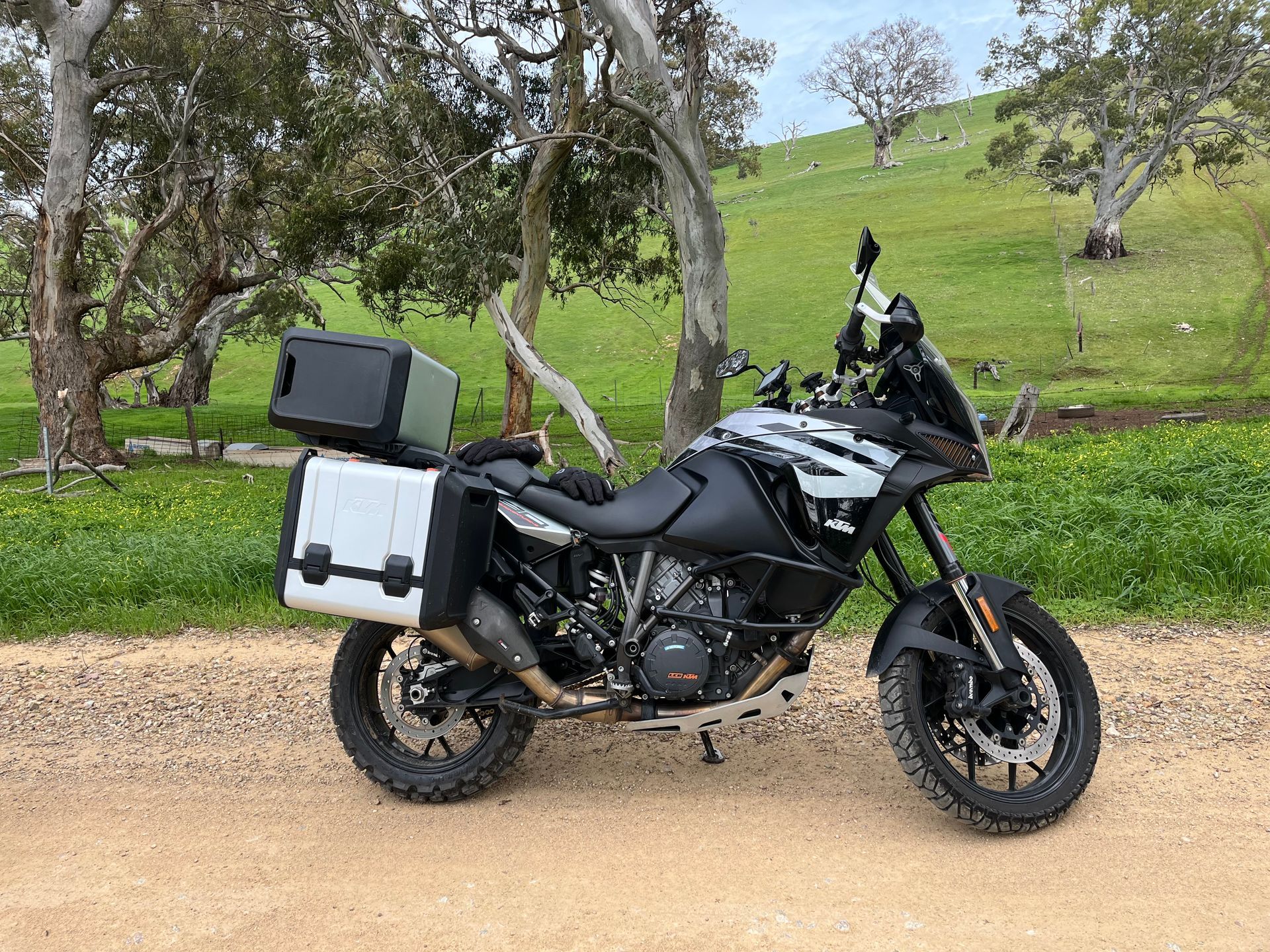
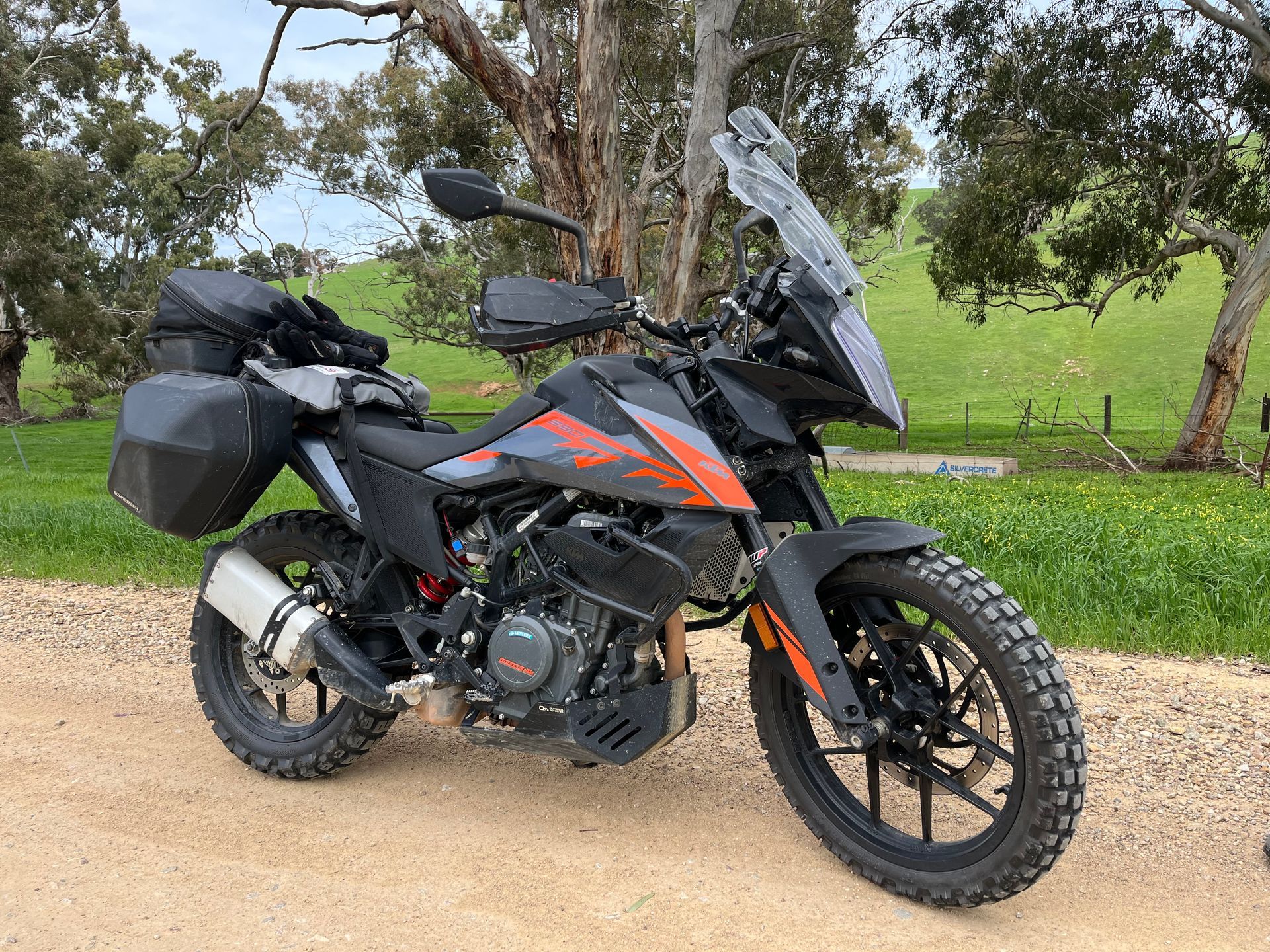

The History & Evolution of the Honda Africa Twin
From Dakar glory to modern-day adventure royalty
While some bikes borrow the adventure aesthetic, the Africa Twin earned it the hard way — by conquering the toughest rally on earth and carving its legend across sand, stone and big-mile expeditions long before Instagram made adventure bikes fashionable. As with all true Adventure Icons such as the Yamaha Ténéré, BMW GS, and Suzuki DR lineage, the Africa Twin wasn’t just built to look the part. It was engineered to survive continents. This is the story of how Honda created one of the most respected adventure motorcycles ever made.
1. Dakar Roots – The Birth of a Legend (1980s)
Like other true adventure bikes the Africa Twin’s bloodline begins in the crucible of the Paris–Dakar Rally — a brutal 10,000 km odyssey across France, Spain, and the Sahara Desert.
In 1986, Honda unleashed the NXR750V, a factory-built desert weapon. It was a purpose built V twin rally racer, very lightweight for its time and unbelievably tough, designed and built with dominating the Dakar in mind. Dominate it did The NXR 650 went on to win four consecutive Dakar’s (1986-1989) etching the Honda name into Rally History. A feat that Honda would not repeat again until 2020 with Ricky Brabec on the CRF 450 (CRF has 3 Victories 2020, 2021 &2024) As Yamaha found with this success came strong customer demand riders wanted to sample some of this Dakar spirit.
Honda responded to the rally fever by releasing a street-legal version of the NXR — the XRV650 Africa Twin. It wasn’t a full replica but it had a 647cc V-twin, long travel suspension, Oversize fuel tank sporting that iconic Dakar livery couple that with geometry that actually inspired some exploration and adventure. The target customer was someone who yearned travel of the type that just threw some soft luggage over the back and disappeared into the wilderness. Even todays collectors consider the 650 one of the PURE Africa Twins.
The XRV750 (1990–2003) this is the model most adventure riders think of when they hear “Africa Twin.” The XRV750 grew from its 650 base into something bigger, more capable and more refined. So what made the XRV750 so legendary? Well first up that bullet proof 742cc V Twin engine, perfect geometry for most riders that was really well balanced and a joy to ride even at low speeds a massive 23 litre fuel load for some true adventure range. All making for unheard of reliability with some examples knocking around with over 300,000 km’s on the clock. It wasn’t lightning fast or all that flashy but it sat just right to do the job it was designed to do. On the quiet The XRV750 became the motorcycle of choice for global overlanders — the kind who crossed continents without a support vehicle or a sponsorship deal. It was a working-class hero of the adventure world.
Adventure bikes evolved and adventure riding became more fashionable. The riders themselves evolved strangely Honda didn’t seem bothered by this evolution movement, maybe they just wanted to distance themselves from the growing band of Latte sipping hordes masquerading as bike riders that were fashionable at the time. After 2003 the Africa twin disappeared leaving Honda faithful begging for a successor that didn’t materialise for a while Mean while the incumbents made their move and put their best foot forward BMW GS went bigger and more electronics, KTM went more aggressive all the while Yamaha stuck with the ever reliable Tenere Linage
Honda spent a decade watching the segment it helped create explode in popularity. Then, like a patient samurai returning from exile… The Rebirth: CRF1000L Africa Twin (2016) The Africa Twin came roaring back with a modern interpretation of the original philosophy: 1000cc Parrallel twin not the V a change that was the subject of great debate in the Honda community, a move which was later to be celebrated producing balnced capable power without being intimidating, long travel suspension providing ample ground clearance for even the most adventurous, some off road inspired geometry and a huge gamble on the option of having DCT dual clutch transmission this was a real shock to the off road world as it was unheard of. This model wasn’t chasing horsepower wars. Honda targeted real-world adventure, durability, and approachability — exactly what made the originals so great and much loved. It felt like a big dirt bike, it carried its weight down low and disguised its true weight which encouraged exploration for an average ability rider. Finally the legend was reborn.
The Evolution Continues: CRF1100L (2020–2025) Honda then refined the modern platform into a more powerful, more polished machine. Enlarging the capacity to 1084cc giving much more torque across the range all sitting in a lighter frame combined with an improved electronic suite that boasted traction control,wheel control and preset riding modes all visible on the large TFT screen a new version DCT made for a smoother ride, electronic adjustable suspension and a 25 litre tank completing this adventure weapon. The 1100 brought the Africa Twin into the premium adventure segment while keeping its “ride it anywhere” spirit intact.
Honda’s approach has been evolutionary, not revolutionary — exactly what long-distance riders trust. Even with fierce competition — KTM 890/990, Yamaha Ténéré 700, Triumph Tiger 900, Aprilia Tuareg 660, and BMW’s F-series — the Africa Twin remains uniquely positioned. Adventure Riders Love It Because:
- It’s tough without being agricultural
- Smooth without being boring
- Technologically advanced without being overcomplicated
- Comfortable for distance
- Surprisingly capable in technical terrain
- Reliable enough to take into the middle of nowhere
It sits beautifully between the “lightweight rally bike” crowd and the “luxury adventure barge” crowd.
It is, simply, a bike that wants to explore.
Rumours are that a possible 850cc – 900cc lighter more rally inspired version may be in the pipeline.
Final Thoughts
The Africa Twin has come a long way since its desert-racing origins in the 1980s. What began as a Dakar-bred rally replica has evolved into a global adventure icon, trusted by riders exploring outback tracks, crossing borders, and commuting through city jungles. It’s a bike that doesn’t just take you places — it takes you back to a time when adventure riding was about getting lost. About pushing on. About coming home with stories. And for that reason, the Africa Twin remains one of the most respected adventure motorcycles ever made — a genuine companion for riders who actually ride.

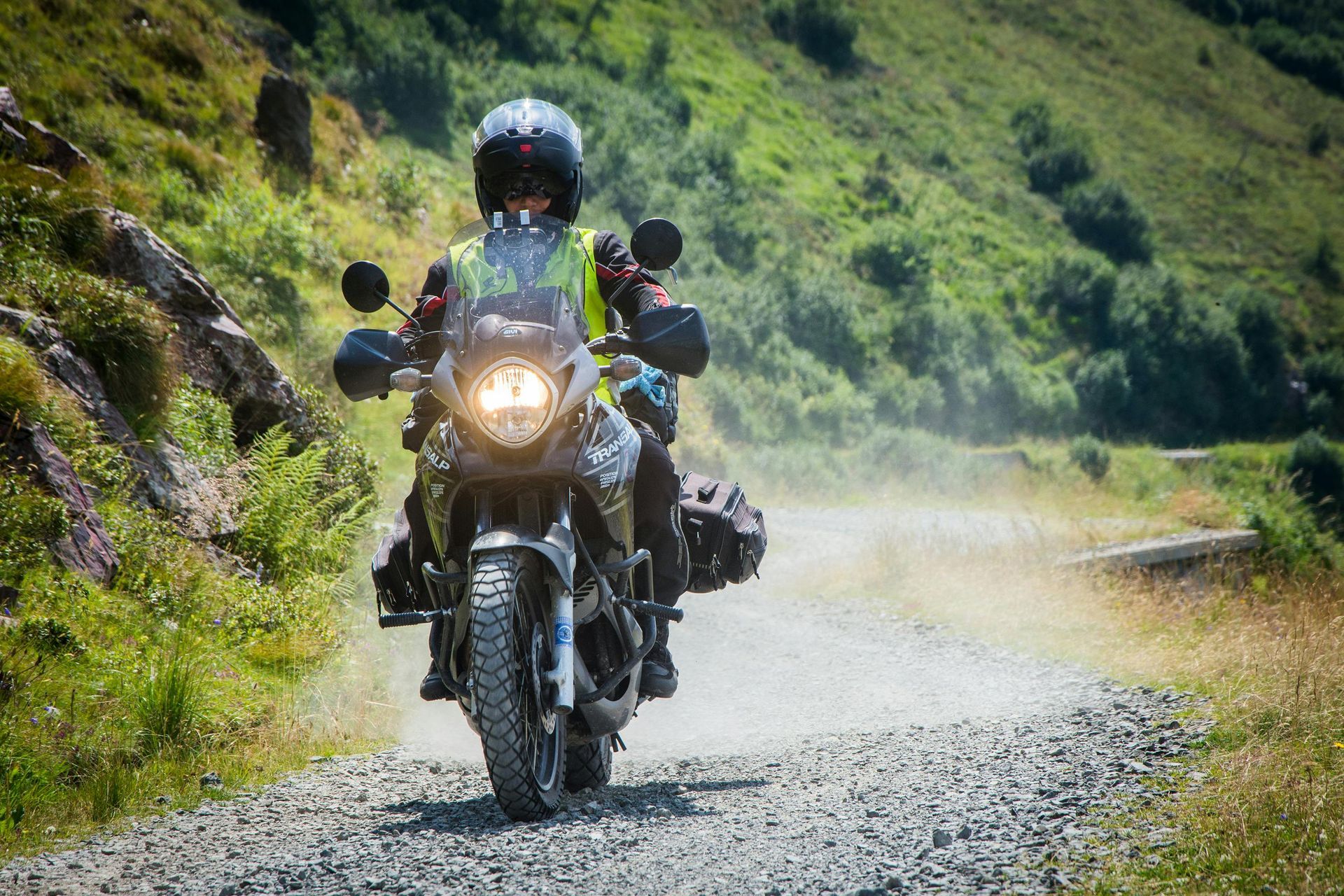
New Paragraph
This is paragraph text. Click it or hit the Manage Text button to change the font, color, size, format, and more. To set up site-wide paragraph and title styles, go to Site Theme.
Honda Transalp 2026
Honda Transalp 2026 The “grown-up” mid-size ADV that’ll do dirt… without pretending it’s a rally bike
Honda’s XL750 Transalp for 2026 is basically the sensible mate in your riding group who still shows up for gravel rides, but also pays their rego on time and owns a torque wrench that isn’t “calibrated by vibes”.
The headline is the E-Clutch version for 2026, plus a handful of practical tweaks aimed at making the Transalp easier to ride, easier to live with, and a bit more trail-ready—without turning it into an actual enduro weapon.
What it is (and what it isn’t)
It is: a mid-size adventure-touring bike that leans “all-rounder” — commuting, weekend twisties, light touring, and realistic off-road (think forestry roads, station tracks, and that “shortcut” your mate swore was fine).
It isn’t: a dedicated dirt bike, a rally replica, or a 200 kg enduro unicorn. At 216 kg kerb weight (E-Clutch 2026 spec), physics still clocks in for work, and might prove a bit of a handful off-road or those of us of the shorter stature.
2026 technical snapshot (the juicy bits)
Here’s the stuff you actually care about when you’re standing in a showroom pretending you’re “just looking”.
Engine & performance
- 755 cc liquid-cooled parallel twin with a 270° crank (more character than a sewing-machine twin)
- 67.5 kW @ 9,500 rpm
- 75 Nm @ 7,250 rpm
- Fuel injection (PGM-FI)
Translation: plenty of shove for overtakes and touring, without the “why is my rear tyre a consumable?” madness of the big-bore arms race.
Chassis, wheels, suspension
- 21” front / 18” rear spoked wheels, tube type
- Showa 43 mm USD forks, 200 mm travel
- Rear: Pro-Link, 190 mm travel
- Ground clearance: 210 mm
That wheel combo is a quiet promise that Honda expects you to leave the bitumen sometimes, not just park next to it for Instagram.
Dimensions & day-to-day living
- Seat height: 850 mm
- Fuel tank: 16.9 L
- Claimed consumption: 4.3 L/100 km (varies in the real world, especially with “Gravel Hound enthusiasm”)
- Kerb weight: 216 kg (E-Clutch 2026 spec)
Electronics & modes
- Ride modes: Sport / Standard / Rain / Gravel / User
- 5-inch TFT + Honda Road sync connectivity
- Rear ABS can be deactivated (thank you, Honda)
The 2026 headline: E-Clutch (what it means in plain English)
The Transalp E-Clutch 2026 keeps the normal 6-speed gearbox, but adds Honda’s E-Clutch system, meaning you can start/stop and shift without constantly feathering the clutch lever (you can still use the lever if you want).
Who benefits most?
- Newer ADV riders: less stall-fuelled panic when the track gets loose and the brain starts buffering.
- Commuters: stop-start traffic becomes less of a left-hand gym session.
- Tourers: smoother shifting when you’re tired, loaded, and negotiating a servo carpark like it’s a trials section.
Gravel Hound verdict: it’s like Honda installed a tiny riding coach in the clutch cover whose only job is whispering, “Relax, champ… I got this.”
Who the 2026 Transalp is aimed at
This bike makes the most sense for riders who want one bike to do most things well:
1) The “one-bike garage” realist
You commute, you weekend ride, you tour occasionally, and you do dirt roads when the map turns brown and your friends start acting brave.
2) The “downsizer”
You’ve done the big ADV thing, and now you’d like to finish a long day without feeling like you’ve been wrestling a fridge.
3) The “upgrader”
Coming from a 300–500 class ADV, the Transalp is a big step up in stability, comfort, and highway legs—without going full cruise-ship.
Pros (why it’s a strong buy)
- Proper ADV wheel sizes (21/18) + real suspension travel: it’s legitimately set up for gravel and rough roads.
- Friendly, usable power: strong numbers without the drama.
- E-Clutch option for 2026: lowers the workload and smooths out the “learning moments.”
- Rear ABS off: because dirt.
- Good range on paper with 16.9 L and claimed 4.3 L/100 km.
Cons (because no bike is perfect, not even your mate’s, and he won’t stop telling you)
- It’s still 216 kg (E-Clutch spec): manageable, yes. “Flickable like a 250,” no.
- 850 mm seat height: fine for many riders, but if you’re inseam-challenged, you’ll be doing the classic ADV ballet at stops.
- Tube-type tyres: spoked wheels are great; tubes are… character building. (Carry tools. Or friends. Preferably both.) A bit disappointing from Honda
- Not a hardcore enduro: if your “adventure” means sand whoops and hero lines all day, you’re shopping the wrong aisle.
- Air filter accessibility: why Honda why, tucked up under the fuel tank and behind the fairing panels The Air Filter: a Masterclass in “Because We Can. That humble, sacrificial sponge whose entire job is to die bravely so your engine may live. On an adventure bike. Designed, allegedly, for dust. Now, you’d think Honda — a company that has sent machines to the Moon, won Dakar stages, and built engines that outlive civilisations — might put the air filter somewhere sensible. Somewhere a tired rider could access after a long, dusty day without first achieving inner peace and removing half the motorcycle. You would be wrong. On the Transalp, the air filter lives beneath layers of plastic and under the fuel tank, like it’s being punished for something. It’s not under the seat. It’s not behind a side panel. It’s not even pretending to be field-serviceable. No — its buried deep in the bike’s core, protected from dust… and riders.
The Gravel Hound “should you buy it?” test
Buy the 2026 Transalp if you want:
- A genuinely capable mid-size ADV
- Road comfort + gravel confidence
- Modern electronics without needing a PhD
- An E-Clutch option that makes riding smoother and less tiring
Maybe look elsewhere if you want:
- The lightest possible dirt-focused weapon
- A bike that forgives zero maintenance and still survives your mate’s “let’s just send it” navigation choices
Yamaha Ténéré 700 World Raid (2026)
Yamaha Ténéré 700 World Raid (2026)
What Yamaha actually changed, and why it matters
The 2026 World Raid isn’t a “new sticker kit and a press photo in the desert” update. Yamaha’s basically taken the T7’s old-school honesty and bolted on the handful of modern bits that long-distance riders have been begging for—without turning it into a 260kg spaceship. It’s still a T7… but now it’s a proper long-haul weapon.
23L twin side-mounted connected aluminium tanks (lower CG + range) with Yamaha quoting ~500 km range. Yamaha Australia says the tanks are 1.5 kg lighter than before.
The bike keeps the rally vibe, but the “World Raid” brief is clearer than ever: go further, stay fresher, and keep control when the track turns nasty.
The fuel tanks: the World Raid’s whole personality
The connected twin tanks are the party trick. Capacity stays 23 litres, but the shape and mounting are all about mass centralisation—less “full tank flop” when you’re threading rocks, more stability when you’re pounding corrugations. Yamaha’s own wording leans heavily on this design as the reason it “keeps going.”
Gravel Hound translation: fewer panic prayers at 3 bars from nowhere, and less of that “why does it feel like I’m steering a half-full jerry can” moment mid-corner.
Electronics finally arrive: ride-by-wire + IMU brains (but not too much nanny)
This is the big philosophical shift: the 2026 World Raid gets Yamaha Chip Controlled Throttle (YCC-T) (ride-by-wire), replacing throttle cables. That unlocks two power modes and enables the modern assist suite.
A lot of outlets also point to a six-axis IMU underpinning the rider aids on the updated World Raid.
Why you care (in real riding terms):
Smoother/cleaner throttle control when it’s slick, steep, or both.
Rider aids that can be tuned to help rather than hijack.
Cruise control: the “I’m not 22 anymore” upgrade
Yamaha has added Cruise Control and a Speed Limiter. For a bike that’s built to eat distance, this is massive—especially for Australia and “get-there days.”
Tenere Tales angle: Cruise doesn’t make you soft. It saves your throttle hand so you’ve still got gas in the tank (the human one) when the road turns to gravel and the fun begins.
Dash + controls: modern cockpit, less mucking about
The World Raid runs a 6.3-inch full-colour TFT and updated switchgear, aimed at better usability and (depending on market/fitment) navigation/connectivity features. Yamaha highlights the TFT as a key comfort/tech step for the distance mission.
Suspension: “World Raid” means you can actually adjust it properly
Yamaha calls out fully adjustable KYB kit and the linked-type KYB Monocross rear as core hardware for control and comfort.
This matters because World Raid riders tend to be:
heavier (luggage + tools + water + “just in case” spares),
doing longer days,
hitting rougher surfaces.
Engine: familiar CP2, updated for the rules—and the ride
It’s still the CP2 689cc parallel twin character everyone trusts, now updated for EU5+ with Yamaha talking up improved torque delivery/response.
Bennetts lists output at 54 kW and 68 Nm (with peak power at 9,000 rpm).
The important bit: World Raid owners don’t need more peak horsepower. They need predictable drive when traction is vague and the bike is loaded.
Australia: when you can actually buy it (and what it’ll cost)
For us here: Australian reporting and dealers state June 2026 arrival, priced from $27,349 ride-away.
Who should care (and who shouldn’t)
You should care if:
you do real-distance rides (hello Tassie mission planning),
you’re sick of wrist fatigue on transit days,
you want the T7 feel but with just enough modern support.
You might not care if:
you’re a minimalist who loves cables and hates screens,
you ride mostly local loops where range and cruise are irrelevant,
you already own a well-set-up older World Raid and prefer to spend the difference on suspension tuning + tanks + a holiday.
Tenere Tales “closing punch”
The 2026 World Raid looks like Yamaha listened to the exact rider who buys a T7: the one who wants reliability and simplicity, but also wants to finish day three without feeling like their right wrist has been through a belt sander.
When Will the Big-ADV Power Arms Race End? (And Why KTM’s 1390R Is Both the Answer and the Problem)
There was a time when a “big adventure bike” meant you could cross a continent, hop a few cattle grids, and still have enough puff left to overtake a caravan doing 83 in a 110 zone. Now? We’ve got bikes rolling out with the kind of power figures that used to live exclusively in the “I shouldn’t be trusted with this” section of the showroom. Enter KTM’s latest orange declaration of war: the 1390 Super Adventure R—1350cc, about 173 hp, and 145 Nm of torque, while still ticking the modern emissions box.
It’s basically KTM looking the industry dead in the eyes and saying: “You want more? Fine. Here. Try not to lick the throttle. “So the real question is: when will the quest for more power be over? And the Gravel Hound answer is: not soon… but it will eventually run into a wall.
The Power Arms Race: Why It Keeps Happening
1) Because horsepower is an easy headline
Most riders don’t test suspension valving, torque curves, aero stability, or low-speed fuelling in a brochure. But everyone understands “173 hp”. It’s simple. It sells.
2) Because the big-ADV buyer is often two riders in one
Half the week: touring weapon.
Weekend: “I’m basically Pol Tarres” cosplay.
So manufacturers build a bike that can do 200 km/h on the tarmac and still pretend it wants to see a dirt road. (Pretend being the key word.)
3) Because competition forces escalation
BMW does a thing → Ducati does a louder thing → KTM responds with a thing that looks like it was designed during a Monster Energy-fuelled argument.
So… When Does It End?
It ends when the returns stop being worth the trade-offs. We’re already close. The ceiling isn’t “because riders don’t want power.” Plenty do. The ceiling is because power drags baggage with it, like a mate who says he’ll bring one beer and shows up with an esky, a generator, and emotional problems. Here’s what eventually taps the brakes:
- Traction reality: adventure tyres, gravel, wet bitumen, luggage, and dodgy body position don’t care about your dyno sheet.
- Weight + complexity: making big power rideable means more electronics, stronger components, bigger cooling demands, etc.
- Regulations + emissions: staying compliant while pushing numbers becomes expensive engineering, not just “bigger bang.”
- The “useable speed” problem: most riders can’t regularly use full power without either losing licences or meeting a wombat at Mach 2.
KTM itself is basically hinting at the next phase: more usable performance, not just bigger numbers—talking up
Camshaft tech, emissions compliance, and long service intervals (like valve checks at
60,000 km).
That’s a sign the arms race is shifting from
“more power” to
“more control and less penalty.”
KTM 1390R: The Pros
1) Effortless overtakes and loaded touring
Big torque (145 Nm) means you can pass traffic even when the bike’s carrying:
- panniers,
- camping gear,
- And your mate’s “essential” cast-iron frypan.
2) Safer when you’re disciplined
Counterintuitive, but true: strong roll-on power can shorten time spent exposed during overtakes—if you’ve got self-control.
3) Modern tech makes stupid power more manageable
Ride modes, traction control, cornering ABS, all that wizardry turns “near-death experience” into “mildly irresponsible grin.”
4) Service interval bragging rights
That 60,000 km valve clearance claim is KTM basically saying: “Yes it’s a weapon… but it doesn’t have to be high-maintenance drama.”
KTM 1390R: The Cons (A.K.A. Where the Gravel Hound Raises an Eyebrow)
1) Weight is the silent assassin
Big power bikes tend to be big everything bikes. Reports put the 1390 Super Adventure R at around
546 lb fully fuelled (about 248 kg-ish in real money).
That’s fine… until you’re on a greasy climb, the front’s ploughing, and you realise your “adventure” has become a slow-motion forklift incident.
2) Power you can’t use off-road is just expensive temptation
On loose surfaces, traction is your boss, not horsepower. After a point, more power just means:
- More wheel spin,
- More electronic intervention,
- More “why is it doing that?” moments.
3) Complexity and cost creep
More performance usually means more complexity, and complexity usually means:
- More sensors,
- More things that can go wrong far from home,
- More “dealer-only” solutions.
4) Rider confidence takes the hit
A big bike with big power can intimidate riders into riding tight, cautious, and awkward—especially on dirt.
And a tense rider on gravel is basically a shopping trolley with a throttle.
5) The industry risks forgetting what “adventure” means
Adventure used to mean capability.
Now it sometimes means horsepower theatre with a beak.
The Middle Ground: What We Actually Want (Even If We Don’t Admit It)
Here’s my hot take, Gravel Hound style:
Most riders would be better served by less peak power, and more of the following:
- strong low-mid torque, smooth delivery
- lighter weight
- better cooling and fuel range
- simpler, tougher components
- suspension set up for real-world loads
- ergonomics that work after 9 hours
- electronics that help without making the bike feel like it’s negotiating with you
The manufacturers know it too. That’s why we’re seeing the marketing shift to “rideability,” “refinement,” and “real-world performance,” not just dyno chest-thumping.
Final Verdict: Will the Power Race End?
It’ll slow down when:
- bikes get heavy enough that the next hp increase doesn’t feel like progress,
- riders get tired of paying for power they never use,
- and manufacturers realise the real flex is making a 250 kg bike feel like a 200 kg bike.
KTM’s 1390R is a brilliant example of the current peak: monstrous, sophisticated, insanely capable—and also proof we’re getting close to the point where the next “upgrade” should be weight, usability, and simplicity rather than another handful of horsepower.
Because when your adventure bike has 173 horses, the real adventure becomes:
“Can I behave myself enough to maintain my licence?”
Italy’s Moto GP Problem Isn’t at the Front of the Grid — it’s in the Car Park
If you judged Italian motorcycling purely by Moto GP right now, you’d think everything was rosy. Ducati’s everywhere. Aprilia punching massive holes in factory egos. Italian engineering sitting at the grown-ups’ table once again a throwback to the Golden age of MV Augusta and AGO. But a short stroll away from the big trucks, past the lavish hospitality units, down toward Moto3 and Moto2 — and the picture changes. It’s no longer noisy down there. It’s not dramatic. Espresso just not prevalent anymore, it’s just… thin. And thin is dangerous for the future of Italian Moto GP who are in Danger of following the Americans and The Brits before them.
The Ladder Used to Be There. Now it’s a Rope.
Once upon a time — not even that long ago — Italy had a ladder. A proper one. Wide rungs, handrails, and someone holding it steady at the bottom. That someone was Valentino Rossi and his VR 46 Team and academy. The Rossi Academy didn’t just train riders, it
placed them. It gave Italian kids something priceless in modern motorsport: a path that didn’t require a miracle. You could see the steps. Moto3. Moto2. Moto GP. Not guaranteed — but possible. Then VR46 packed up shop downstairs and moved upstairs. Perfectly understandable. Sensible, even. Moto3 and Moto2 are financial meat grinders and Moto GP is where influence actually lives. But when VR46 withdrew, it didn’t just leave a vacancy — it left a
hole in the floor. Now the Italian ladder isn’t a ladder. It’s a rope.
And you’d better hope you’ve got the grip strength.
Spain Didn’t Get Faster — It Just Kept Building
Here’s the uncomfortable truth: Spain didn’t suddenly start producing better riders. Spain just never stopped building the system. Their kids grow up racing on circuits that the teams already scout. Spain also seems to offer many more training opportunity’s with an abundance of Go cart tracks enabling Mini bike racing and practice after school possible. They move through junior categories that feed directly into the world championship. By the time a Spanish rider hits Moto3, the paddock already knows their name, their data, and their bad habits. See Pedro Acosta. Italian riders? Too often they arrive as strangers. Not because they’re slower — but because they’ve taken a different, bumpier road. One with fewer signposts and more toll booths.
The Cost of Hope
Nobody likes talking money in racing, but pretending it doesn’t matter is how you lose generations. Moto3 and Moto2 are no longer junior classes. They’re professional motorsport with junior optics. If you don’t arrive funded, connected, and ready, you’re already behind. Italy used to blunt that edge through structure. Now it asks families to blunt it themselves. That’s not a development system — that’s a filtering mechanism. And it filters out a lot of talent that simply runs out of runway.
The Ducati Irony
This is where it gets cruel. Italy builds the best bikes in the paddock. Ducati has redefined what “the right bike” even means. Aprilia is right there, throwing elbows. And yet, the better the bikes get, the harder it becomes for an Italian rider without momentum to get a seat. Why? Because when your bike is the weapon of choice, nationality stops mattering altogether. Teams don’t need “potential” — they want proof. Junior wins. Data trails. Evidence. The irony is brutal: Italian bikes are winning now because they stopped being sentimental. Italian rider development hasn’t caught up to that reality.
Life after Rossi Feels Quieter Than Expected
Rossi didn’t just win races — he created gravity. Kids leaned toward racing because he made it look possible. Sponsors leaned in because he made it look valuable. Parents leaned in because he made it look worth the risk. Now, without him racing and with VR46 refocused, Italy lacks a single loud, unavoidable junior narrative. There are riders. There is talent. But there is no central voice saying, this is the path — follow it. So talent scatters. Or stalls. Or disappears.
This Isn’t a Crisis. Yet.
Let’s be clear: Italy is not in decline. This isn’t doom. This isn’t some nostalgic “back in my day” rant. This is a warning light. Moto GP will happily run without Italian riders at the front if that’s what the pipeline delivers. It already has proof that nationality doesn’t win races — preparation does. Right now, Italy is still shouting at the top of the paddock. But two classes down, its gone quiet. And in racing, quiet rarely means everything’s fine.
Gravel Hound Closing Thought
You don’t lose Moto GP titles overnight. You lose them five years earlier — when the next rider never gets the call. Italy still builds the bikes everyone wants to ride.
The question is whether it still builds the riders who’ll be ready when the seat opens. Because ladders, once removed, are hard to climb.
Getting the Bike Ready: Preparing for Tasmania (Where the Roads Bite Back)
Tasmania is not the place to “she’ll be right” your bike prep. This is an island where roads can go from billiard-table smooth to frost-heaved goat track in the space of a cattle grid. Where weather forecasts are more of a philosophical suggestion. Where corners tighten, surfaces change mid-lean, and the locals in Utes drive like they’ve got somewhere important to be. In short: Tasmania rewards preparation — and punishes complacency. With our upcoming Tasmanian run looming, this is how I’m preparing the bike so it’s ready for long days, mixed surfaces, cold mornings, and the occasional moment of self-reflection when you realise you’re a long way from the nearest parts counter. In the interest of keeping the wheels turning and the smiles intact, we’ll be operating an officially unofficial Tasmanian Time-Wasting Tax. Any delays caused by preventable bike issues — such as optimistic tyre choices, “I meant to fix that” maintenance, or forgetting the spare parts or tools you were specifically allocated — will result in a small contribution to the group slush fund. This is not a punishment for bad luck or genuine mechanical gremlins; it’s simply a gentle reminder that our Tasmanian tour has a tight schedule and has no slack time for sourcing spare parts and having tyres fitted.
Tyres: Hope Is Not a Strategy
Let’s start with the obvious. If your tyres are “probably good for another couple of thousand kilometres,” they are not good for Tasmania. We will all be heading out from Crafers on Brand new rubber. Tasmanian roads are famously grippy when dry and alarmingly slick when damp — sometimes in the same corner. Fresh rubber with a known personality is worth its weight in ferry tickets.
Rule #1:
If you’re wondering whether you’ll get away with it — you won’t.
Brakes: Because Gravity Works Harder Down There
Tasmania has hills. Proper ones. Which means: Long descents, Heavy braking, Cold starts followed by hot callipers. Check:
- Pad thickness (front and rear)
- Disc condition
- Brake fluid age (if you can’t remember when it was changed, that’s your answer)
Spongy brakes in the Tasmanian highlands are a quick way to discover new swear words.
Suspension: Set It for Reality, Not Ego
Loaded bike.
Cold weather.
Broken back roads.
Unexpected cattle grids.
- Increase preload for luggage
- Make sure adjusters actually move
- Check for leaks
- Ensure steering head bearings aren’t quietly plotting against you
This isn’t about riding faster — it’s about riding longer, with less fatigue and fewer “why does it feel weird?” moments.
Chain, Sprockets & Driveline: The Unsexy Stuff That Ends Trips
Chains don’t care how good the scenery is. Clean it. Inspect it. Adjust it. Lube it Daily whilst covering this type of mileage. Same goes for sprockets, wheel bearings, and anything that spins or moves. Tasmania is not the place to discover a dry bearing or a tight spot you’ve been ignoring.
Rule #2:
Preventative maintenance is cheaper than Tasmanian recovery trucks.
Electricals: Because Cold Finds Weakness
Cold mornings expose electrical gremlins faster than any workshop test.
Check:
- Battery health
- Charging system
- Lights (especially brake and indicators)
- Accessory wiring (heated gear, GPS, phone chargers)
Nothing kills morale like a dead battery at a misty Tassie lookout while everyone else is sipping coffee and taking photos. Also allocated are two jump start sets for the crew.
Luggage & Mounts: If It Can Shake Loose, It Will
Tasmanian roads vibrate bikes in ways mainland roads simply don’t.
Every bolt, rack, and mount should be:
- Tight
- Thread-locked where appropriate
- Tested on a loaded shakedown ride
If you haven’t ridden your bike fully loaded before the trip, you are conducting a live experiment. Tasmania is an unforgiving laboratory. Special note to self, make sure and double check tie downs are adequate and tight, including making sure camera is secure in mount as I’m famous for causing Go Pros to go diving down the road and holding the crew up while I retrieve said camera.
Spares & Tools: Ride Light, Think Heavy
No need to carry half a workshop — but you do need:
- Tyre repair kit
- Air solution
- Basic tools for your bike
- Chain lube
- A few strategic spares
The goal isn’t to rebuild the bike roadside — it’s to get moving again without drama.
Final Thoughts: Respect the Island
Tasmania is spectacular. Brutally beautiful. Technically demanding. Deeply rewarding.
But it asks one thing in return: respect. A well-prepared bike means:
- Less stress
- More confidence
- More brain space to enjoy the ride
Get the prep right, and Tasmania delivers some of the best riding you’ll ever do. Get it wrong, and you’ll still have stories — just not the ones you wanted. See you on the ferry.
Bring good tyres. And don’t trust the weather app.
Tasmania’s weather has the emotional stability of a two-stroke on bad fuel, so your riding gear needs to cover everything from high-30-degree heat to low single digits with sideways rain — sometimes in the same day. Layering is king: breathable base layers, proper insulation you can add or remove, and a genuinely waterproof outer shell (not “water-resistant if you believe hard enough”). Ventilation matters, so do seals, and if your gloves or boots take on water easily, assume they will — repeatedly. Heated gear isn’t overkill, its morale management, and dry socks are worth their weight in ferry tickets. Dress for the worst, vent for the best, and remember: in Tasmania, the sun is often just an apology between rain showers.
The Gravel Hound Packing Commandments (Tasmanian Edition)
I. Thou shalt not pack optimism as a weather strategy.
If your plan relies on “it probably won’t rain,” Tasmania has already decided otherwise.
II. Thou shalt honour thy waterproofs, for they shall keep thee warm and dry.
And if they are not actually waterproof, they will be exposed, shamed, and soaked.
III. Thou shalt bring layers, and thou shalt bring many.
For the day may begin at 32 degrees and end at 4, and neither will warn you.
IV. Thou shalt not test new gear on this trip.
Tasmania is not your beta-testing environment. Ride-tested gear only.
V. Thou shalt respect heated grips and heated liners, for they are morale devices.
They do not make you weak — they make you functional.
VI. Thou shalt pack dry socks as if thy happiness depends on them.
Because it does.
VII. Thou shalt secure thy luggage, lest it depart thee at speed.
Tasmanian roads vibrate loose anything held together by hope.
VIII. Thou shalt carry the tools and spares assigned unto thee.
And thou shalt remember where thou packed them when required.
IX. Thou shalt not bring gear that surrenders at the first puddle.
This includes boots, gloves, and emotional resilience.
X. Thou shalt honour the Klim Kaiser on his milestone birthday.
Celebrate with cake, stories, and dignity — not hypothermia, regret, or a poorly chosen jacket.
Set Your Bearings: A Rider’s reset for the Year Ahead.
The turn of a new year has a funny way of doing that thing to riders. Somewhere between the last ride of December and the first coffee of January, we all quietly think the same thought: “This will be the year I ride more.” Sometimes that means more kilometres. Sometimes it means new places. And sometimes it just means getting back to why we ride in the first place. At Tenere Tales, we’re not big on New Year’s resolutions. Bikes don’t care about promises. Instead, we like the idea of setting your bearings — choosing a direction, making a few deliberate decisions, and letting the road (or the dirt) do the rest.
Choose Experiences, Not Just Distances
There’s nothing wrong with chasing big numbers on the odometer, but some of the best rides have very little to do with distance. This year, consider choosing experiences instead:
· Your first proper overnight ride
- Your first gravel loop that actually makes you nervous (in a good way)
- That route you’ve saved, talked about, and never quite committed to
Riding with intent changes everything. You don’t need to ride harder or faster — just more deliberately. A good route has a way of pulling you out of autopilot. It asks you to be present. To read the surface. To think a corner ahead. That’s where riding starts to feel like riding again. We have all had days when we are not feeling it and just run on auto pilot and go through the motions, this can also be dangerous because concentration becomes an issue.
Start the Year Ride-Ready, Not Instagram-Ready
January is a great time to give the bike an honest look — not for upgrades, but for reliability. Forget the shiny stuff for a moment and check the basics:
- Tyres that suit how and where you actually ride
- Chain, sprockets, wheel bearings
- Suspension set for your weight, not the factory average
- Comfort tweaks that reduce fatigue, not just posture points
A bike that starts every time and finishes the day without drama is far more confidence-building than one that looks good parked outside a café.
The Rider Matters More Than the Bike
We spend a lot of time talking about machines, but the rider is still the biggest variable. A few small resets go a long way:
- Refresh slow-speed control
- Practice braking on mixed surfaces
- Spend time standing on the pegs properly
Just as important is headspace. Ride within your limits. Leave margin. Most crashes don’t happen because riders lack skill — they happen because riders ignore fatigue, ego, or conditions. There’s no trophy for getting home exhausted.
Tasmania: Setting the Bearings for Real
For our small band of intrepid adventures, this year already has a clear compass point — Tasmania. From 7–17 February 2026, a small crew will point the front wheels south and commit to an 11-day, 4,600-plus kilometre adventure that blends long transport days, relentless twisty tarmac, and some of the best gravel riding the island has to offer. This isn’t a rushed lap or a highlight-reel smash-and-grab. It’s a deliberately planned ride with time built in to actually ride Tasmania — not just tick it off. The journey starts the only honest way it can: an early roll-out from Adelaide to Geelong, tight timing, and the familiar hum of the Spirit of Tasmania loading ramp. By dawn the next morning, we roll into Devonport with the island waiting. From there, the route unfolds properly:
- Ben Lomond and Jacob’s Ladder, climbing early to remind us Tassie doesn’t ease you in gently
- Backroads through Scottsdale and Branxholm, mixing farmland dirt and forest tracks
- East coast nights via St Helens, then south through Bicheno, Coles Bay and Orford
- A southern loop taking in Hobart, Mount Wellington and Bruny Island
- Remote inland riding via Strathgordon, Lake Gordon and the Gordon Dam, where fuel planning matters and 91 octane is sometimes all you get
- The west coast classic from Derwent Bridge to Queenstown, a stretch many riders quietly call the best road in Australia
- A full sweep through Strahan, Smithton, Stanley, Zeehan and Tullah, blending C-roads, forest tracks and sweeping highways
- A final Tassie farewell via Cradle Mountain, Mole Creek, the Great Lakes and Sheffield, before boarding the ferry home
The return leg is part of the adventure too — the Great Ocean Road, Mount Gambier, and a coastal run through Beachport, Robe and the Coorong bringing the trip full circle back to Adelaide. This trip is exactly what setting your bearings looks like in practice:
- Bikes serviced, not just accessorised
- Tyres chosen for durability (Tassie’s coarse roads are hard on rubber)
- Ferries and accommodation locked in early
- A planned route with enough flexibility to enjoy the unexpected
Somewhere between ferry crossings, fuel stops and another debate about tyre pressures, the Klim Kaiser will quietly notch up a milestone birthday while we’re away. There will be no candles (fire risk), no cake (crumb control), and absolutely no slowing down to “act his age.” Instead, the celebration will involve more kilometres, questionable pub meals, copious amounts of Achol and the undeniable proof that experience and good Klim gear age far better than most of us. Milestone acknowledged — riding will continues. More than anything, it’s about intent. Not riding harder — riding properly, day after day, in changing conditions, with good people and good roads.
Riding Is Better Shared
Motorcycling has always been a quiet social contract. The nod. The wave. The fuel-stop conversations. The shared tracks passed on like secrets. This year, make space for community:
- Ride with someone new
- Share a route
- Ask a question you think you should already know the answer to
Tenere Tales exists because riding is better when it’s shared — routes, stories, and lessons learned the hard way.
Set One Bearing and Start Rolling
So here’s the invitation.
Don’t overthink the year. Don’t wait for perfect timing, perfect gear, or perfect fitness. Pick one ride you want to do this year. One route. One trip. One experience. Set your bearings — and start moving. If a GPX file helps turn “one day” into “this year”, you know where to find us. See you out there.
Ride safe. Ride curious. Ride ready.
The Evolution of Suzuki Adventure series
From the DR Series to the V-Strom – When Two Very Different Paths Shared the Same DNA. Not all adventure motorcycles chased Dakar podiums.
Some were built simply to start every time, survive abuse, and ask very little in return. Suzuki’s adventure story doesn’t shout. It doesn’t boast cutting-edge electronics or race wins plastered across brochures. Instead, it quietly split into two parallel philosophies — the brutally simple DR series, and later, the refined, misunderstood V-Strom. Both came from the same company. Both serve adventure riders. And yet, they couldn’t be more different.
The DR Series – When Simple Was the Design Brief
The DR lineage began long before the term “adventure bike” meant Bluetooth menus and rider modes. Bikes like the DR600, DR650, and DR-Z400 were built when off-road meant dirt roads, station tracks, fire trails — and no support truck in sight. The DR formula was blunt: Air/oil-cooled single-cylinder engines, steel frame, minimal electrics and most importantly easy access to everything you might break or need to clean.
The DR650, in particular, became legendary not because it excelled at anything — but because it was good enough at everything and rarely complained. Well capable of holding its own Crossing deserts, commuting, out with the boys on the trail even a thrashing on the bitumen backroads with a smile on your dial. Did it all usually with no more than a few tools you carried under the seat no fancy racks for these guys.
Why the DR Earned Trust
- No ride modes to fail
- Carbs you could strip in the bush
- Suspension you worked around, not with menus
- Engines that ran hot, cold, abused, neglected — and kept running
It wasn’t glamorous. It was dependable. And in Australia, that mattered more than any any fancy marketing.
The Problem with the DR (And Why Suzuki Moved On)
For all its strengths, the DR series had limits. As riders aged (and expectations changed), the DR began to show cracks: Vibration on the freeway, no weather protection, very modest power output and not what most of us would call comfortable by modern standards.
Adventure riding was evolving. Riders wanted: to stay in the saddle for some longer day and multiday rides, often requiring long stretches of highway and the need to carry luggage or even for some a pillion. What was needed was reliability without forgoing the creature comforts. So Suzuki held its hand up and didn’t try to reinvent this cult machine. They created a new cult figure. Completely different.
Enter the V-Strom – A Different Kind of Adventure
In 2002, Suzuki released the DL1000 V-Strom, followed shortly by the far more successful DL650. This wasn’t a dirt bike pretending to tour. It was a road bike adapted for the long way around. Instead of chasing off-road dominance, the V-Strom focused on: Rider comfort in a very stable platform a decent touring range and maintain some of that legendary real world reliability. The engine choice told you everything you needed to know about this development a proven V Twin (later a parallel twin designed to run all day stress free fully loaded in all weathers. The V-Strom didn’t want to impress Instagram — it just wanted you to arrive refreshed and relaxed.
Why the V-Strom 650 Became a Benchmark
The V-Strom 650 is perhaps one of the most quietly successful motorcycles ever made. And yet, it’s often overlooked. Why? Because it doesn’t posture. What modern Suzuki does haven’t made a good looking bike since the GSXR 1100 as far as I’m concerned but in fairness the V-Strom did a job, offered decent fuel economy, neutral novice friendly handling character, arm chair comfort for all day excursions and near bullet proof reliability. It became the bike that: riders new to Adventure riding didn’t outgrow to quickly as is the case with KTM 390 Adventure and I suspect the Royal Enfield Himalaya, sensible (kind word for Old) riders quietly returned to participate in some long distance touring with the occasional forte up in gravel road or two. It really did earn a great deal of trust from its band of avid followers. In many ways, the V-Strom replaced the DR for riders whose adventures shifted from mere survival to fun leisurely travel.
Two Philosophies, One Honest Brand
This is what makes Suzuki’s adventure evolution interesting. They didn’t pretend one bike could do everything. KTM should have followed this philosophy instead of selling a 390 Duke in drag and duping us into telling us it was a capable lightweight adventure bike.
Instead:
- DR = bush-first, fix-it-yourself, suffer a little
- V-Strom = distance-first, comfort-focused, quietly capable
Where other manufacturers chased image and escalation, Suzuki stayed practical. No rush, no arms race, No spec-sheet warfare. Just bikes that worked and did what it said on the tin they never pretended to be anything else. In 2025, we find ourselves circling back toward lighter, simpler adventure bikes. See Yamaha Tenere 700, CF Moto 450 MT Royal Enfield Himalayan and hey presto DR650s are still being bought new, V-Strom 650s are seen crossing continents and many riders myself included are questioning complexity is worth it. The Humble DR reminds us you don’t need sophistication to get out with a bunch of mates and explore some gravel and single track just reliability and commitment. The V-Strom serves to remind us that Adventure neither has to be uncomfortable or extreme for it to be real.
The Gravel Hound Verdict
Suzuki didn’t abandon adventure — they split it into two honest paths. One stayed in the dust, wearing scars with pride. The other took the long way around in quiet confidence. Two very different bikes with a shared DNA, in a world that is constantly chasing the next big thing Suzuki’s philosophy deserves a bit of respect. Neither the DR nor the V-Strom is my cup of tea but respect where respect is due. Both deserve their place in Adventure riding history. I have a confession I do own a 1985 DR 600
THE EVOLUTION OF THE KTM ADVENTURE SERIES
How KTM Took Dakar Attitude, Poured It into a Fuel Tank, and Told the World to Hang On, Adventure bikes usually evolve gently — a few extra cc here, a fresh dash there, maybe a beak redesign that gains 0.02% more aerodynamic smugness. But KTM didn’t evolve. KTM escaped. The orange brand didn’t look at adventure riders and ask,
“What do you need? “They looked across the Sahara, squinted through the heat haze at the Paris–Dakar Rally… and asked, “How stupidly fast can we go before someone complains? “This is the story of how a quirky Austrian dirt-bike company became the patron saint of aggressive adventure riding — and why KTM’s Adventure series still feels like starting a bar fight with the desert itself.
The 640 Adventure (1997–2007)
In a time before electronics, TFT screens, and well before ABS became a government-mandated safety blanket… there once was the KTM 640 Adventure. A machine that didn’t just stand tall — it loomed. A bike so high you practically needed a stepladder and a pep talk just to swing a leg over. It rattled like a bag of spanners and cornered with all the grace of a shopping trolley missing a wheel, but none of that mattered. The 640A was built around the LC4 engine — a single-cylinder thumper that produced more vibrations than horsepower and somehow wore that as a badge of honour.
Yet this oddball, this uncompromising, slightly feral creature, became a cult icon. Why? Because no sensible manufacturer would have dared build something so focused, so unapologetically tough, and so blatantly Dakar-inspired. If you wanted a motorcycle that could cross the Nullarbor without blinking, blow past 4WDs on gravel like they were parked, and survive a low-speed crash with nothing more than a fresh scar and a story… the 640 Adventure was your mate.
It was here — in the madness, the noise, the height, and the sheer audacity — that KTM cemented its philosophy: win rallies first, sell bikes second. And the world has been better (and slightly more bruised) for it ever since.
The 950 & 990 Adventure — Dakar DNA Comes to the Streets (2003–2012)
The late ’90s and early 2000s were KTM’s golden rally era — Fabrizio Meoni, Marc Coma, Cyril Despres. big names. Big bikes. Big wins. So KTM took their rally platform and gave it to the public: the 950 Adventure. Twin-cylinder. Big 22-litre tank. Suspension tall enough to need oxygen. A chassis that said, “Yes, you can jump me. Please jump me! ”These weren’t adventure bikes as we know them today. These were weapons.
The 950 and later 990 Adventure became legends for one simple reason: They rode like oversized enduro bikes that somehow had headlights. Perfect for those amongst us that thought the BMW GS was a bit soft and the Africa Twin too polite, the 950/990 Adventure shouted: “Stop worrying’ and give it the berries.” The 990 brought EFI, better brakes, and even more punch — but retained that raw rally attitude. Many still say it’s the best big ADV bike ever built.
The 1190 Adventure — the Orange Brand Grows Up (2013–2016)
KTM shocked the industry with the 1190. It had… wait for it…refinement. Suddenly the orange hooligan had some manners. Still fast? Absolutely — 148 hp in an ADV bike was practically unheard of at the time. Still capable? It could dance through sand, corrugations, and twisties better than anything its size had any right to. But this was KTM admitting the market had changed. Reliable electronics. Traction control. ABS that actually worked off-road. A chassis ready for long-haul travel. And yet, if you twisted the throttle far enough, it still whispered: “Mate… do you want to see God?”
The 1290 Super Adventure — When Too Much Power Still Isn’t Enough (2015–Present)
Here lies madness. The KTM 1290 Super Adventure is what happens when a company asks itself: “How big can we go before physics takes out a restraining order?”
We’re talking:
- Up to 160 horsepower
- Semi-active WP suspension
- Cornering lights
- Electronics smarter than the average driver
- Cruise control (so you can relax while you break the sound barrier)
The 1290 is absurd and brilliant. A motorcycle that can tour across Australia in plush comfort… then get on gravel and make you feel like Toby Price in a mid-life crisis. It’s the ADV bike for riders who believe restraint is a medical condition.
The 790 / 890 Adventure — The Return to Dirt-First Thinking (2019–Present)
After building big, heavy adventure muscle bikes, KTM took a hard pivot.
Enter the 790 and later 890 Adventure platforms.
Right away:
Low-slung tanks.
Proper off-road geometry.
A chassis that says, “Take me places you’d normally only take an enduro.”
KTM had finally made the unicorn many riders wanted:
A middleweight ADV bike that actually rides like a dirt bike.
The R version in particular is a benchmark. If the 1290 is the sledgehammer, the 890R is the scalpel covered in dust.
KTM 390 Adventure
Less said about this the better although a very nice capable beginner friendly bike to use on the bitumen that is squarely where this bike should stay it has to be said definitely not one of KTM’s best ideas
The KTM Philosophy — Why Their Bikes Feel Different
Three truths define the orange DNA:
1. Power is fun, but dirt manners are sacred
Even the 1290 feels like an overgrown dirt bike when ridden aggressively.
2. Electronics must help, not tame
KTM tech is designed to let the bike go faster, not behave better.
3. KTM builds for riders who push limits
Not the “quiet tourer.”
Not the “smooth commuter.”
But the rider who enters a gravel corner thinking:
“Let’s see what happens.”
And let’s be honest — the world needs that kind of chaos.
What’s next for KTM?
Rumours, clues, and educated guesses:
- A new 990 or 901 Rally model
- More widespread semi-active suspension
- Lighter chassis across the range
- Hybrid or electric rally prototypes
- Continued focus on Dakar dominance
Whatever comes, it will not be sensible.
And thank goodness for that.
Final Thoughts — Why KTM Still Matters
In a world where adventure bikes are becoming safer, cleaner, and more polite, KTM stubbornly remains the brand that says:
“Adventure should feel a little bit dangerous.”
The 640 thumped it into shape.
The 950/990 showed us what rally spirit feels like.
The 1190 gave it sophistication.
The 1290 turned it into a tyre-shredding monster.
The 790/890 brought it back to its dirt-first roots.
The 390 opened the door for everyone else.
No other manufacturer has such a chaotic, brilliant lineage. And that’s why the KTM adventure story isn’t just evolution. It’s a riot. A glorious, dust-filled riot.
The History & Evolution of the Honda Africa Twin
From Dakar glory to modern-day adventure royalty
While some bikes borrow the adventure aesthetic, the Africa Twin earned it the hard way — by conquering the toughest rally on earth and carving its legend across sand, stone and big-mile expeditions long before Instagram made adventure bikes fashionable. As with all true Adventure Icons such as the Yamaha Ténéré, BMW GS, and Suzuki DR lineage, the Africa Twin wasn’t just built to look the part. It was engineered to survive continents. This is the story of how Honda created one of the most respected adventure motorcycles ever made.
1. Dakar Roots – The Birth of a Legend (1980s)
Like other true adventure bikes the Africa Twin’s bloodline begins in the crucible of the Paris–Dakar Rally — a brutal 10,000 km odyssey across France, Spain, and the Sahara Desert.
In 1986, Honda unleashed the NXR750V, a factory-built desert weapon. It was a purpose built V twin rally racer, very lightweight for its time and unbelievably tough, designed and built with dominating the Dakar in mind. Dominate it did The NXR 650 went on to win four consecutive Dakar’s (1986-1989) etching the Honda name into Rally History. A feat that Honda would not repeat again until 2020 with Ricky Brabec on the CRF 450 (CRF has 3 Victories 2020, 2021 &2024) As Yamaha found with this success came strong customer demand riders wanted to sample some of this Dakar spirit.
Honda responded to the rally fever by releasing a street-legal version of the NXR — the XRV650 Africa Twin. It wasn’t a full replica but it had a 647cc V-twin, long travel suspension, Oversize fuel tank sporting that iconic Dakar livery couple that with geometry that actually inspired some exploration and adventure. The target customer was someone who yearned travel of the type that just threw some soft luggage over the back and disappeared into the wilderness. Even todays collectors consider the 650 one of the PURE Africa Twins.
The XRV750 (1990–2003) this is the model most adventure riders think of when they hear “Africa Twin.” The XRV750 grew from its 650 base into something bigger, more capable and more refined. So what made the XRV750 so legendary? Well first up that bullet proof 742cc V Twin engine, perfect geometry for most riders that was really well balanced and a joy to ride even at low speeds a massive 23 litre fuel load for some true adventure range. All making for unheard of reliability with some examples knocking around with over 300,000 km’s on the clock. It wasn’t lightning fast or all that flashy but it sat just right to do the job it was designed to do. On the quiet The XRV750 became the motorcycle of choice for global overlanders — the kind who crossed continents without a support vehicle or a sponsorship deal. It was a working-class hero of the adventure world.
Adventure bikes evolved and adventure riding became more fashionable. The riders themselves evolved strangely Honda didn’t seem bothered by this evolution movement, maybe they just wanted to distance themselves from the growing band of Latte sipping hordes masquerading as bike riders that were fashionable at the time. After 2003 the Africa twin disappeared leaving Honda faithful begging for a successor that didn’t materialise for a while Mean while the incumbents made their move and put their best foot forward BMW GS went bigger and more electronics, KTM went more aggressive all the while Yamaha stuck with the ever reliable Tenere Linage
Honda spent a decade watching the segment it helped create explode in popularity. Then, like a patient samurai returning from exile… The Rebirth: CRF1000L Africa Twin (2016) The Africa Twin came roaring back with a modern interpretation of the original philosophy: 1000cc Parrallel twin not the V a change that was the subject of great debate in the Honda community, a move which was later to be celebrated producing balnced capable power without being intimidating, long travel suspension providing ample ground clearance for even the most adventurous, some off road inspired geometry and a huge gamble on the option of having DCT dual clutch transmission this was a real shock to the off road world as it was unheard of. This model wasn’t chasing horsepower wars. Honda targeted real-world adventure, durability, and approachability — exactly what made the originals so great and much loved. It felt like a big dirt bike, it carried its weight down low and disguised its true weight which encouraged exploration for an average ability rider. Finally the legend was reborn.
The Evolution Continues: CRF1100L (2020–2025) Honda then refined the modern platform into a more powerful, more polished machine. Enlarging the capacity to 1084cc giving much more torque across the range all sitting in a lighter frame combined with an improved electronic suite that boasted traction control,wheel control and preset riding modes all visible on the large TFT screen a new version DCT made for a smoother ride, electronic adjustable suspension and a 25 litre tank completing this adventure weapon. The 1100 brought the Africa Twin into the premium adventure segment while keeping its “ride it anywhere” spirit intact.
Honda’s approach has been evolutionary, not revolutionary — exactly what long-distance riders trust. Even with fierce competition — KTM 890/990, Yamaha Ténéré 700, Triumph Tiger 900, Aprilia Tuareg 660, and BMW’s F-series — the Africa Twin remains uniquely positioned. Adventure Riders Love It Because:
- It’s tough without being agricultural
- Smooth without being boring
- Technologically advanced without being overcomplicated
- Comfortable for distance
- Surprisingly capable in technical terrain
- Reliable enough to take into the middle of nowhere
It sits beautifully between the “lightweight rally bike” crowd and the “luxury adventure barge” crowd.
It is, simply, a bike that wants to explore.
Rumours are that a possible 850cc – 900cc lighter more rally inspired version may be in the pipeline.
Final Thoughts
The Africa Twin has come a long way since its desert-racing origins in the 1980s. What began as a Dakar-bred rally replica has evolved into a global adventure icon, trusted by riders exploring outback tracks, crossing borders, and commuting through city jungles. It’s a bike that doesn’t just take you places — it takes you back to a time when adventure riding was about getting lost. About pushing on. About coming home with stories. And for that reason, the Africa Twin remains one of the most respected adventure motorcycles ever made — a genuine companion for riders who actually ride.
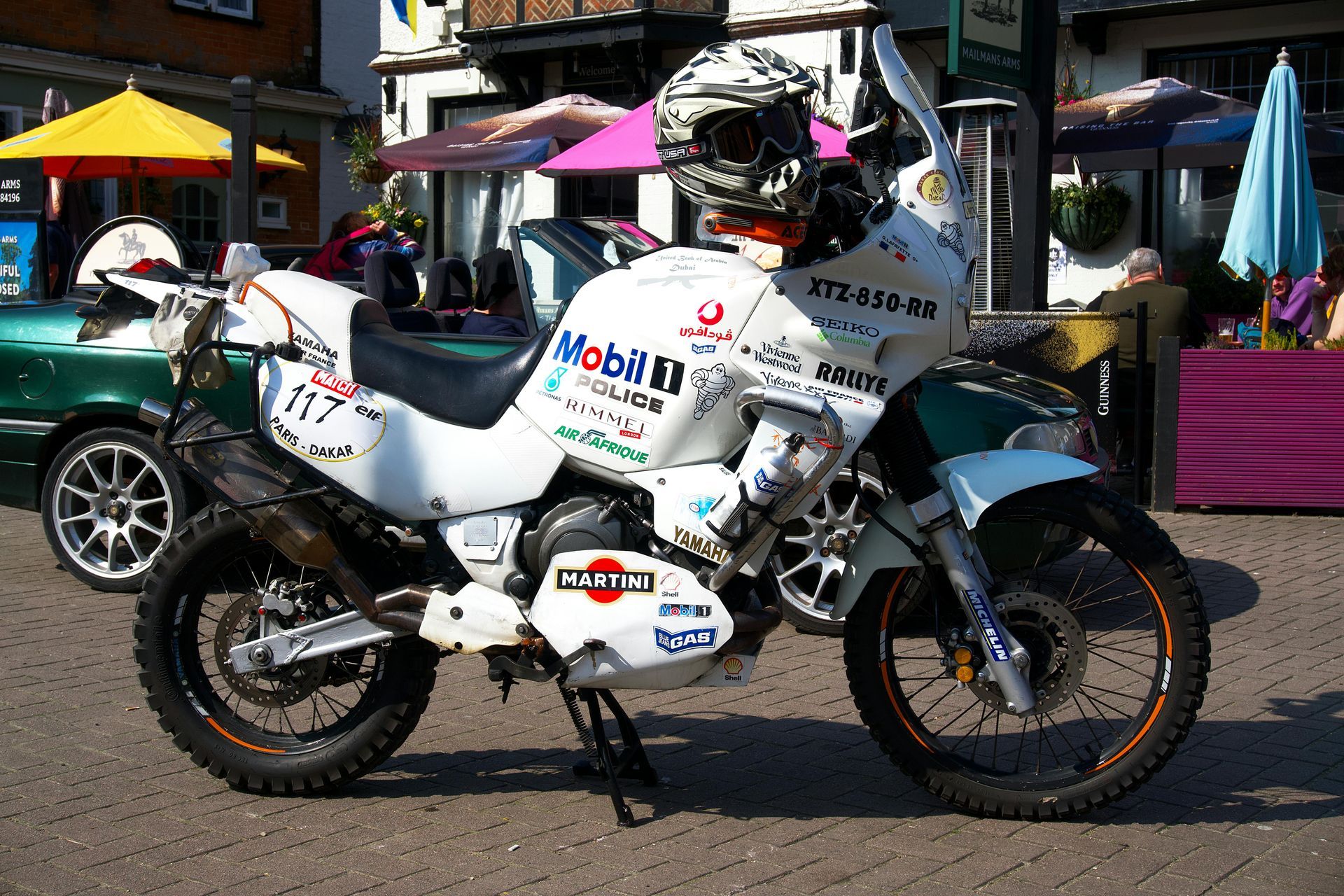
The Evolution of the Yamaha Ténéré
Few motorcycles have a lineage as rugged, romantic, and unmistakably adventure-born as the Yamaha Ténéré. Named after the vast, unforgiving Ténéré Desert of the Sahara, the model has spent four decades carving its own path through dunes, gravel tracks, goat trails and eventually the hearts of real world riders across the globe. For true middleweight tragic riders like myself, it’s the sweet-spot Ténérés that matter most: the bikes that weren’t too big, weren’t too heavy, and didn’t need a sky-high mortgage to keep running. This is the history of the pure Ténéré line.
Origins
Before there was a “Ténéré” named bike, there was a Yamaha obsession: win the Paris-Dakar Rally. In the late 1970s Yamaha’s off-road engineers took the proven XT500 and XT550 platforms and adapted them for multi-day endurance racing. The features that would eventually define the Ténéré already existed here: big, reliable thumping singles, long-travel suspension, ultra-simple mechanical architecture, extended fuel range and rally-inspired ergonomics. Then came the watershed moment: 1982. A young French rider named Stéphane Peterhansel didn’t win yet—but Yamaha’s presence and dominance in early Dakar set the stage. After this early limited success Yamaha went all-in. The public were crying out for these bikes that the Dakar riders were taking across 10,000 km of desert. So Yamaha decided to build one.
XT600Z Ténéré (1983–1990 Announced at the Paris Motorcycle Show autumn 1982, this is where the legend officially begins. In 1983, Yamaha introduced the XT600Z Ténéré — the first production machine to carry the Tenere monika.
- 30-litre fuel tank (huge at the time) for true distance capability.
- 595 cc air-cooled single, styled for adventure.
- Long-travel suspension, monoshock rear (Monocross), disc front brake—a big step up in off-road endurance design.
- Slim, rally-inspired silhouette—designed to look the part, as much as perform.
The XT600Z wasn’t just a motorcycle—it was a passport. It became the overland bike of the 1980s. Backpackers bought them. Film crews used them. Soldiers, explorers, aid-workers, and wandering souls adopted them as desert companions. In ten years of production following its release over 61,000 Units were sold in Europe alone. Cementing the Ténéré identity: tough, simple, go-anywhere and ready for the long way around, decades before Ewan & Charley made it “cool”.
For riders in the middleweight, adventure-ready camp, the XT600Z set a benchmark: proving you didn’t need a large horsepower engine or enormous mass to conquer the big tracks. Reliability, simplicity and range mattered much more. The ~150 kg dry weight, big tank and hardy build made it a dream for many off-grid explorers.
The 1990s Transition: XT600E
While still very capable bikes, the early 90s Ténéré models began to soften somewhat. The XT600E and related XT600 variants became more oriented toward dual-purpose rather than pure desert-raid. Over time, the full rally focus waned a little as regulatory pressures and rider demands shifted. Tank capacities sometimes reduced, ergonomics shifted toward comfort. Electric start became more common; fewer purely off-road features. Suspension and frame design became more on-road friendly, less “open desert” hard core. This phase at least kept the Tenere name alive at a time when adventure riding as we know it today was in its infancy, however the bike managed to maintain its go anywhere attitude and probably more important was instrumental in keeping Yamaha invested in the blossoming adventure segment.
The Rebirth: XT660Z Ténéré (2008–2016)
After a relative lull, Yamaha woke up to the fact that the adventure world was booming again. In 2008 they re-released a machine that wasn’t just carrying the Ténéré name, but deserved it. This was the era of the XT660Z Ténéré.
- 660 cc fuel-injected single (about 35 kW / 58 Nm) with modern fuel management.
- 23-litre fuel tank for decent range capability (~400+ km in real world).
- Tall Dakar-style bodywork, long suspension travel, spoked wheels, 21-inch front wheel—everything a dirt-first adventurer wanted.
- “Bulletproof” reliability.
Many riders reported long, trouble-free miles. For example my own 660Z has always started with the first press of the button … Over the years it has taken more than its fair share of abuse … and still scrubs up well and never really looks out of place on group rides and the like. Coupled with the fact that there are no over-complex electronics messing things up and allowing for great reliability for most riders, just good baseline good fun Adventure bike. For me, a genuine love of adventure riding, long-haul gravel tracks and the XT660Z is a pivotal chapter. It took the ethos of the original 1983 machine and updated it for 21st century reliability and parts availability, while keeping the heart and tall-stance desert bike feel intact. It kept the Ténéré brand alive when modern dual-sports were becoming heavier, more road-biased, and full of electronics packages. I still rate the XTZ 660 as one of the best do everything middleweight adventure bikes of its time.
The Latest: Ténéré 700 (2019–2025)
When Yamaha finally announced the CP2-powered Ténéré 700, the ADV world almost combusted. It took everything many riders wanted and nailed it: a middleweight that didn’t compromise. 689 cc parallel-twin (CP2), ~72 hp (53.8 kW) and 68 Nm torque. This bike was developed directly from the T7 concept shown in 2016 and refined via the Ténéré 700 World Raid concept (2017). With its off-road inspired 21 inch front wheel and long travel suspension allowing for a bike that handles more like a big dirt bike compared to some of the other offerings in the Adventure segment of the market.21-inch front, long-travel suspension, tall stance yet thanks to its off road geometry the bike handles more like a big trail bike than a heavyweight. Riders who want real off-grid capability but also want to without resorting to an oversized touring rig. It’s a renewed middleweight Ténéré legend for a new generation. With the latest 2025 version sporting Updated electronics suite (phone integration, revised TFT display). Improved ergonomics (seat options, better reach). Suspension valving refinements for load carrying and better pillion performance. Some slight weight tweaks, and sharper styling touches—all while preserving the CP2 engine and “go-anywhere” DNA. The Ténéré remains proof that you don’t need to carry a luxury-tourer price or size to have serious adventure capability. All these bikes were built and some destined to cross continents they’re economical, durable, and still evoke that original 1980s rally romance. The lineage resonates with grassroots riders who want genuine capability without compromise.
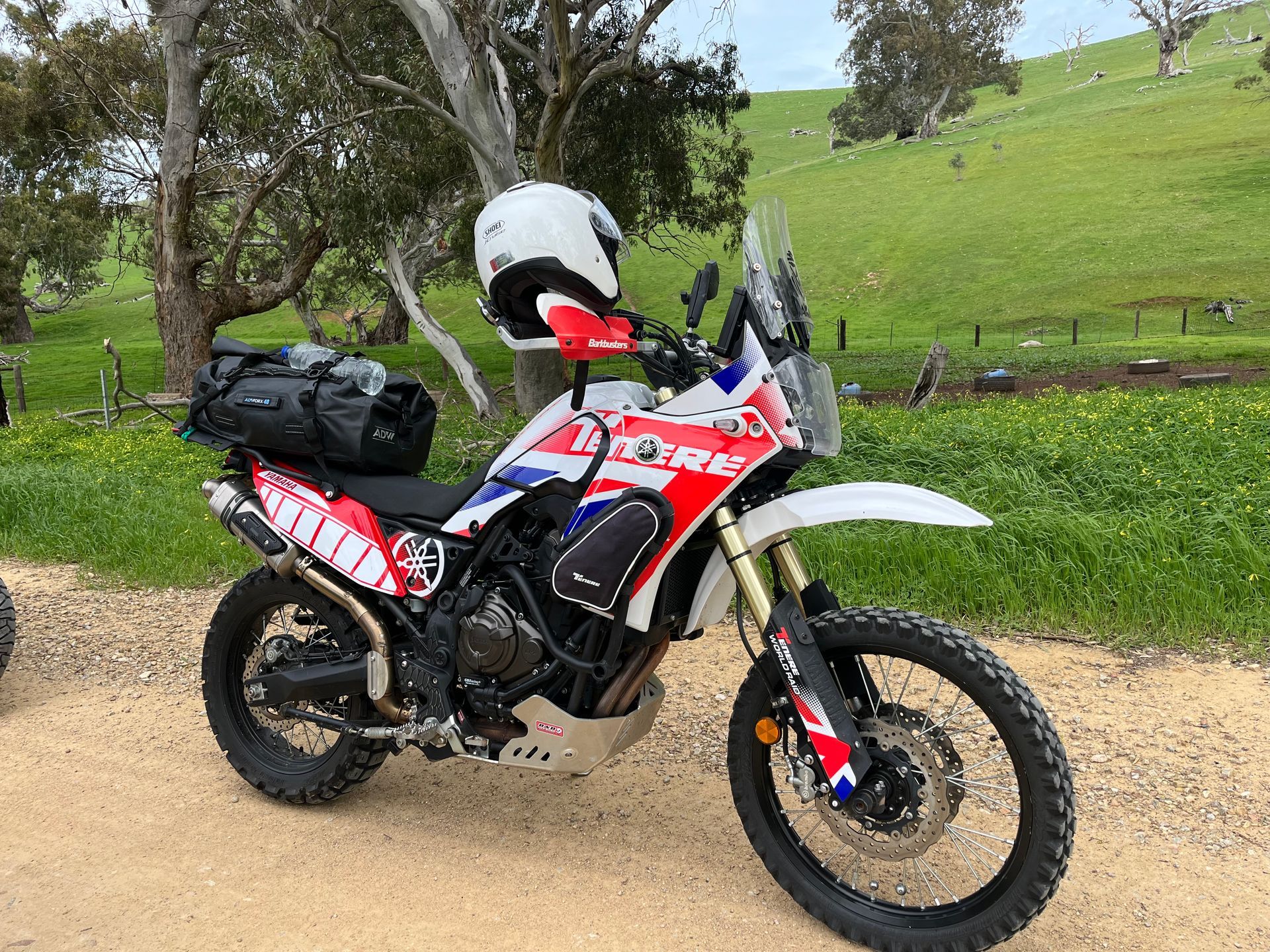
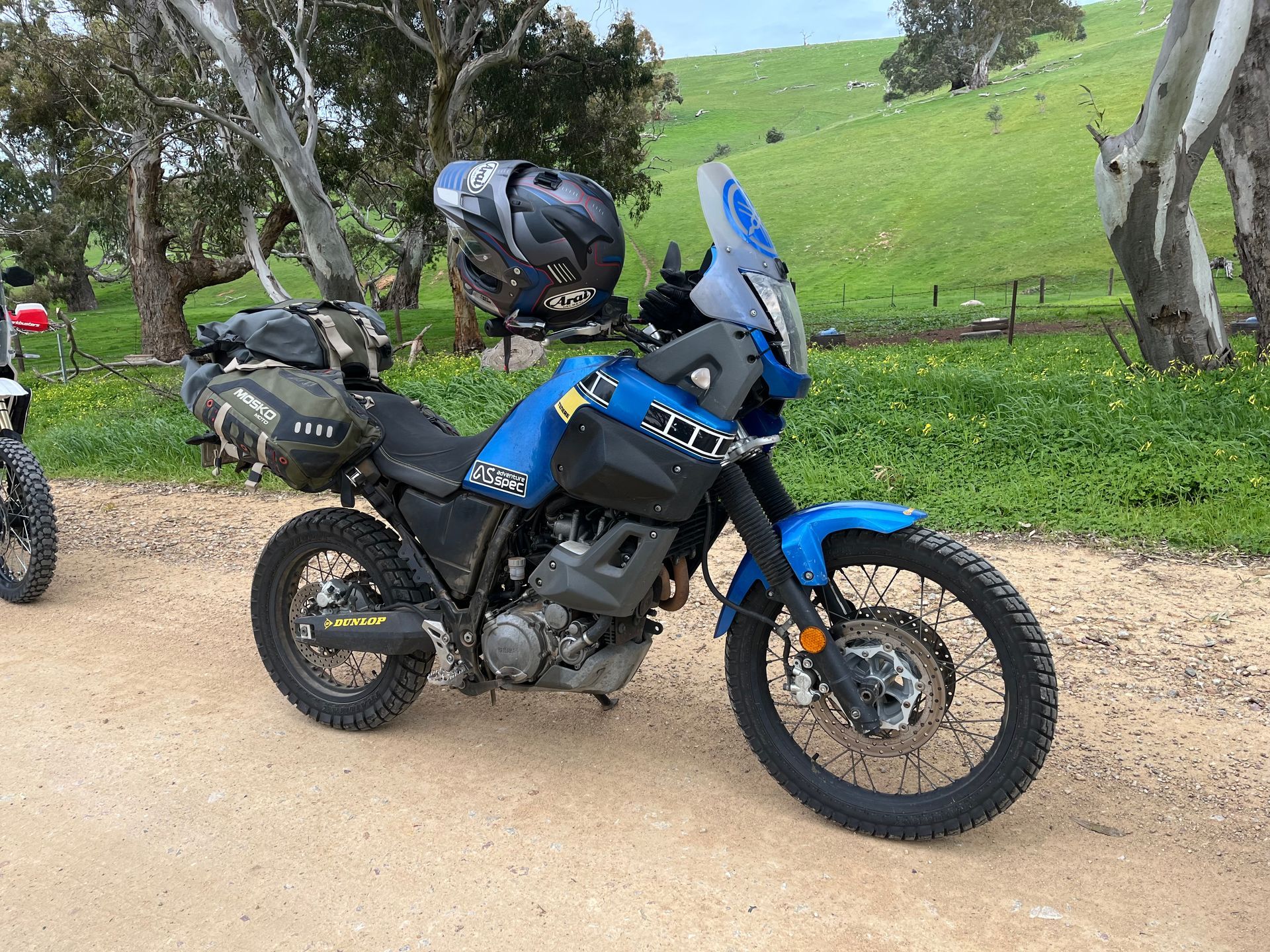

The Mental Health Benefits of Motorcycling: A Review of Empirical Evidence
Abstract
Motorcycling is widely perceived as a leisure activity, yet emerging evidence indicates that it may produce measurable psychological benefits, including reduced stress, improved cognitive functioning, enhanced emotional wellbeing and increased resilience. This article synthesises peer-reviewed research and accredited studies to evaluate the mental-health impacts associated with motorcycle riding, with a particular focus on physiological stress markers, attentional engagement, and neurobiological mechanisms.
1. Introduction
Mental health disorders, including stress-related conditions and anxiety, are globally prevalent and increasing in incidence. Physical activity, outdoor exposure, and attentional engagement are well-established contributors to psychological wellbeing. Motorcycling uniquely combines these elements, making it a candidate for therapeutic benefit. Recent academic and industry-supported research has begun to quantify these effects using physiological and neurocognitive measures.
2. Physiological Stress Reduction
A 2021 study conducted by the University of California, Los Angeles (UCLA) investigated the psychophysiological responses of participants during motorcycle riding compared with driving and resting states. Using electroencephalography (EEG) and salivary biomarkers, the study found:
- 28% reduction in cortisol levels during motorcycle riding relative to resting baseline (Lleras et al., 2021).
- Increased heart-rate variability, suggesting improved autonomic regulation.
- Moderate increases in epinephrine consistent with controlled arousal rather than stress.
These findings demonstrate that motorcycling may activate a productive state of alertness while simultaneously lowering biochemical stress indicators.
3. Enhanced Cognitive Function and Attentional Focus
The same UCLA study also reported increased EEG beta power and reduced alpha power during riding, patterns associated with elevated concentration and sensorimotor engagement (Lleras et al., 2021).
Additional findings included:
- Enhanced mismatch negativity responses, indicating improved sensory processing.
- Increased environmental awareness compared to automobile driving.
These outcomes align with Csikszentmihalyi’s (1990) “flow theory,” wherein high-attention activities induce deep engagement and reduced rumination.
4. Contribution to Emotional Wellbeing
Motorcycling has been associated with improved mood regulation and subjective wellbeing. In a 2020 review of motorcyclists’ psychological outcomes following road-related trauma, injured riders demonstrated higher long-term resilience and better psychological recovery compared with car occupants experiencing similar incidents (Craig et al., 2021).
This unexpected finding suggests that motorcyclists may possess — or develop — enhanced coping mechanisms, possibly linked to:
- Frequent exposure to controlled risk
- Active skill-based decision making
- Strong social and identity-based rider communities
These factors align with well-established resilience frameworks in psychology.
5. Motorcycling as a Form of Physical and Environmental Therapy
Motorcycling involves complex whole-body movement, vestibular activation, and proprioceptive coordination. Exercise science research shows that these mechanisms improve cognitive function and foster emotional regulation via:
- Upregulation of brain-derived neurotrophic factor (BDNF)
- Increased dopaminergic and serotonergic activity
- Activation of the parasympathetic nervous system post-activity (Ratey, 2013)
Additionally, exposure to natural environments — a common feature of trail and adventure riding — has repeatedly been linked to reduced anxiety, improved mood, and increased attention restoration (Kaplan, 1995; Bratman et al., 2015).
Motorcycling, particularly off-road or adventure motorcycling, blends physical engagement with environmental immersion, placing it within a category of “green exercise” known to yield strong mental-health benefits.
6. Mechanisms of Action
6.1 Attentional Demand
High engagement reduces cognitive bandwidth for intrusive thoughts and anxiety-related rumination.
6.2 Controlled Arousal
Moderate adrenaline release produces heightened focus without chronic stress activation.
6.3 Psychological Flow State
Riders frequently report loss of time awareness, deep focus and intrinsic reward — hallmark indicators of flow.
6.4 Identity, Mastery, and Social Belonging
Riding communities, skill progression, and mastery of terrain are protective psychological factors.
7. Conclusion
The mental-health benefits of motorcycling are supported by emerging empirical evidence. Riding appears to reduce physiological stress, enhance cognitive performance, support emotional stability, and foster resilience. While more longitudinal research is required, current findings strongly support the inclusion of motorcycling — particularly off-road and adventure riding — as a meaningful contributor to psychological wellbeing.
References (APA-style)
Bratman, G. N., Hamilton, J. P., & Daily, G. C. (2015). The impacts of nature experience on human cognitive function and mental health. Annals of the New York Academy of Sciences, 1249(1), 118–136.
Craig, A., Tran, Y., Guest, R., Gopinath, B., Jagnoor, J., Bryant, R. A., ... & Cameron, I. D. (2021). Psychological disturbances and psychological recovery after road traffic crashes: Findings from the UQOL study. BMC Public Health, 21(1), 1–12. https://doi.org/10.1186/s12889-021-12003-0
Csikszentmihalyi, M. (1990). Flow: The psychology of optimal experience. Harper & Row.
Kaplan, S. (1995). The restorative benefits of nature: Toward an integrative framework. Journal of Environmental Psychology, 15(3), 169–182.
Lleras, A., Patel, H., Furlan, A., Panousis, G., & Hanson, M. A. (2021). Neurophysiological and psychological effects of motorcycle riding compared to driving a car and resting: An EEG and biomarker study. Frontiers in Neuroscience, 15, 633156. (UCLA/Harley-Davidson collaboration)
Ratey, J. J. (2013). Spark: The revolutionary new science of exercise and the brain. Little, Brown.
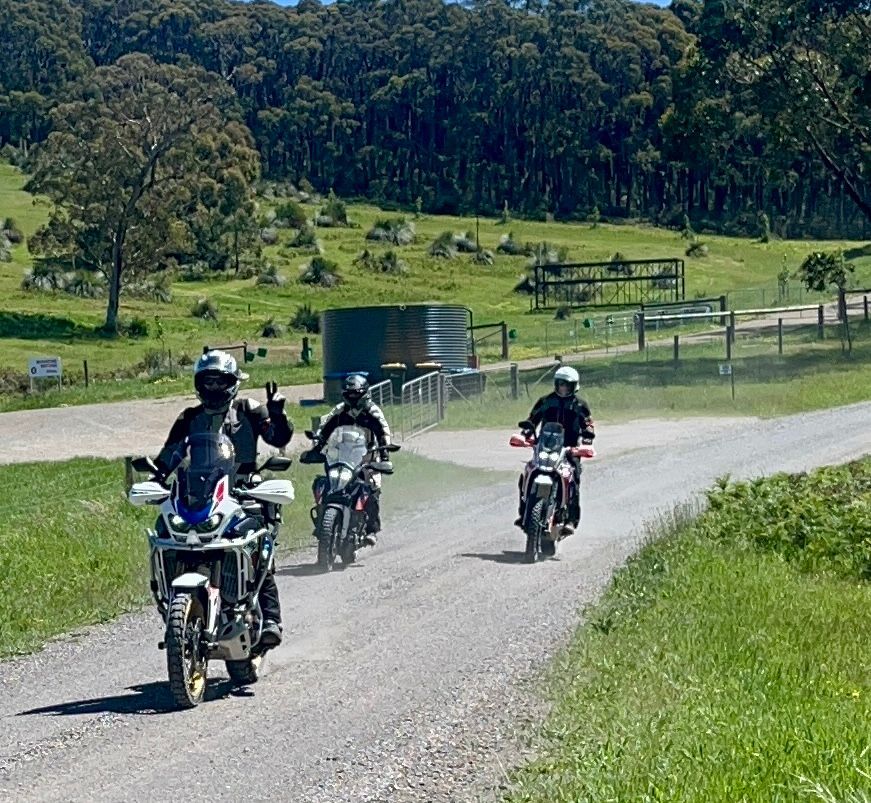
2026 Adventure Bikes: The Year Manufacturers Finally Went, “Fine, Have ALL the Toys!”
If 2024 and 2025 were warm-up laps, then 2026 is the year the adventure bike world hit full send. Every manufacturer seems to have had the same meeting:
Boss: “What do adventure riders want?”
Engineer: “More.”
Boss: “More what?”
Engineer: “Yes.”
And so here we are — staring down a buffet of updated models, new releases, and enough electronics to power a lunar lander.
Grab a coffee. Sit down. Hide your wallet. Let’s dive in.
YAMAHA – The T7 World Raid Now Smarter Than Most Riders
Well, Yamaha finally caved. The 2026 Ténéré 700 World Raid now comes with more electronics than the average suburban teenager.
A six-axis IMU?
Multiple ride modes?
Lean-sensitive traction control?
This is the same bike that used to proudly say, “Electronics? We’ve got a headlight.”
Don’t panic — it’s still very much a T7. It’ll still punch above its weight, pull like a stubborn mule, and take you to places your chiropractor would rather you didn’t go. It’s just… a little clever now.
Good luck explaining to your mates why your “simple bike” now has more sensors than a Tesla.
BMW – The 450 GS Arrives to Ruin All Your Excuses
BMW has dropped the new F 450 GS, which means every rider who’s ever said:
“Oh yeah mate, I’d totally come on that ride, but my bikes a bit heavy for single-track…”
…has officially run out of lines.
The 450 GS is light, clever, well-mannered and surprisingly capable — basically the complete opposite of a tired adventure rider on day three of a Flinders trip.
Meanwhile, the R 1300 GS Adventure is still doing its thing: being enormous, luxurious, and capable of crossing continents without the rider even breaking emotional commitment with their seat heater.
If Yamaha built mules, BMW builds heated leather recliners with wheels.
DUCATI – The Desert-X V2: For Riders Who Want Dirt AND Drama
Ah, Ducati. They’ve taken the already spicy DesertX and put it through a full Italian transformation sequence.
New frame?
New engine?
More touring ability?
Yes, yes, and yes, signed with an espresso foam heart.
It’s the perfect bike for the rider who wants to slide through sand, then glide into a café and calmly pretend they didn’t nearly crash twice.
Expect to see these in SA with riders nodding smugly at each other like:
“Yes, this is my desert weapon. Yes, I moisturise.”
SUZUKI – V-Strom 800DE: The Sensible One
Suzuki continues to offer the V-Strom 800DE, which is still the adventure bike for people who prefer reliable partners, functional relationships, and tyres that don’t cost $400 each.
It’s like the friend who turns up with food, tools, a tyre pump and a first-aid kit.
Not flashy, but absolutely the one you want around when the track gets interesting — or when someone’s KTM has collapsed emotionally.
APRILIA – Tuareg 660 Continues Being the Cool Kid
The Aprilia Tuareg is still the hipster-approved, rally-ready middleweight. Updates for 2026 are evolutionary — but the bike was already so good that “evolutionary” feels like cheating.
It’s for riders who like their gravel fast, their bikes exotic, and their friends asking:
“Mate… what is that thing?”
TRIUMPH – The Tiger 900: Same Tiger, New Paint, Still Prowling
Triumph has decided the Tiger 900 is basically perfect, so the 2026 touches are mostly colours and details.
Which is fair.
If the Tiger were a bloke, it’d be that quietly confident guy at the bakery who orders a meat pie, sits alone, causes no trouble, and absolutely smashes everyone on the twisties home.
WILDCARDS – Rumours, Whispers & Workshop Gossip
- Royal Enfield: The Himalayan 450 remains the lovable Labrador of adventure bikes. Eats dust, never complains, might roll in puddles.
- Kawasaki: The KLE revival rumours continue. Kawasaki is being mysterious — which is very un-Kawasaki. Expect a surprise box at an expo, maybe containing a bike… or a family of snakes. Hard to say.
Here’s the real 2026 takeaway:
Adventure bikes now come in “Simple,” “Smart,” and “Smart Enough to Judge Your Life Choices.”
The pendulum has swung away from debates about too much tech. Riders have accepted it. Manufacturers have embraced it. And bikes now come with:
- Cruise control
- Lean-sensitive ABS
- Screens big enough to watch MotoGP on
- Gearshift assistants
- More sensors than a weather balloon
…and still somehow no proper place to store a pie and a cold one.
🥇 Gold, 🥈 Silver & 🥉 Bronze – The Tenere Tales 2026 Adventure Bike Podium
🥇 Gold – Yamaha Ténéré 700 World Raid (2026)
The champ returns and takes the top step without breaking a sweat. Yamaha finally gave the T7 the brains to match its brawn, adding IMU wizardry, ride-by-wire refinement and just enough tech to make you feel modern without making the bike feel needy. It still punches like a mule — a very Blue Mule — which makes it our undisputed Gold winner for 2026.
🥈 Silver – Aprilia Tuareg 660
The Tuareg grabs Silver with that perfect mix of rally energy, premium feel and middleweight playfulness. Light, lively, beautifully balanced and now even more polished with Euro 5+ updates, it remains the adventure rider’s “if you know, you know” choice. The cool kid of the gravel world.
🥉 Bronze – BMW F 450 GS Adventure
A brand-new platform and the start of a seriously interesting new chapter for BMW’s GS lineup. The 450 brings GS DNA into lightweight territory, meaning suddenly everyone is out of excuses for skipping singletrack. It’s clever, capable, approachable and earns a very well-deserved Bronze on our 2026 podium.