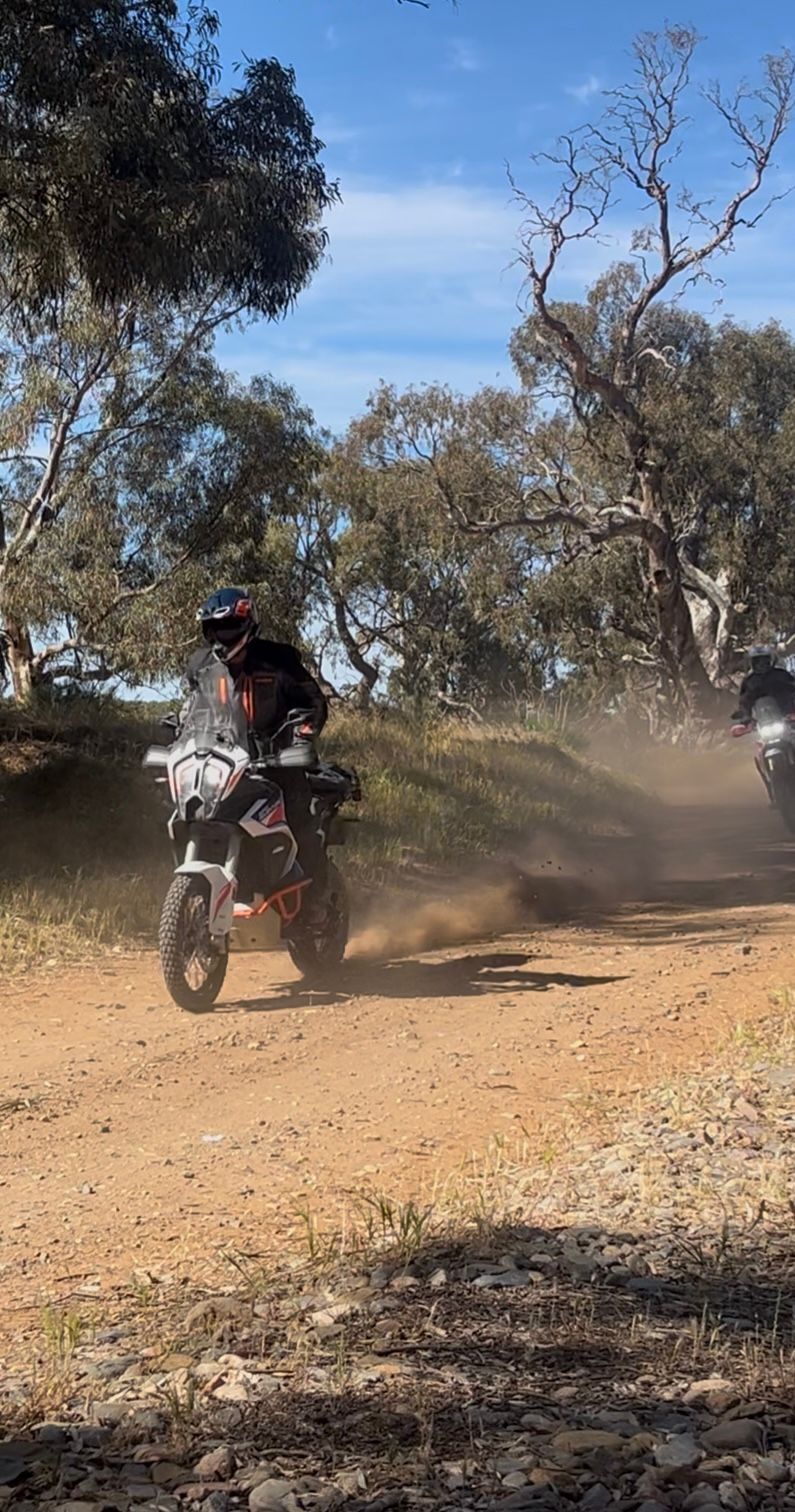
Welcome to the Gravel Hound shed
—the place for honest motorcycle ownership reports, workshop jobs, equipment reviews and the occasional mechanical problem we probably should have noticed earlier.
Everything featured here comes from motorcycles and equipment we actually own, ride, maintain and occasionally break. No brochure reviews, no pretending every product is perfect and no advice based entirely on specifications.
If it works, we’ll tell you. If it doesn’t, you’ll probably get the complete story—usually after we have spent several hours in the shed trying to understand why.
CFMOTO 450MT Long-Term Review: 22,000 km
Has this affordable adventure bike proved itself—or merely survived?
When I bought my 2025 CFMOTO 450MT, I did so with a major motorcycle tour rapidly approaching and at least a few doubts in the back of my mind.
My Yamaha XT660Z Ténéré—the Blue Mule—was getting older. I was not entirely convinced that reliability would become a problem, but some of the other riders preparing for our Tasmania trip were considerably less optimistic.
With ten days of touring ahead, including long road sections, gravel, luggage and seven motorcycles relying on one another, the Tasmania deadline forced my hand.
I considered buying a Yamaha Ténéré 700. It was the obvious progression from the XT660Z and came with an established reputation. But then I rode the CFMOTO 450MT.
Any concern about it lacking sufficient power disappeared during the test ride. Once its AU$10,500 ride-away price was included in the calculation, the decision became almost impossible to argue against.
The Desert Dingo joined the Gravel Hound pack.
Twenty-two thousand kilometres later, it has commuted, carried out Blood Bike duties, completed regular 250-kilometre-plus weekend rides and toured Tasmania for ten consecutive days. It has travelled on sealed highways, flowing gravel roads, corrugations, rough tracks and everything in between.
More importantly, it has never failed to start, never stranded me and never required recovery.
So, was buying the 450MT a compromise?
After 22,000 kilometres, I would say absolutely not.
First impressions
The first things I noticed were the smooth acceleration and surprisingly pleasant exhaust note.
The engine felt polished from the beginning. There was no sense that it needed thousands of kilometres to loosen up or become enjoyable. Apart from the normal running-in period, I have not noticed any significant change in its character since it had approximately 100 kilometres on the odometer.
It was also immediately comfortable.
At five feet six inches tall, I fit the motorcycle particularly well. The riding position suits me both seated and standing in the attack position. I have not needed handlebar risers or major ergonomic changes.
The controls feel solid, the dashboard is clear and the bike feels considerably more substantial than its price might suggest.
That last point remains true after 22,000 kilometres. It still feels tight, plush and properly assembled.
Is there enough power?
This will probably be the first question asked by anyone considering the 450MT against a Ténéré 700, KTM 690, Aprilia Tuareg or larger adventure bike.
For the riding we do, the answer is yes.
The 450MT will lose some ground under hard acceleration against the larger motorcycles in our crew. That should surprise nobody. We regularly ride with Africa Twins, Ténéré 700s, KTM 690s and machines with considerably more horsepower.
However, during a normal 250-to-300-kilometre mixed-surface day, the CFMOTO holds its head high. In the right hands, it will go virtually anywhere the larger bikes go and keep up perfectly well.
The engine feels happiest higher in the rev range. It is smooth, willing and pleasant to use, but I prefer the flexibility created by taller gearing.
The standard 14-tooth front and 47-tooth rear gearing did not suit my combination of commuting, country roads, highway sections and flowing gravel. I initially changed to a 15-tooth front sprocket while retaining the 47-tooth rear.
That improved the bike, but it still did not achieve what I wanted at highway speeds.
I eventually arrived at 15/43 gearing, which has transformed the motorcycle for my purposes. It reduces engine speed and the sense of mechanical stress during highway sections without compromising the gravel-road performance that makes up much of our riding.
Would the taller gearing be ideal for technical single-track, steep climbs and hard enduro riding?
Probably not.
But that is not our game.
Our rides are increasingly built around distance: sealed transport sections, backroads, flowing gravel and occasional rougher tracks. For that combination, 15/43 is the sweet spot.
If CFMOTO offered me one engine improvement, I would ask for another 10–15 horsepower. Not because the existing engine is inadequate, but because a little more punch—and the ability to lift the front wheel when required—would make an already entertaining motorcycle even better.
It does not need 100 horsepower. But another ten or fifteen would be welcome.
Fuel economy and range
I am not someone who records every fuel receipt and calculates consumption to three decimal places. I generally fill the motorcycle when the fuel light appears and stop thinking about fuel until it appears again.
During our Tasmania tour, the dashboard average was approximately 4.1 litres per 100 kilometres.
In practical use, the 450MT offers excellent range. Around 350 kilometres is easy to plan around, and the displayed range can approach 400 kilometres depending on conditions.
That removes much of the fuel anxiety that can complicate country and remote-area riding.
Tasmania: the real test
The Tasmania trip was the reason I bought the motorcycle, so it became a serious test early in my ownership.
The tour covered roughly 4,700 kilometres from Adelaide back to Adelaide, including the Victorian transport sections, ferry crossing, Tasmania and the return through the Great Ocean Road, Mount Gambier and Kingston SE.
The 450MT carried a Mosko Moto Reckless 80 rackless luggage system, which proved perfect for the job.
Despite the luggage and consecutive long days, the motorcycle remained balanced, planted and completely capable. I looked forward to getting back on it every morning.
By approximately four o’clock most afternoons, I was ready to get off and have a beer—but that probably says more about the rider than the seat.
The standard seat is excellent. I can ride all day without a problem, and I consider it every bit as comfortable as the old XT660Z Ténéré.
The windscreen also causes me no trouble. I generally leave it in its lowest position and do not notice buffeting or excessive wind pressure. However, at my height, windscreens have rarely caused me problems on any motorcycle during 50 years of riding.
The 450MT proved that it could be loaded, ridden for consecutive days and trusted far from home.
Sealed-road handling
On sealed roads, the motorcycle feels extremely well planted.
It is stable, predictable and more than capable of keeping pace with larger machines on typical country roads. The revised gearing also makes it comfortable on highway sections.
There is a tendency toward headshake at very high speed when using more aggressive knobbly tyres. I attribute this primarily to the tyres rather than the chassis. With the more road-oriented Mitas Enduro Trail tyres used in Tasmania, there was no headshake—even at speeds well beyond normal touring pace.
One of my most memorable moments on the bike involved an admittedly unwise 170 km/h contest with Wayne. It demonstrated that the 450MT was capable of more than enough speed, but it is not something I recommend repeating on a public road.
This is an adventure motorcycle, not a high-speed sports tourer.
Gravel and rough-road performance
Gravel is where the 450MT makes the strongest argument for itself.
It is exceptionally good on fast, flowing unsealed roads. It feels planted, responsive and easy to position.
Like most motorcycles, it can feel slightly skittery on loose marble-like gravel, but I do not consider that a specific 450MT weakness. Loose stones on a hard surface will make almost any motorcycle move around.
The suspension performs well during general gravel and backroad riding. Its limitations become apparent when encountering deep holes or successive large hits. In those conditions, the suspension can bottom and bounce rather than maintaining full control.
Better damping and higher-quality suspension components would improve the motorcycle, particularly across corrugations and repeated impacts.
However, price must remain part of the discussion. At $10,500 ride-away, I cannot reasonably expect premium competition suspension.
The standard setup is entirely adequate for the riding the motorcycle was designed to do. It simply reaches its limits when asked to behave like a hard-enduro or motocross machine.
The fork incident
The most serious mechanical incident during my ownership involved the front forks jamming completely.
Initially, this looked like a potentially serious motorcycle failure. After investigating, however, I believe the problem resulted from a washer being omitted when I reassembled the forks following a seal replacement.
That allowed a spacer tube to split and become jammed inside the fork tube. The damaged component could not be removed without risking further damage, so I replaced the complete fork leg.
The replacement unit cost approximately $960 and even arrived filled with fork oil.
I completed the repair myself and did not pursue a warranty claim because the evidence suggested the problem was caused by my own assembly error, not a manufacturing defect.
It has not changed my opinion of the motorcycle or its durability.
We put it down to my stupid mistake, repaired it and moved on.
An honest long-term review must distinguish between a motorcycle failure and an owner-induced problem. In this case, I do not blame CFMOTO.
Brakes
My initial impression was that the front brake lacked feel and might be one of the motorcycle’s weak points.
With more time, I have adjusted my opinion.
The rear brake is good, and the front brake is adequate for the motorcycle. It stops the bike effectively and has not become a meaningful problem in everyday use.
That said, if CFMOTO wanted to improve the next model, a stronger front brake with more feedback would be high on my list.
The existing brake works. I would simply prefer more feel and authority.
Weight and confidence
The 450MT’s manageable weight is one of its biggest advantages.
It is lighter and easier to manoeuvre than several motorcycles in our group. That matters on gravel, but it also helps when I am moving around the Pack to film or photograph other riders.
Compared with the XT660Z, the CFMOTO feels lower, lighter and more responsive. Those qualities have increased my confidence off-road.
The old Ténéré was a comfortable and much-loved motorcycle with plenty of character. It remained in production for years and built a strong reputation. The 450MT cannot instantly manufacture that same history.
But in practical ability, the CFMOTO is at least its equal.
It is equally comfortable, just as capable on the highway with the revised gearing, better on gravel and rougher terrain, and noticeably easier to manoeuvre.
Controls and electronics
The dashboard is clear, easy to read and provides the information I need.
The switchgear feels solid. One particularly useful feature is the ability to turn traction control on and off while moving. Some considerably more expensive adventure motorcycles cannot do this, yet CFMOTO has made it simple.
The ABS and traction-control settings resetting after the motorcycle is restarted initially seemed annoying, but I have adapted to it and no longer consider it a significant issue.
My main switchgear complaint is the high-beam switch. Its position makes it too easy to activate with a slight, unintended touch of a gloved hand.
This is a relatively small issue, but one I would like CFMOTO to change.
Commuting and Blood Bike work
The 450MT is not used solely for weekend adventures.
It is also a practical commuter and works well for Blood Bike courier duties with a 50-litre top box fitted. The box remains on the motorcycle approximately 95 per cent of the time.
The smooth engine, manageable height, comfortable riding position and excellent range make it easy to use regularly.
It does not feel like a highly specialised motorcycle that must be endured during ordinary riding in return for occasional off-road ability. It works equally well during the week and on a long weekend ride.
Accessories and modifications
The Desert Dingo currently has or has used:
- Radiator guard
- Header guard
- Upgraded bash plate
- Upper and lower crash bars
- Passenger-peg removal
- Modified exhaust bracket
- Foam air filter and pre-filter
- 15/43 gearing
- 50-litre top box
A tail tidy and side-stand enlarger were considered but have not been fitted.
The foam filter and gearing changes have delivered the biggest practical benefits. The bash plate and header protection are also non-negotiable for the way I use the motorcycle.
I would fit the same modifications again.
The aftermarket pannier racks did eventually snap during a particularly rough section while the top box was fitted. The leverage created by the loaded top box was more than the racks could tolerate.
Used correctly with suitable soft luggage such as the Mosko Moto system, the racks had been adequate. I consider the failure a consequence of the load and conditions rather than evidence of a fundamental motorcycle problem.
Servicing and running costs
Routine servicing has been straightforward.
An oil-and-filter change costs approximately $115 when I complete the work myself, with some oil left over.
My main maintenance complaint is that the bash plate must be removed to drain the oil and replace the filter. I would prefer proper service access without removing the protection every time.
The foam air filter and pre-filter should reduce long-term servicing costs and make filter maintenance easier.
The original chain and sprockets were replaced at approximately 19,000 kilometres. By that stage, the chain was badly worn.
The wheel bearings remained in good condition when checked at 21,000 kilometres.
I have experienced no difficulty obtaining replacement parts. Everything I have needed has been available from stock.
There has also been no concerning corrosion, fading or general deterioration. The motorcycle is stored undercover overnight, although it spends around 40 per cent of its daytime use parked outdoors in the elements.
At 22,000 kilometres, it still feels tight and plush.
Tyres
The Mitas Enduro Trail tyres used for Tasmania were excellent and long-lasting.
For my regular riding, my preferred option is now the Mitas Enduro Trail XT. They suit the combination of sealed roads, gravel and rougher weekend riding that defines the bike’s normal use.
Tyre choice can also influence the 450MT’s high-speed stability. More road-oriented tyres eliminated the headshake experienced at very high speeds with aggressive knobbies.
Reliability
This is the section many prospective owners will be waiting for.
Before buying, I did have concerns about longevity. At the price, and given some riders’ preconceptions about Chinese motorcycles, it was reasonable to wonder whether the savings would eventually appear in reliability or build quality.
So far, they have not.
In 22,000 kilometres, the 450MT has:
- Started first time, every time
- Never stranded me
- Never required recovery
- Completed a major interstate tour
- Carried luggage over consecutive long days
- Handled regular 250-kilometre-plus weekend rides
- Worked as a commuter and Blood Bike courier
- Shown no concerning corrosion or premature deterioration
- Remained tight and well assembled
The fork problem appears to have resulted from my own assembly mistake. The broken pannier rack was an aftermarket accessory subjected to unsuitable leverage and rough conditions.
Neither represents a fundamental CFMOTO failure.
At this point, my concerns about reliability and longevity have largely been put to bed.
Should I have bought the T7?
No.
I have never regretted choosing the 450MT instead of spending considerably more on a Yamaha Ténéré 700.
The T7 offers more power, a strong reputation and an established name. It may also be the better motorcycle for some riders.
But the CFMOTO does everything I require.
It tours comfortably, handles gravel extremely well, carries luggage, commutes, provides excellent range and runs alongside much larger motorcycles without embarrassment.
A higher purchase price would not necessarily have produced more enjoyment.
Who should buy one?
The 450MT is particularly well suited to shorter riders, but its appeal is much broader.
It would make an excellent motorcycle for:
- New adventure riders
- Intermediate riders building confidence
- Experienced riders wanting something lighter
- Commuters who also ride on weekends
- Solo tourers
- Gravel-road riders
- Riders who value manageable performance over headline horsepower
- Anyone looking for strong value without buying a bare-bones motorcycle
Beginners and intermediate riders could gain a tremendous amount of confidence and experience from this bike.
Its combination of approachable height, manageable weight, smooth power and genuine capability makes adventure riding feel achievable.
Who should not buy one?
Look elsewhere if you want:
- A high-speed highway touring motorcycle
- Regular two-up touring with heavy luggage
- A hard-enduro motorcycle
- Premium competition suspension
- Huge horsepower
- The prestige of an established badge
The 450MT is not trying to be a sports tourer, superbike or enduro competition machine.
It is a practical, middleweight adventure motorcycle—and a very good one.
The three best things
After 22,000 kilometres, its strongest qualities are:
- It starts first time, every time.
- The engine accelerates smoothly and sounds surprisingly charming.
- It combines comfort, manageable weight and real-world adventure capability exceptionally well.
What should CFMOTO improve?
My three requests would be:
- Another 10–15 horsepower
- A stronger front brake with more feel
- Better-quality suspension damping and components
At the current price, however, these are improvement requests rather than serious complaints.
Final verdict
I expect to keep the Desert Dingo until at least 50,000 or 60,000 kilometres.
Would I set off on another major interstate trip tomorrow?
Absolutely.
If the motorcycle were stolen or destroyed, I would buy another 450MT.
That may be the clearest verdict possible.
After 22,000 kilometres, I give it nine out of ten. Better brakes and suspension are all that prevent it from scoring a perfect ten.
The 450MT has shown that a capable adventure motorcycle does not need to weigh 250 kilograms, produce more than 100 horsepower or cost a small fortune.
It needs to be comfortable, manageable, reliable and enjoyable.
The Desert Dingo is all of those things.
The CFMOTO 450MT has proved that you don’t need to spend a fortune or have more than 100 horsepower to own an extremely capable and enjoyable adventure motorcycle.
And after 22,000 kilometres, I am still looking forward to the next ride.
Gravel Hound Adventures — Trained by Terrain.